ethiopex-2.jpg

Ethiopia garnered USD121 million from the export of 22,689 tons of meat and meat products during the 2021/22 fiscal year.

The 11th edition of ETHIOPEX and 7th session of ALEC tandemly kicked off at Ethiopian Skylight and will continue until 29 October 2022. Over 4,000 visitors, traders, and stakeholders from Ethiopia and neighboring countries are expected to visit the event organized by Prana Events and supported by the Ministry of Agriculture, Pan African Chamber of Commerce and Industry, and SNV Netherlands Development Organization.


africa-hall-1.jpg

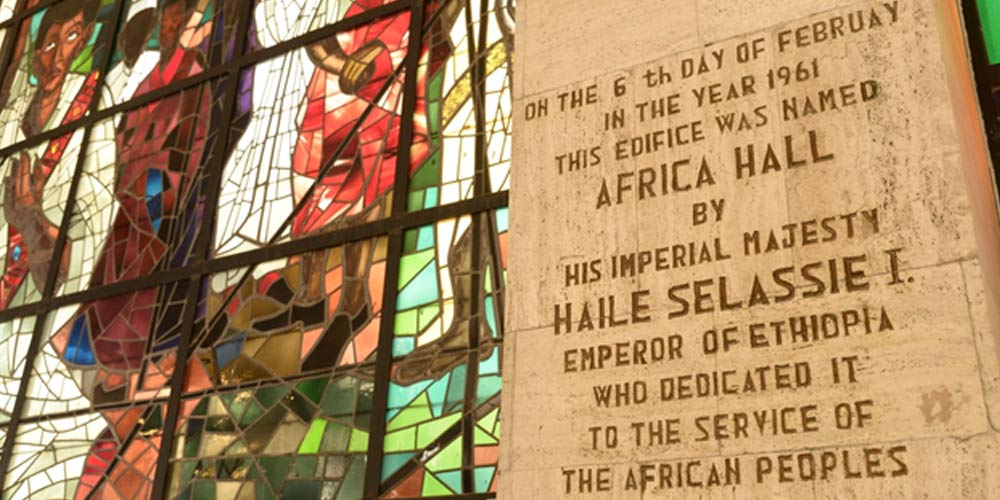
The historic Africa Hall, home to the genesis of the United Nation’s Economic Commission for Africa (UNECA) and the Organization of African Unity (now African Union) is to be renovated via USD56.9 funding from the UN. The work will begin in November and is expected to finalize in mid-2024.

The landmark building built in 1961 was dedicated to the “services of the African people” by Emperor Haile Selassie and of which, member states of the UN have recognized the need to preserve and update its functionality and sustainability while preserving culture and patrimony.

The project area comprises 8,300 square meters of floor area and 4,500 square meters of landscaped areas and will feature a new visitor’s center. The ceremony to commence the works was led by Antonio Pedro, acting Executive Secretary of UNECA and Tesfaye Yilma (Amb), State Minister for Political and Economic Diplomacy at the Ethiopian Ministry of Foreign Affairs.

The makeover of the hall is hoped to strengthen heritage tourism, one of the tenets of the AU’s Agenda 2063 program.


Photo Credit: Samuel Habtab


cfo-forum-ethiopia.jpg

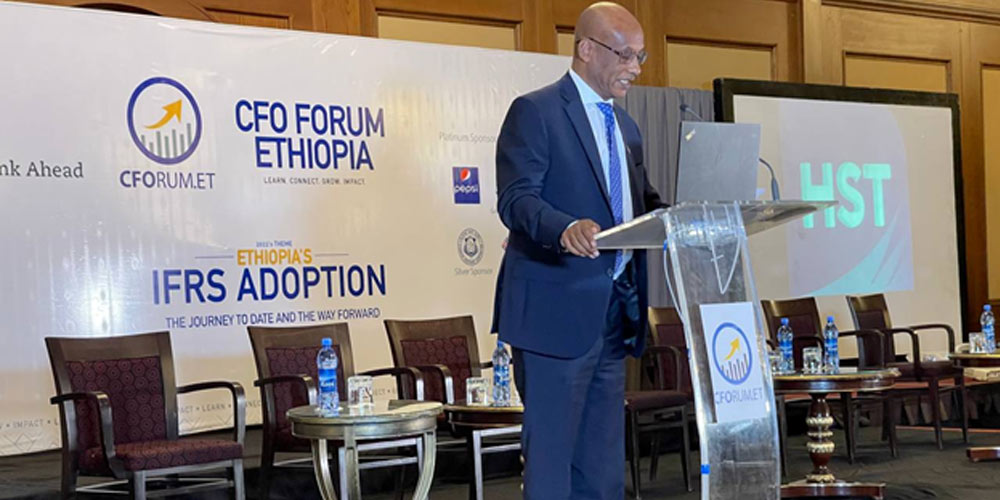
The CFO Forum Ethiopia was held in Addis Ababa with the purpose of creating a platform for finance professionals and stakeholders. Organized by the local consulting firm HST and the Association of Chartered Certified Accountants (ACCA) Ethiopia, this year’s them was “Ethiopia’s International Financial Reporting Standards (IFRS) Adoption. The journey to-date and the way forward.”

HST presented the major factors making Ethiopia’s IFRS implementation difficult and these included the shortage of appropriate experts and expertise, inadequate regulation, shortage of appropriate training and education systems, lack of support by company owners and other stake holders, and the high cost of implementation.

Ethiopia has chosen to fully adopt IFRS and is now amongst approximately 120 nations to have done so.


If there is any commonality among the series of political administrations that have ruled Ethiopia over the decades, it is the demonizing of Egypt as a nation that always dreams of the downfall of Ethiopia as a nation. Even though these administrations do not present concrete evidence as to the extent of Egypt’s involvement, one may not fall far from the truth to assume that Egypt benefits less from a sturdy east African nation capable of taking its fair share of a river’s waters that have disproportionately only benefited Egypt for centuries.


The backbone of the Ethiopian economy in both job creation and export values, Coffee registered record numbers in the just completed Ethiopian fiscal year of 2021/22, passing the USD1 billion mark for the first time in history. Even though prices have been inflated due to inflationary pressures worldwide, quantities exported have also grown. The fiscal year saw 300,000 metric tons exported to gain USD1.4 billion.


financial-inclusion-hopes.jpg

Ethiopia’s financial sector, that had lived under a tight grip of the government for decades, now seems to be undergoing a series of shake ups in the past few years. While some measures by the central bank seem to have a loosening effect on some areas, other measures have been restrictive and demanding with a slew of directives. The most tightly controlled sector in the Ethiopian economy has seen a rise in the number of banks and other financial institutions. More telling is the diversification being seen in availing financial services to previously unreached areas and sections of the population. Here, the sector is registering positive trends towards availing banking services and credit to wider and wider audiences. With such endeavors, however, financial institutions have to enter the risky business of uncollateralized lending—at least in small amounts. In all, lending diversification is most welcome and requires further strengthening, writes EBR’s Bamlak Fekadu.


Seid-Mohammed-Birhan.jpg

Seid Mohammed Birhan
Founder & Chief Executive Officer, Ambassador Business Group

Born in Adi Awro, Tigray and growing up where there was no power, water, or even a bed to sleep on, Seid would first be introduced to the garment industry at the tender age of six when his father gave ETB600 to his older brother to start a business.

However, in a few years’ time, war broke out between the central government and armed rebels in Tigray and his entire family had to flee to the state’s capital, Mekelle. After doing some small entrepreneurial works, Seid moved to Addis Ababa where he began the journey of Ambassador Garment with a single used stitching machine which he bought for ETB1,000 in Mercato. Paying a monthly rent of ETB20 around 30 years ago, Seid would commence his positive and profitable trajectory.

The small business he has launched by hiring himself as an employee has now grown to employ thousands and fashionably-dress innumerable more with a vision of being a figure for a modern lifestyle brand. Now, Ambassador Garment is the destination for sharp men’s suits for the aspiring Ethiopian middle-class male. His small cloth patching machine has catapulted him to take on other business ventures. Seid Mohammed Birhan, founder of Ambassador Garment, Ambassador Hotel, and Ambassador Real Estate gave EBR’s Addisu Deresse an audience at the glinting Ambassador Mall to share his extraordinary and exemplary life as an individual and a businessman.


lease-financing-progressing-amidst-challenges.jpg

Lack of access to capital and credit is one of the biggest barriers facing small and medium enterprises (SMEs), microbusinesses, and new ventures in developing nations even though they are crucial to economic growth and job creation. The paucity of funding required to increase productivity typically undermines such a substantial role. The government of Ethiopia passed the country’s first leasing law in 1998 in response to the need of hastening the growth and development of SMEs by allowing access to financing and providing operational machinery and equipment to businesses. Five capital goods finance companies (CGFCs) were granted licenses by the National Bank of Ethiopia in the early months of 2014. With the further entrance of the first foreign-owned leasing company and the revitalization of an already existing leasing service, lease financing seems to be slowly progressing amidst inter and intra-institutional challenges, writes Eden Teshome.


dr-Melaku.jpg

Having attended his medical education in Germany and then Canada, Melaku returned to engage in the medical business sector. Ten years ago, three of his friends and himself would establish WGGA, a visible player in eye clinical care. Specialized in hematology-oncology, Melaku works at the University of Alberta, Canada, and travels to Ethiopia every three months to manage his business. WGGA Eye Care Center is a full-service multi-specialty practice located in Addis Ababa, Ethiopia. Established in 2012, WGGA offers diagnostics, comprehensive eye examinations, and the most advanced vision correction treatments and procedures for eye diseases and disorders. The center has also worked in building and furthering the capacity of Ethiopian ophthalmologists and allied ophthalmic professionals and is a division of WGGA Medical Services PLC, an organization established by two Ethio-Canadians, who have actively been engaged in philanthropic medical initiatives in East Africa for more than 12 years. WGGA has been one of the beneficiaries of lease financing to procure top-end equipment. In this interview, EBR’s Addisu Deresse had an audience with Melaku about lease financing and his company’s plans for expansion.


cotton-shortage-haunting-textile.jpg

The plan of various administrations to make manufacturing the leading engine of the economy has most often ended up being a disappointment. Through the failures were also few sectors that have contributed their fair share to manufacturing and the economy at large. The textile and garment sector is a case in point—where centuries of traditions were industrialized during the mid-1900s under Emperor Haile Selassie. A sector that was launched bounds of hope and support from the government has indeed performed relatively well throughout the years. As of recently, however, a series of security, political, and environmental challenges have been slowing down the supply of cotton and thus, productivity of the entire sector. Positive moves like the commercialization of genetically modified cotton have been countered by the removal of Ethiopia from the American Growth and Opportunity Act (AGOA), writes EBR’s Bamlak Fekadu.


Ethiopian Business Review | EBR is a first-class and high-quality monthly business magazine offering enlightenment to readers and a platform for partners.


2Q69+2MM, Jomo Kenyatta St, Addis Ababa

Tsehay Messay Building

Contact Us

+251 961 41 41 41