DSC_3948_kqrvgd-1280x852.jpg

EBR_News Apr 21, 2026

Betegbar Yaregal

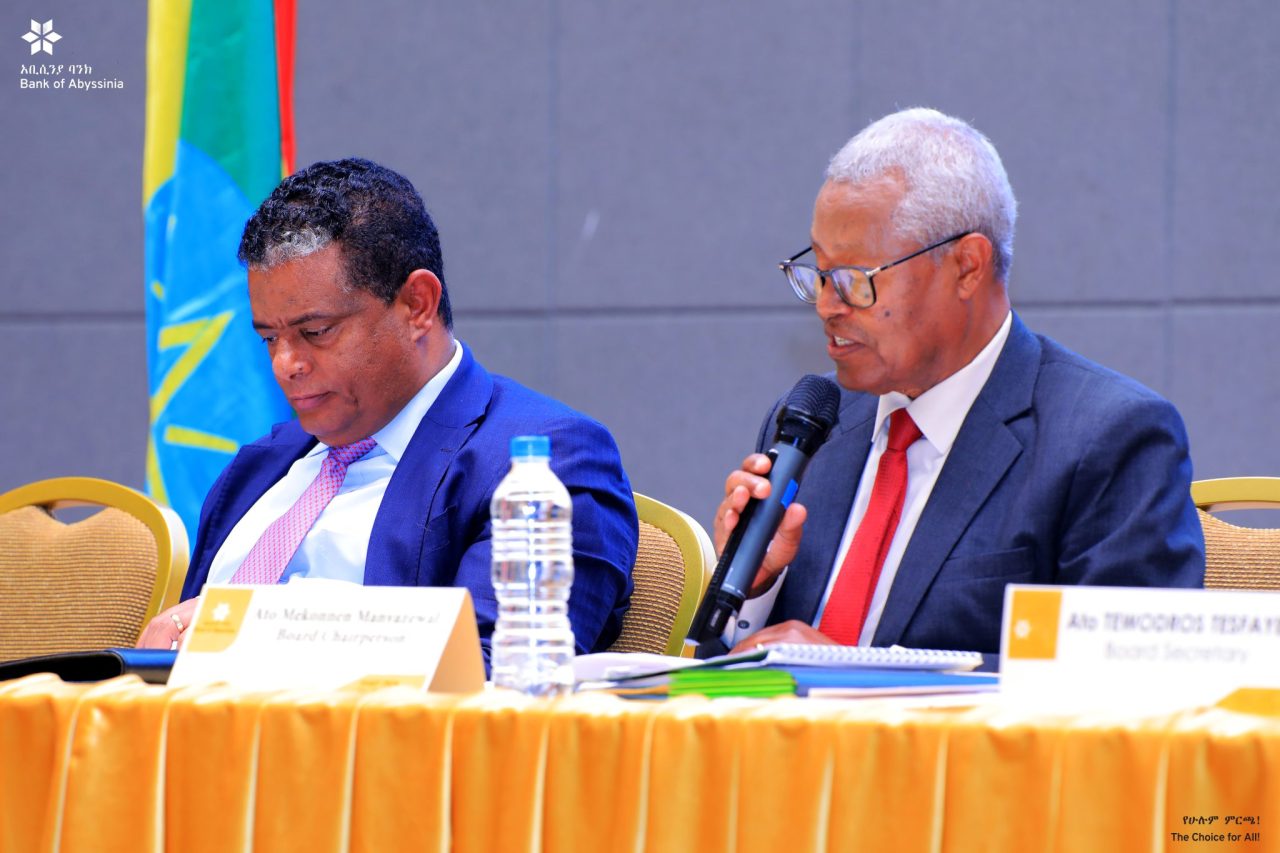
Prime Capital S.C. has officially received an investment banking license from the Ethiopian Capital Market Authority (ECMA), becoming the second independent investment bank in the country and the sixth institution licensed in the investment banking category.

The licensing ceremony, held at ECMA headquarters in Addis Ababa, brings the total number of licensed Capital Market Service Providers (CMSPs) in Ethiopia to 17, expanding the ecosystem across three operational categories.

With Prime Capital’s entry, the investment banking category now includes six institutions: Siinqee Investment Bank, CBE Capital, First Addis Investment Bank, Wegagen Capital, Awash Capital, and Prime Capital. Prime Capital joins First Addis Investment Bank as the only two independent investment banks not operating as subsidiaries of commercial banks.


EBR_News Apr 20, 2026

Natran Abdulfetah

The European Union and the Secretariat of the African Continental Free Trade Area (AfCFTA) have signed a Memorandum of Understanding (MoU) establishing a $1.4 billion (€1.22) investment framework during the EU-Ethiopia Business Forum at the Hilton Hotel in Addis Ababa. The agreement, signed by European Commissioner Jozef Síkela and the AfCFTA Secretariat, Wamkele Mene formalizes a financial commitment to African economic integration. This funding is part of the Team Europe Initiative and involves the European Commission and eight EU Member States: Denmark, Germany, Ireland, France, the Netherlands, Finland, Portugal, and Sweden.


EBR_News Apr 20, 2026

Betegbar Yaregal

Russia has more than doubled its wheat exports to Sudan and solidified its position as Africa’s dominant grain supplier, capturing a record 40 percent of the continent’s wheat import market, according to Russia’s agriculture export agency Agroexport. The development coincides with Ukraine’s strategic pivot to Africa, opening its first agricultural hub in Ghana and intensifying competition for a continent where Ethiopia remains heavily dependent on Black Sea imports.

Russian wheat shipments to Sudan surged to 1.7 million tons since the start of the 2025/26 season, up from 0.7 million tons a year earlier, driven by the restart of several Sudanese mills and a broader push into African markets. Agroexport reported that Egypt alone accounted for a record 21 percent of Russia’s wheat exports in the 2024/25 season, exceeding 9.4 million tons.


EBR_News Apr 17, 2026

Chinese company Aladdin Holdings Group has signed a strategic memorandum of understanding with the Ethiopian embassy in Beijing to establish a China-East Africa Modern Agriculture and Cultural Tourism Industry Innovation Center, marking a new phase in bilateral economic cooperation, according to a report by China Daily.

The proposed project aims to combine renewable energy, modern farming, equipment manufacturing, and cultural tourism into an integrated industrial-agricultural cluster. Under the MoU, the two sides will focus on developing solar power, industrial energy storage, cold-chain logistics, and agricultural robotics, with the goal of creating a scalable model for replication across Ethiopia, East Africa, and the wider continent.


EBR_News Apr 17, 2026

Betegbar Yaregal

Ethiopia, the Democratic Republic of the Congo, and Nigeria are set to lose between $240 million and $780 million each in official development assistance after African bilateral aid budgets contracted by 16 to 28 percent in 2025, a reduction of $4 to $7 billion, according to the International Monetary Fund’s April 2026 Regional Economic Outlook.

The report, released during the IMF Spring Meetings in Washington, reveals that the closure of the United States Agency for International Development (USAID), substantial cuts to US development budgets announced in January 2025, and funding reductions from other major donors including France, Germany, and the United Kingdom have triggered an aid shock unlike any seen before.

Unlike past episodes where aid declines were often country-specific or cyclical, this contraction is “donor-driven, simultaneous across countries, and unfolding with minimal warning,” the IMF states.

Initial estimates indicate that humanitarian aid flows to sub-Saharan Africa dropped by 42 percent in 2025 compared to 2024 levels, according to UNOCHA data cited in the report. Chad, Africa’s largest host country for refugees per capita, could see its aid receipts halved in the coming year, severely crippling life-saving assistance for both refugee camps and its own population.

The United Nations Office for the Coordination of Humanitarian Affairs estimates that less than half of the people in need of humanitarian assistance can be reached with available resources in 2026. An estimated three million children in sub-Saharan Africa may be pushed out of school, and 75 million children globally may miss routine vaccinations over the next five years, the report warns.

The 2025 bilateral cuts are likely only the first wave, the IMF cautions. Most bilateral donors plan aid on multiyear cycles, meaning further reductions will occur when new programming periods begin. Multilateral agencies, traditionally shock absorbers for the region, face their own steep budget cuts following decreased contributions from bilateral donors. The World Food Programme, UNICEF, and the World Health Organization project 34 percent, 27 percent, and 39 percent less funding in the coming years than in 2023-24, respectively.

Aid cuts reinforce the criticality of domestic revenue mobilization in sub-Saharan Africa. Sub-Saharan Africa has the lowest tax-to-GDP ratio in the world, with the median country collecting 13.8 percent of GDP. Improved tax administration and policy reforms can raise this figure, but doing so requires strengthening technical capacity and building public support and trust.

The countries most affected by the cuts tend to be those already facing multiple sources of vulnerability, including conflict, insurgency, high poverty rates, and political instability.

The report notes that low-income countries and fragile states, where aid previously financed health, education, and humanitarian programs, will bear the heaviest burden.


EBR_News Apr 17, 2026

By Betegbar Yaregal

Aliko Dangote, Africa’s richest man, has unveiled plans to sell approximately 10 percent of his $20 billion oil refinery through a landmark pan-African initial public offering (IPO) in 2026, a move that could transform continental capital markets while raising billions to fund a $40 billion expansion drive across refining, fertiliser, and mining.

The announcement was made during an event hosted by the Atlantic Council in Washington, D.C., on Thursday, with Dangote confirming that the Dangote Petroleum Refinery and Petrochemicals FZE will pay dividends to shareholders in US dollars after listing.

While specific financial details remain undisclosed, analysts estimate the offering could value the 650,000-barrel-per-day facility at between $40 billion and $50 billion, potentially making it Africa’s most valuable listed company.


EBR_News Apr 16, 2026
By Betegbar Yaregal

Sub-Saharan Africa entered 2026 with its strongest economic momentum in over a decade, achieving 4.5 percent growth in 2025, but the escalating conflict in the Middle East has clouded the outlook, forcing the International Monetary Fund to downgrade regional growth projections to 4.3 percent for 2026, 0.3 percentage points below pre-war forecasts, according to the IMF’s April 2026 Regional Economic Outlook released during the Spring Meetings in Washington.

Abebe Aemro Selassie, Director of the IMF’s African Department, highlighted that countries such as Ethiopia and Nigeria benefited from macroeconomic adjustments, including exchange rate realignments, fuel subsidy reductions, and strengthened monetary policy frameworks. These efforts contributed to improved fiscal positions, declining inflation, and stronger external balances across the region.

The Middle East war has triggered a major external shock, with oil, gas, and fertilizer prices surging alongside shipping costs. Trade with Gulf partners has been disrupted, while tourism and remittances are being squeezed. Financial conditions have tightened, particularly for fuel-importing countries. Median inflation is expected to rise to around 5 percent by the end of 2026.


EBR_News Apr 15, 2026

By Betegbar Yaregal

The National Startup Steering Committee has held its second round of consultations to review implementation of Ethiopia’s Startup Proclamation, with discussions focused on establishing a Fund of Funds, grants, and loan guarantee programs to address startup financing gaps.

State Minister of Innovation and Technology and Committee Chairperson Bayisa Bedada (PhD) noted that the proclamation will lay a crucial foundation for national economic growth by creating a conducive environment for startups and positioning Ethiopia as a competitor in global technological development. The implementation of twenty-four activities identified in the national implementation plan was presented at the consultation.


EBR_News Apr 15, 2026

By Betelhem Yetagesu

Russian e-commerce powerhouse Wildberries has officially launched its pilot operations in Ethiopia, marking the platform’s first major entry into the African market and positioning the country as a strategic digital trade hub for the continent. The move, which began with a soft launch in April, is part of a broader strategy to support Ethiopia’s “Digital Ethiopia 2030” agenda while creating new export channels for local producers of coffee, textiles, leather goods, and handicrafts.

The development follows a high-level partnership agreement signed in November 2025 between Wildberries and Ethiopian Investment Holdings (EIH), the country’s sovereign wealth fund managing over USD 150 billion in assets. The memorandum outlined joint efforts to adapt Wildberries’ platform to local conditions and to develop logistics and digital infrastructure. Speaking at a tech conference in Moscow, Wildberries founder Tatyana Kim confirmed that Ethiopian products are now available on the platform, with Ethiopian coffee already a well-known brand in Russia.


60abb89_3052-14bnhnm.4khr-1280x856.png

EBR_News Apr 15, 2026

By Betegbar Yaregal

Ethiopian music icon Teddy Afro has officially terminated his contract with Sewasew Multimedia by mutual agreement, returning 33 million birr to the publisher as he prepares to release his highly anticipated ninth studio album, “Etorika,” independently on Thursday, April 16.

The financial settlement covers the original 25 million birr advance the artist received four years ago, plus accumulated bank interest over the contract period, according to the artist’s management and confirmed by Sewasew Multimedia. The termination comes after prolonged disagreements over contract renewal terms, dispelling various political rumors circulating on social media.

The partnership, originally valued at 50 million birr, began four years ago with an initial payment of 25 million birr. However, during negotiations to renew the contract as the album release approached, new points of contention emerged that both parties could not resolve.


Ethiopian Business Review | EBR is a first-class and high-quality monthly business magazine offering enlightenment to readers and a platform for partners.


2Q69+2MM, Jomo Kenyatta St, Addis Ababa

Tsehay Messay Building

Contact Us

+251 961 41 41 41