Startup-Financing-Rising-Amongst-Economic-Challenges.jpg

Startups are heralded for their numerous economic benefits. However, starting a business in Ethiopia—whether small, medium, or big—has always been a nightmare for entrepreneurs and investors. This has been well-evidenced throughout the years in ease of doing business rankings. One sticky point in getting a business off the ground has been the lack of financing. Startups are a driving force in the business community, responsible for the creation of new jobs, development of innovative products and services, and expansion of overall productive economic opportunities. There are now few pieces of evidence which support the view that the current administration has a decent understanding of the role of startups. Through the governmental push and other endeavors, the culture of financing startups is slowly rising. Still, the country could further benefit from better capacitated venture capital and angel investors, writes EBR’s Bamlak Fekadu.

markos-lemma.jpg

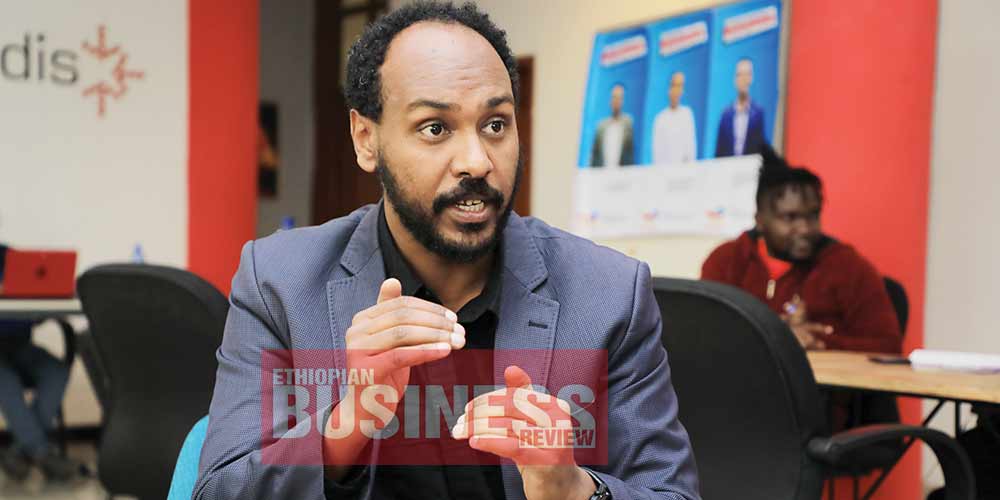
Markos Lemma is co-Founder & CEO of iceaddis, one of the early innovation hubs and tech startup incubators established in 2011 in Addis Ababa. He is also Founder of SelamCompany—an education technology venture working on primary education and literacy.
Through the years, Markos has focused on establishing the technology ecosystem and providing business consulting specific to information communications technology (ICT). His businesses support social innovations and startup initiatives of the young. He is doing these impactful works while also working as a program coordinator for a global study on literacy in Ethiopia.

Markos is also an advocate and advisor on entrepreneurship and innovation policy while being a member of the advisory board for the Global Innovation Gathering (GIG). He runs a variety of classes, vibrant tech scenes, and several tech events in East Africa. In this interview with EBR’s Addisu Deresse, Markos discusses the emerging landscape of startups in Ethiopia, looking at the challenges and opportunities ahead.


Coffee-Export-Success-Story-Overrated.jpg

Ethiopia has historically produced some of the best-reviewed single-origin premium coffee beans and boasts the status as the birthplace of coffee. Ethiopian coffees are well renowned for their complexity—strong, wine-like flavor and a very wild acidity. The cash crop remains the nation’s major export item covering over 30Pct of the country’s total export earnings. Various administrations have attempted to fully tap into the country’s full potential for coffee and other agricultural products. The launching of the Ethiopian Commodity Exchange (ECX) was one such attempt, seeking to secure a larger and fairer share for Ethiopian farmers. Recently, coffee exporters, particularly from the State of Oromia, have walked away from ECX to join the vertical scheme where farmers can export or sell directly to exporters or suppliers. With authorities crediting this move for burgeoning exports, there are more complexities at play, writes Selome Getachew.


The-Mainstreaming-of-Second-Hand-Apparel.jpg

As a result of ongoing inflation, more Addis Ababans seem to be resorting to second-hand stores, which are increasingly crowded with individuals who otherwise may not have thought to visit. Secondhand shopping takes up the customers’ time even if it could appear like a decent escape from the inflation-stricken pricey new garments, since many Thrift. Second hand products market is a huge industry globally generating income for millions and millions in taxes for governments. Faced with brutal inflation, Ethiopians are proud no more to visit second hand shops and to visit them more often. In this article, EBR’s Eden Teshome gives regional and global perspective on the growing second hand market particularly in the capital.


Inflation-Dictating-Metropolitan-Diet.jpg

As Ethiopia is being rocked by high inflation, the economic nightmare has affected people’s lives in many ways. As such, unaffordable goods and services in the capital are causing a change in lifestyles. A couple years back, buying food from street stands that serve food was frowned upon and was more frequented by daily laborers who work at construction sites or others working on streets—from shoe shiners to fruit vendors. The continuing rise in food prices, however, is driving even those with relatively better earnings to consider street food as an affordable alternative, writes EBR’s Trualem Asmare.


rophnan.jpg

The increased prevalence of single music tracks has diminished the prevalence of full music albums. However, those Ethiopian artists dedicating themselves to release the longer works are making significant impact. One tradition that seems to be on the rise along with the release of these music albums are the events that accompany them. It has now become common for artists to announce the release of their albums at lavish events. The latest addition to musicians employing expensive release events is Rophan—the young artist that has rocked the nation with his latest album called SIDIST. In this article, EBR’s Trualem Asmare tells the story of these album release events and their implication.


Open Letter to the Prime Minister and Government

On August 3, 2022, the Ethiopian government held its annual meeting to review the macroeconomic performance of the country. The session led by the Prime Minster assessed the country’s economic journey and performance in terms of GDP growth and other macro-economic variables such as inflation, employment creation, export, and investment promotion.

Despite higher inflation, incessant conflicts unfavorable to business, the practice of corruption, global recessions, and rapid population growth—which all have a negative relationship with economic growth—the Prime Minster declared that the country’s economy grew by 6.6Pct. That was considered a miracle and gave credit to the government’s plan and effort.


Environmental, social, and governance (ESG) considerations are playing an increasingly prominent role in business. ESG is now central to how firms in a wide range of sectors, including finance and asset management, define their purpose, mission, and strategy, and it is increasingly shaping hiring practices and regulatory activity. But whether the apparent embrace of ESG will deliver real progress remains to be seen.

The promise of ESG stems from an important proposition. The key challenges we face today – from achieving reasonable levels of equity and equality of opportunity to ensuring environmental sustainability – cannot be overcome by any single actor, not even the government. On the contrary, effective solutions will require all hands on deck, including business, government, finance, education, the courts, and the nonprofit sphere.


From March 1967 to July 1972, the United States military carried out Operation Popeye during the Vietnam war. The operation used a type of geoengineering which “seeded” clouds that rained on the Laotian Panhandle. No, this is not a fictitious or dramatic scene from Michael Herr’s Dispatches. Rather an actual action that married the agile technology of its time to a government operation for just over 5 years.


New evidence from two Kenyan counties shows that cash transfers and other income supplements reduce hunger, illness, and risk exposure during crises. Countries should consider building transfer systems that can be activated at short notice to help people weather unanticipated shocks.

When the COVID-19 pandemic and the resulting recession pushed 120 million people worldwide into extreme poverty in 2020, many countries relied on social-protection measures to cushion the blow. By May 2021, a total of 3,333 such schemes had been planned or implemented in 222 countries or territories.


Ethiopian Business Review | EBR is a first-class and high-quality monthly business magazine offering enlightenment to readers and a platform for partners.


2Q69+2MM, Jomo Kenyatta St, Addis Ababa

Tsehay Messay Building

Contact Us

+251 961 41 41 41