IFA.jpg

The Institute of Foreign Affairs (IFA), in collaboration with the Ministry of Foreign Affairs, held a high-level conference on Tuesday at the Sheraton Hotel under the theme “Exploring New Avenues: Economic Diplomacy as a Mainstay of Ethiopian Foreign Policy.”

The forum brought together leading government institutions — including the Ministry of Finance, Ethiopian Securities Exchange, Ethiopian Investment Holdings, Ethiopian Investment Commission, and the Ministry of Foreign Affairs — to discuss how to align foreign policy with Ethiopia’s economic ambitions.

Central to the discussions was the Homegrown Economic Reform Agenda, launched in September 2019, which aims to liberalize and modernize Ethiopia’s economy. Panelists explored how the reform program is positioning the country to better integrate with the global economy and attract quality investments.

In his opening remarks, IFA Executive Director Jafar Bedru stressed the need to shift diplomatic efforts beyond traditional political frameworks. “Our diplomatic engagements must transcend conventional paradigms and adopt a proactive, business-oriented approach — one that prioritizes investment and trade facilitation,” he said.

Ambassador Workalemahu Desta, Political and Economic Diplomacy Advisor, MoFA, acknowledged that while Ethiopia’s economic and business diplomacy is making progress, it still falls short of matching the opportunities created by recent reforms. He noted the growing global demand for competitive investment destinations, emphasizing Ethiopia’s strategic potential.

“Globally, production and labor costs are soaring. Multinational companies are actively seeking low-cost, stable, and business-friendly environments — and Ethiopia is emerging as a top destination,” he said.

Ambassador Workalemahu also underscored Africa’s growing strategic importance, pointing to the African Continental Free Trade Area (AfCFTA) as a transformative platform. “AfCFTA is unlocking a vast market for investors across Ethiopia. Additionally, our membership in BRICS and the New Development Bank enhances our positioning within the evolving global economic order,” he added.

Dr. Tilahun Kassahun, CEO of the Ethiopian Securities Exchange (ESX), highlighted the need to diversify Ethiopia’s financial landscape to sustain economic growth. He emphasized that beyond traditional financing mechanisms, both local and foreign private investors require access to alternative financial instruments such as portfolio investments. He mentioned that amid the launch of the capital market in Ethiopia, the Ministry of Foreign Affairs must attract investments from abroad as the old technical way of investment has changed to easy and Central Securities Depository. “Beyond simply counting how many remittance accounts are opened, a new key performance indicator (KPI) should be how many CSD accounts are created,” he added.

He also revealed that the capital market is expected to integrate with the interbank lending system in the first week of July. Just six months after its launch, the interbank market has already facilitated over ETB 800 billion in transactions, with daily volumes reaching several ETB billion, he reported.

This comes on the heels of the launch of a Diplomatic Guide for the Homegrown Economic Reform Agenda, unveiled on Monday by the Ministry of Foreign Affairs in collaboration with the Ministry of Finance, the Ethiopian Securities Exchange, and Ethiopian Investment Holdings.


as.jpg

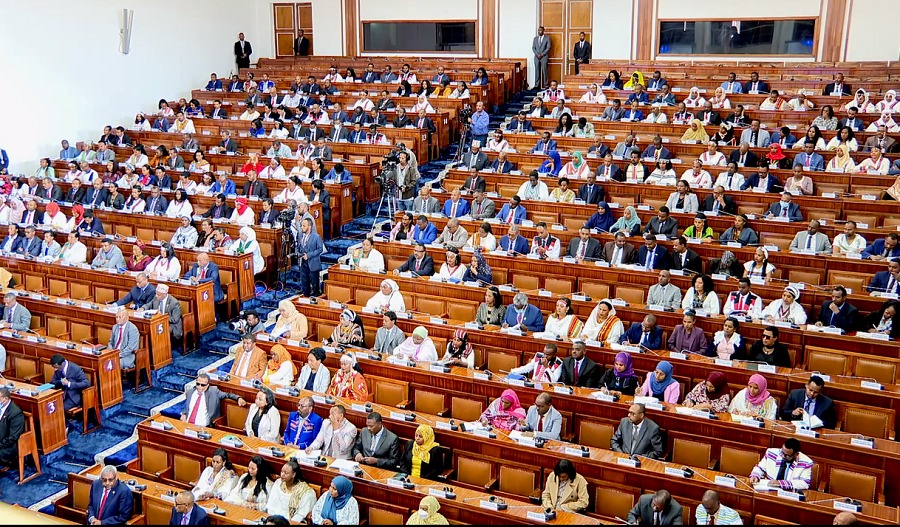
 The 35th regular session of the House of People’s Representatives began deliberations on Ethiopia’s draft budget for the upcoming 2025/2026 Ethiopian fiscal year.

Finance Minister Ahmed Shide presented the government’s proposal, outlining a record ETB 1.93 trillion budget. This represents a significant 34% increase compared to the previous year’s allocation. The minister justified the ambitious figure by citing substantial economic progress achieved during the current FY. 

In the budget speech, the Minister announced that ongoing macroeconomic reforms had successfully stabilized the economy, citing key achievements: an 8.5% economic growth rate, a sharp decline in inflation from 34.5% to 13%, and a record-high export revenue of $7.2 billion hailed as an unprecedented national milestone.

The finance minister detailed the government’s funding strategy for the proposed 2 trillion ETB budget. He projected that 1.5 trillion ETB (approximately 75%) would be sourced from domestic revenue streams combined with foreign aid and grants. The remaining balance, roughly 500 billion ETB, is expected to be covered through proceeds from government bond sales and securing foreign loans or credits.


photo_2025-05-02_09-16-49.jpg

Ethiopian Airlines has emerged as the leading player in Africa’s cargo aviation sector, now holding 35 percent of the continent’s market share, according to a new report by the African Finance Corporation (AFC). The airline has significantly expanded its annual cargo capacity, growing from 266,000 tons in 2016 to 715,000 tons by 2023.

The AFC report also highlights persistent gaps in intra-African air transport. In regions such as West Africa, European carriers continue to dominate cargo and passenger traffic. Kenyan Airways and Royal Air Maroc, the next closest competitors, together account for only 25 percent of the cargo market, signaling a sharp contrast in competitiveness.

The report commends Ethiopia and Kenya for using their national airlines to strengthen export trade and urges other African countries to adopt similar strategies. Ethiopian Airlines currently operates 16 dedicated cargo aircraft and serves 60 international destinations, with half located within Africa. The airline plans to expand its cargo fleet to 37 aircraft by the year 2035, reinforcing its long-term commitment to the sector.

In addition, the report praises Ethiopia’s advances in digital infrastructure, particularly in the rapid growth of telecom service users and the increasing adoption of digital technologies. These developments are positioning the country as a leader in Africa’s digital transformation.

Despite such progress, the AFC identifies weak infrastructure as a major constraint to the growth and competitiveness of Africa’s aviation sector. Addressing these limitations is seen as critical to unlocking further potential.

The report also identifies other high-potential sectors across the continent. These include mining, agriculture, logistics, and digital infrastructure. Ethiopia is highlighted as the top wheat producer in sub-Saharan Africa, with wheat cultivation rising from 5,000 hectares in 2018 to 650,000 hectares in 2023.


White-Minimalist-Economics-Headline-News-Instagram-Post-2025-06-09T121824.602.png

BitX, a global mining company has signed a Memorandum of Understanding (MoU) with Ethiopia Mining Farm, paving the way for cutting-edge AI-powered mining infrastructure in Ethiopia, according to Street Insider.

The agreement marks a significant milestone in BitX’s African expansion, introducing its flagship Bit-X V2 Accelerator into local mining operations. This AI-driven technology is designed to double mining efficiency without the need for hardware upgrades, offering a more sustainable and cost-effective approach to Bitcoin mining. Ethiopia is seen as a high-potential hub, thanks to its largely untapped energy reserves and increasing momentum in digital transformation.

BitX’s CEO highlighted that the partnership goes beyond efficiency—it aims to foster a more inclusive and decentralized Web3.0 mining model, where access and fairness are prioritized. Ethiopia Mining Farm officials echoed this vision, stating that the integration of BitX’s accelerator will significantly enhance their operational performance and global competitiveness.

According to the MoU, BitX plans to roll out its technology across 20,000 mining machines in Ethiopia by the end of 2025, with ambitions to expand across other African markets. A key part of this initiative is BitX’s Shared Accelerator Program, which allows global participants to invest in decentralized mining via AI-powered contracts, starting at just $100—making it accessible to a broad base of investors, including Ethiopians.

Unlike traditional mining models that depend heavily on hardware or low-cost electricity, BitX’s approach focuses on software optimization and energy efficiency, enabling emerging economies like Ethiopia to participate in the global Bitcoin mining economy without massive capital requirements.

With a proven track record in North America and Central Asia, BitX’s move into Ethiopia underscores a growing shift in global mining strategy, one that champions decentralization, smart technology, and environmental consciousness.


White-Minimalist-Economics-Headline-News-Instagram-Post-2025-06-09T092932.186.png

The governments of Saudi Arabia and Egypt have finalized plans for a landmark infrastructure project, a fixed link across the Red Sea that will physically connect Africa and Asia, according to Xtra Africa. Estimated at USD4 billion, the initiative, informally known as the “Moses Bridge,” is poised to become a catalyst for regional economic integration, cross-border mobility, and strategic cooperation.

First introduced in 1988 and revived by Saudi King Salman in 2016, the project will traverse the Strait of Tiran, linking Ras Hamid on the Saudi coast with Sharm el-Sheikh in Egypt’s Sinai Peninsula. After decades of political, environmental, and logistical hurdles, Egyptian Transport Minister Kamel al-Wazir recently confirmed that all planning phases are now complete.

Once operational, the Red Sea crossing is expected to significantly enhance trade, tourism, and religious travel between the two continents. Analysts forecast that the structure could facilitate the movement of over one million people annually, including thousands of African pilgrims traveling to Mecca. The project aligns with both nations’ broader economic visions, particularly Saudi Arabia’s Vision 2030 and Egypt’s regional development agenda.


DSC00751-1280x721.jpg

Kegna Beverages S.C has officially launched its flagship product, Kegna Beer backed by an impressive ETB 22 billion investment and the support of over 5,000 Ethiopian shareholders.

The grand launch, held at the Addis International Convention Center, was not merely a product unveiling. It was the realization of an eight-year journey marked by perseverance through foreign currency shortages, COVID-19 disruptions, and political turbulence. Yet, the company stood firm, fueled by what it calls a “collective vision” of economic empowerment and national pride.

“We passed through tough challenges, but we had strong backing from the community. From the first public announcement alone, we raised ETB 1.2 billion,” said Neway Megerssa, Chairman of the Board at Kegna Beverages and CEO of Sinqe Bank. With visible excitement, he also recalled the moment they submitted nearly 50 documents to the Development Bank of Ethiopia, secured ETB 7.12 billion in financing, and proceeded to purchase the machinery.

Derived from the Afaan Oromo word “Kegna” — meaning “ours” — the brand is an expression of public ownership and cultural identity. The company was founded under the principles of the “Oromo Economic Revolution”, an economic philosophy aiming to elevate regional prosperity through inclusive entrepreneurship.

During its formation, Kegna conducted extensive taste research across 20 cities, crafting a recipe tailored to Ethiopian preferences. The result: Kegna Beer, a premium lager brewed with local and internationally certified inputs, featuring 5% ABV and available in 33cl and 50cl bottles, as well as 30-liter kegs.

Situated on 110 hectares in Ginchi Town, Oromia Region, the Kegna Brewery is among the most advanced in East Africa, blending state-of-the-art global machinery with local engineering talent.

“From the water to the wheat, every ingredient is tested to international standards. Kegna is built with cost-efficiency in mind — one machine here can replace five traditional ones,” said Afework Legesse, Chief Operations Officer.

With a current production capacity of three million hectoliters, the company plans to double capacity to six million hectoliters within four years.

“This isn’t just made in Ethiopia – it’s made of Ethiopia. It’s a shared legacy,” said Abiyu Abera, Commercial Manager at Kegna Beverages.

Kegna Beverages is uniquely structured as a public share company, now employing over 250 people, with plans to grow its workforce to 1,000 nationwide. Its over 5,000 shareholders include individuals, cooperatives, and institutions from across Ethiopia — ensuring that the profits generated return to the communities that built it.

Kegna’s ambitions go beyond beer. As part of its multi-product roadmap, the company plans to introduce eight additional beverages, including water, juices, and soft drinks, in a bid to expand its footprint in Ethiopia’s fast-growing FMCG sector. Starting mid-June, Kegna Beer will be available at bars, butcheries, groceries, and restaurants nationwide. 


Jaquor.jpg

Jaquar Group, an international manufacturer of bathroom and lighting solutions, has officially inaugurated its flagship showroom in Addis Ababa, reinforcing its long-term commitment to Ethiopia through both business investment and community development.

Located on the first floor of the Joburg Building near Kazanchis Total, the new showroom is designed as a one-stop destination for Jaquar’s premium range of bath and lighting products, tailored to the needs of the Ethiopian market.

The launch event drew key industry figures, media, and stakeholders, offering guests an immersive introduction to Jaquar’s latest innovations and global design standards.

“This isn’t just about bringing our products to Ethiopia,” said Mr. Ricardo Lage, Business Head for Africa and Francophone countries at Jaquar. “Our aim is to be a partner in Ethiopia’s growth by helping build a skilled workforce, raising industry standards, and creating sustainable employment.”

Beyond commercial operations, Jaquar is investing in professional training and certification programs—particularly in plumbing to empower local technicians with in-demand skills. The initiative reflects the company’s focus on community upliftment through education and job creation.


Indmi.jpg


A new report commissioned by the Embassy of India in Addis Ababa highlights significant export potential for Ethiopian gemstones in the Indian market, while emphasizing the urgent need for investment in local processing infrastructure to fully unlock this opportunity.

Ethiopia, renowned for its rich deposits of opal, emerald, sapphire, and over 40 other gemstone varieties, has attracted growing interest from Indian buyers. However, the report reveals that the country’s gemstone exports remain largely underdeveloped due to the absence of cutting, polishing, and value-addition facilities. In 2022 alone, Ethiopia exported USD4.65 million worth of gemstones to India, with opal constituting over 98% of that trade. The vast majority of these stones were shipped in raw form, resulting in significant lost revenue opportunities and limiting Ethiopia’s competitiveness in the global gemstone value chain.

“Ethiopia’s gemstone potential is exceptionally promising,” the report states. “But without modern processing facilities, much of the value is captured abroad.”

India’s jewelry and gemstone industry, one of the largest worldwide, depends heavily on imports of uncut stones, which are then processed and re-exported globally. As India’s middle class expands alongside rising global demand for jewelry, Ethiopia could emerge as a key supplier—provided it enhances local processing capabilities.

Geologically diverse regions such as Wollo, Tigray, Oromia, and SNNP produce high-quality sapphire, emerald, tourmaline, aquamarine, chrysoprase, and quartz. The study highlights recent discoveries that have increased Ethiopia’s known gemstone varieties to more than 40, many of which align well with India’s sourcing requirements. With targeted investments, the report suggests, Ethiopia could secure a larger share of India’s high-growth jewelry market.

Despite the clear potential, the report identifies several structural challenges. The lack of domestic cutting and polishing centers forces exporters to ship raw stones, missing crucial value addition. Customs and export bottlenecks lead to prolonged clearance times, reducing trade volume and reliability. Additionally, Ethiopia’s inadequate certification systems hinder the ability of its gemstones to meet India’s import standards. Although India’s Duty-Free Tariff Preference (DFTP) scheme offers Ethiopian exporters a zero-tariff gateway to one of the world’s largest gem markets, low awareness among exporters and inconsistent quality control have limited its utilization.

To address these issues, the study recommends a comprehensive approach that includes establishing domestic gemstone processing hubs with Indian technical support, developing traceability and certification systems aligned with Indian import regulations, and encouraging joint ventures and skills exchange programs between Indian and Ethiopian companies. It also calls for streamlining export procedures to reduce bureaucratic red tape and enhance market responsiveness.

The Government of Ethiopia has expressed its support for such measures, recognizing the mining sector’s potential contribution to export earnings and job creation. “Strengthening gemstone exports is not just about trade—it’s about building local industries and creating value at home,” said Ethiopia’s Minister of Mines, Habtamu Tegegne, in the report’s foreword.


mice.jpg

Anbessa Travel has officially launched its Meetings, Incentives, Conferences, and Exhibitions (M.I.C.E) division. The new service was unveiled at a high-profile event yesterday, attended by senior government officials, international guests, and company stakeholders.

The expansion marks a strategic pivot for Anbessa Travel, aligning its services with global tourism trends and responding to growing international demand. The company also introduced a rebranded logo to reflect its evolving vision and broader operational scope.

Established 13 years ago, Anbessa Travel has swiftly grown from a travel agency into a diversified service provider, offering car rental, air ticketing, and medical and electrical import services. Its latest leap into the M.I.C.E segment is driven by the ambition to transform Ethiopia from a traditional tourist destination into a globally competitive events and conferencing hub.

“M.I.C.E is a sleeping giant,” said Tewodros Derbie, Policy and Strategy Advisor at the Ministry of Tourism. “Ethiopia is increasingly becoming a center for international conferences, thanks to venues like the Addis International Convention Center, Skylight Hotel, and the African Union headquarters. The government is committed to supporting private sector players like Anbessa M.I.C.E in capitalizing on this potential.”

According to Anbessa’s CEO, Mola Mihretu, the company’s M.I.C.E services go beyond logistics. “Incentive travel, for example, fosters team-building and goal alignment among travelers,” he said. “We are creating platforms where professional goals meet cultural discovery, turning every event into a transformative experience.”

To support its expansion, Anbessa Travel has invested ETB 1.2 million in an Enterprise Resource Planning (ERP) system developed in partnership with Ashewa Technology. The system enhances financial management and operational efficiency. The company has also onboarded new professionals equipped with intensive training and industry insights. As a member of international M.I.C.E networks, Anbessa expects to benefit from continuous knowledge transfer and global best practices.

Anbessa Travel is already a recognized player in the tourism sector. It was named Best Destination Management Company for Ethiopia in 2023 and holds Sustainable Tourism certification from the Netherlands-based institution Travel Life, becoming the first Ethiopian company to earn this distinction. Additionally, it received a Loyal Taxpayer Award from the Addis Ababa City Administration for the 2022/2023 fiscal year.


Big-5-Construct-Ethiopia-Talks-1280x853.jpg

Addis Ababa is set to host the 2025 edition of Big 5 Construct Ethiopia from 26–28 June at the Millennium Hall, alongside the inaugural East Africa Infrastructure & Water Expo. The dual events, officially endorsed by the Ministry of Urban and Infrastructure, are expected to serve as key platforms for business networking, knowledge sharing, and international collaboration within Ethiopia’s expanding construction and infrastructure sectors.

The upcoming Big 5 Construct Ethiopia and East Africa Infrastructure & Water Expo will feature over 230 local and international exhibitors showcasing construction and infrastructure solutions tailored to Ethiopia’s fast-growing market. Key industry players such as Jotun, NAFFCO, USG, and Emirates National Copper Factory will present high-quality products, while first-time exhibitors like Signify (Philips Lighting) highlight the sector’s expansion. Country pavilions from Germany, Türkiye, China, Italy, and India reflect strong global interest. The events align with Ethiopia’s major development projects—including the Grand Ethiopian Renaissance Dam, Mesob Tower, La Gare redevelopment, and Abusera International Airport—as the nation ramps up investment in transport, water, power, and ICT infrastructure.

According to Josine Heijmans, Senior Vice President – Construction at dmg events, “The launch of the East Africa Infrastructure & Water Expo alongside Big 5 Construct Ethiopia supports the government’s development vision by facilitating investment, knowledge exchange, and strategic partnerships.”

The event will also feature CPD-certified professional talks, including the Big 5 Talks, which will cover topics in architecture, project management, construction technology, and sustainable materials. New programmes, Infra360 and Water360, will explore actionable solutions for East Africa’s infrastructure and water challenges. An invite-only East Africa Infrastructure & Water Summit will convene policymakers, developers, and technical experts to discuss long-term infrastructure strategies.

East Africa Infrastructure & Water Summit, a premium, invite-only programme, will convene policymakers, project owners and technical experts to explore unique strategies and infrastructure development pathways for the region. “Urbanization across Ethiopia and the wider East African region is creating new business opportunities at an unprecedented pace. Big 5 Construct Ethiopia alongside the East Africa Infrastructure & Water Expo, will support and accelerate this growth,” concluded Heijmans.


Ethiopian Business Review | EBR is a first-class and high-quality monthly business magazine offering enlightenment to readers and a platform for partners.


2Q69+2MM, Jomo Kenyatta St, Addis Ababa

Tsehay Messay Building

Contact Us

+251 961 41 41 41