
Sub-Saharan Africa’s Strongest Growth in a Decade Faces New Threat from Middle East War, IMF Warns
EBR_News Apr 16, 2026
By Betegbar Yaregal
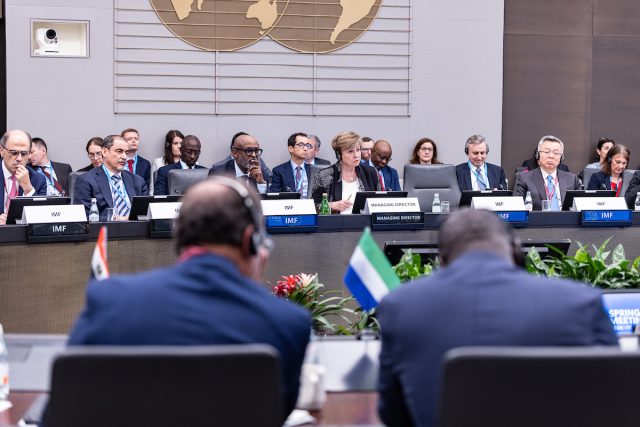
Sub-Saharan Africa entered 2026 with its strongest economic momentum in over a decade, achieving 4.5 percent growth in 2025, but the escalating conflict in the Middle East has clouded the outlook, forcing the International Monetary Fund to downgrade regional growth projections to 4.3 percent for 2026, 0.3 percentage points below pre-war forecasts, according to the IMF’s April 2026 Regional Economic Outlook released during the Spring Meetings in Washington.
Abebe Aemro Selassie, Director of the IMF’s African Department, highlighted that countries such as Ethiopia and Nigeria benefited from macroeconomic adjustments, including exchange rate realignments, fuel subsidy reductions, and strengthened monetary policy frameworks. These efforts contributed to improved fiscal positions, declining inflation, and stronger external balances across the region.
The Middle East war has triggered a major external shock, with oil, gas, and fertilizer prices surging alongside shipping costs. Trade with Gulf partners has been disrupted, while tourism and remittances are being squeezed. Financial conditions have tightened, particularly for fuel-importing countries. Median inflation is expected to rise to around 5 percent by the end of 2026.
The impact is highly uneven. Oil exporters will benefit from higher revenues but remain vulnerable to volatility and procyclical fiscal responses. Oil importers, particularly non-resource-rich and fragile states, including many in Sub-Saharan Africa, face deteriorating trade balances, rising living costs, and limited buffers. “The human consequences are almost certain to be severe,” Abebe warned.
According to the report’s statistical appendix, Ethiopia’s real GDP growth reached 9.2 percent in 2025, with projections of 9.2 percent for 2026 and 7.9 percent for 2027, maintaining its position among the region’s fastest-growing economies. Inflation has declined sharply from 30.2 percent in 2023 to 13.2 percent in 2025, with further moderation to 11.8 percent projected for 2026.
Ethiopia’s fiscal balance improved significantly, with the overall deficit narrowing from 4.2 percent of GDP in 2024 to an estimated surplus of 0.9 percent in 2025, one of the strongest fiscal turnarounds in the region. This reflects the impact of exchange rate reforms, subsidy reductions, and revenue mobilization efforts under the IMF-supported program.
The report notes that this latest shock comes on the heels of a sharp and unprecedented decline in official development assistance, which fell by an estimated 16 to 28 percent in 2025. Unlike previous episodes where aid flows tended to recover, current pressures appear more structural and are falling hardest on low-income countries and fragile states. Ethiopia, the Democratic Republic of the Congo, and Nigeria could face the largest losses in dollar terms, ranging between $240 million and $780 million each.
Abebe outlined near-term priorities: keeping inflation expectations anchored, protecting the most vulnerable through targeted time-bound support, and balancing fiscal credibility with flexibility. Oil exporters should treat windfall revenues as temporary and rebuild buffers, while oil importers must protect priority social and development spending while mobilizing domestic revenue.
Over the medium term, accelerating structural reforms is essential to unlock private sector-led growth. The report’s analytical chapter lays out concrete reform options, including improving governance, strengthening the business environment, and deepening domestic financial markets.
 Betegbar Yaregal