

 Michael Spence (PhD)
The post-pandemic economy’s high inflationary pressures are being powered in part by secular trends and forces, many of which are operating on the supply side. While there are also transitory factors – such as supply-chain disruptions and bottlenecks, and China’s zero-COVID policy – these presumably will abate at some point. But the secular trends are likely to lead to a new equilibrium in many economies and global financial markets.
 J. Bradford DeLong
On September 6, my book was published Slouching Towards Utopia, it’s economic history of the “long twentieth century” from 1870 to 2010. It is past time, I argue, that we shifted our understanding of where the hinge of global economic history lies.
Some might put it in 1076, when the European Investiture Controversy cemented the idea that law should constrain even the most powerful, rather than being merely a tool at their disposal. Another big year is 1450, when the arrival of the Gutenberg moveable-type printing press and the Renaissance set the stage for the Enlightenment. And then, of course, there is 1770, when the Industrial Revolution really got into swing.

 Ethiopian Business Review
Housing Prices Have Tripled in Less than Two Years
Buying houses from real estate developers incurs 15Pct Value Added Tax (VAT) and 6Pct title deed transfer fee on the actual price tag. Additionally, real estate developers take more time to deliver housing units which further escalates the cost of construction—ultimately pushing the price tag further up. The price of houses developed by real estate firms has further skyrocketed because of the price of finishing materials, which are almost entirely imported, have dramatically shot up by over 200Pct over the past couple of years. This is attributable to the worsening foreign currency shortage and subsequent rising exchange rates of major foreign currencies against the local currency.
This makes houses built by real estate companies over expensive for the vast majority of Addis Ababans. As a result, house buyers have been looking for affordable options.
Villas developed by unlicensed individuals have become one of the options. These players have lesser tax obligations and deliver houses for less in a shorter time span by using adhesives and other chemicals to shorten the curing time of concrete. For this and the curativeness of the business, they are mushrooming and becoming more active in the housing market.
As their number increases, there is fear that the market will become even more informal and out of the watchful eyes of the government. EBR explores.
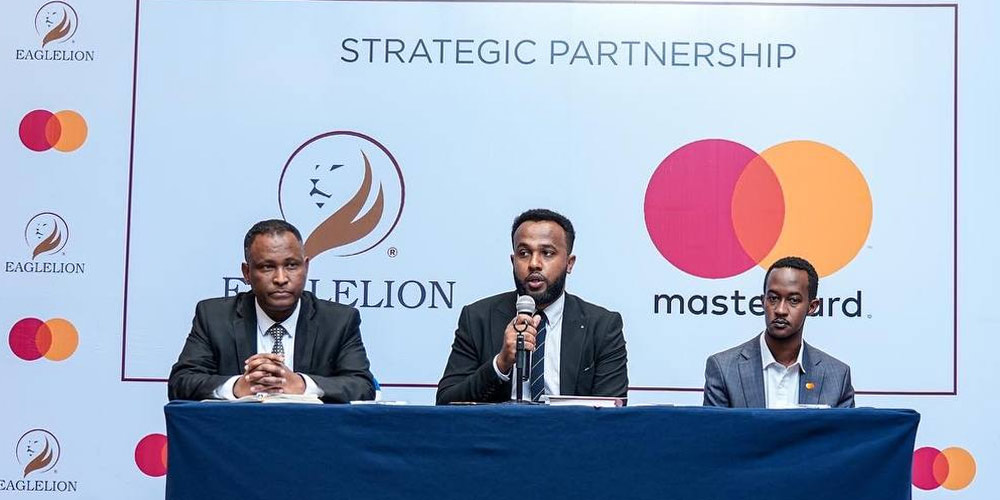
The global payments business leader, Mastercard Inc., has inked a partnership agreement with a local tech firm, Eaglelion System Technology.
MasterCard, a global payments company with a global reach that spans more than 210 countries, chose to collaborate with the tech firm to provide financial, technical, and advisory support on several products the firm developed.
Eaglelion has developed platforms with the monikers “Getrooms,” an accommodation search engine; “Get Fee,” which was unveiled in association with the state-owned Commercial Bank of Ethiopia; and “Dubepay,” a novel”buy now, pay later” consumer financing platform in alliance with Dashen Bank.
“In the age of the digital world, it is a matter of urgency to revolutionize and make Ethiopian finance system, thereby boosting the flow of remittances in the country,” said Bersufikad Getachew, founder of Eaglelions System Technology, whose fintech-based platform portfolio increased by more than ten in just two years.
“We are gearing up to launch the first continental financial summit with the aim to foster financial inclusion and regional economic integration,” he said.
Elfaged Aregahegn, the business development director for MasterCard in Ethiopia, Sudan, and Somalia, revealed that the cooperation deal will begin to be implemented in January 2023 and said that the corporation considers the relationship to be a game changer.
MasterCard is a technology company in the global payments business, renowned for developing advanced payment solutions and seamlessly processing billions of transactions around the world, with over 1.9 billion cards and 35.9 million acceptance locations in 210 countries and territories and 150 currencies.

South Africa, Ethiopia, and other African nations anticipate receiving a portion of a USD 40 billion fund from Vatican and UK businesses to help their economies and fund government development initiatives.
The initial benefactor from these companies may be Tanzania, which is now working on its two large-scale strategic projects, the Julius Nyerere Hydropower and Standard-Gauge Railway (SGR).

 Selome Getachew
The export sector in Ethiopia has been under scrutiny for poor performance for decades. As Ethiopia has not been a manufacturing hub as such, the criticism has been downplayed. Despite the number of investors who are seemingly interested in the export business, the country has also been struggling to export value-added items including its flagship coffee. Looking at the exponentially increasing number of exporters that joined the line of business in the last five years, one may think new entrants are helping the country’s success in global trade. Unfortunately, exporters are increasingly in the business to support their imports. And there are even more controversial activities in the field. Though the number of exporters and Dollars earned has shown significant increases, practices in the export sector are full of malpractice that that are hurting the Ethiopian economy, writes Selome Getachew.
Liberalization might increase prospects for foreign investment—it nurtures competition and improves efficiency. When trade and investment obstacles are lifted, businesses must engage in a more intense competitive field for market share. Resultantly, consumers will purchase goods and services of superior quality at lower prices. It can also inspire innovation and the improvement and efficiency of production methods of businesses. The ensuing cost savings may then be passed on to customers in the form of lower prices or better quality. A more prosperous firm then leads to increased tax revenue for governments.
Every year, the African Business Top 250 Companies charts the rise of innovative, strategic and resilient African businesses that straddle the continent, make huge profits and invest billions into Africa-wide strategies to seize future opportunities.
Telecommunications firm MTN Group soars from #13 to #4 on this year’s ranking after more than doubling its market capitalization to USD24.5 billion, up from USD11.1 billion in 2021.

 Bamlak Fekadu
Since the inception of the Organization of African Unity (OAU), the concepts of economic union and integration have existed without realization due to various factors including the similarity of goods produced, subpar infrastructure, and dissimilar legal systems, to name a few. Relative to other regions, the continent is primarily reserved to small-scale trading. Ethiopia, like many other African nations, enjoys such cross-border trade along its borders with neighboring nations. For many years, such trade has been treated as illegal, and the traders were nothing but contrabandists. Despite the significance of these trade points and the signing of framework agreements among neighboring countries, the severe lack of infrastructure and skills necessary to oversee the trade process has prevented countries from reaping the benefits of developed cross-border trade. Even though there are few improvements on the Ethiopian side in terms of setting up free trade zones and other infrastructure, ongoing security and natural challenges prevent this landlocked country from realizing the full potential of cross-border trade, writes EBR’s Bamlak Fekadu.

 Addisu Deresse
Yonas Admasu
Founder & CEO, Lovegrass Ethiopia
Yonas Admasu was born in 1968 into a rural farming family in northern Ethiopia. He graduated with a BSc in Electrical and Electronics Engineering from the University of Greenwich in London in 1996, after which he began his first job as an engineer—working on mobile technology at Chase Electronics. Thereafter, he continued his studies and received his master’s degree with distinction in Business and Information Technology in 2001.
As Yonas had always wanted to work in the banking and finance sector, he pursued further trainings in financial risk management and quantitative finance—becoming certified as a Financial Risk Manager (FRM) from the Global Association of Risk Professionals (GARP) in 2004. This paved his career towards working as a Support Analyst at the interest rate derivatives desk of the global banking giant BNP Paribas. He then proceeded to join the world-renowned investment banks JP Morgan and Credit Suisse, ascending to Vice President (VP) of the emerging markets division of the latter in 2013.
After having built a career that many would envy, Yonas decided to return home to start a health-food processing facility in 2015. Although this had always been a dream, his decision was triggered by an encounter that he had with teff products at a supermarket in Britain which were clearly not of Ethiopian origin.