In today’s interconnected world, businesses have increasingly sought opportunities beyond their national boundaries. Expanding into new markets and exploring investment prospects has become a viable option for companies looking to grow and thrive. While venturing into foreign markets can present challenges, several nations stand out as highly conducive environments for businesses and individuals alike. These countries offer welcoming business climates, robust infrastructure, stable economies, and supportive regulatory frameworks. Notably, Africa has emerged as a significant investment hub, with the continent experiencing impressive economic growth. Despite the presence of socioeconomic challenges, many African countries are rapidly evolving to become attractive destinations for business owners.


atletes-e1699555197254-1280x809.png

Ethiopia has a rich and proud history of athletic excellence, particularly in long-distance running. Ethiopian athletes have won 59 Olympic medals, including 23 gold in track and field events. This result is comparable to the 113 Olympic medals, including 35 gold, that neighboring Kenya has achieved. Ethiopia has a high altitude, which helps to develop athletes’ cardiovascular systems. The relatively cool climate is also ideal for training—the solid cultural emphasis on running also, in a way, prepares youth for athletics. Kenya’s dominance in the continent came mainly in recent years, since 2008. From the lack of infrastructure to poor administration and insufficient funding, Ethiopia’s athletics require a solid intervention to overhaul the sector, especially in short and medium-distance running, EBR’s Brook Genene reports.


Employment-1280x731.png

Examining the Ramifications of Not Opening New Public Posts

When the Ethiopian government announced its intention of not opening new posts in the civil service in the current fiscal year, the news shocked students and graduates. For many years, employment in the public sector has guaranteed a stable life. In a changing scenario now, public sector employment is no longer a guarantee for a decent income and regular life. In recent years, the salary and benefits of public sector employees have been minimal. At the same time, the working environment compromises professional freedom as more public sector roles have increasingly become political. That’s because successive governments used the civil service to reward their loyal supporters by offering employment.

For this reason, the civil service is already crowdedly staffed, many of whom need to be more skilled. It’s one of the reasons why the current government found it difficult to institute an efficient and corruption-free civil service. Like its predecessor, it, too, wanted to reward some of its loyal supporters by granting them employment in the earlier days of its ascendancy. However, due to a solid fiscal discipline needed to curb inflation, the government announced its intention of not opening any new posts last July. EBR’s Nejat Mohammed explores the ramifications of this policy.  


Historical Opportunity for Economic Self-Reliance

Last August, the 15th regular summit of the BRICS member states held their annual heads of state and governments meeting in South Africa. At the end of the conference, the BRICS group of nations invited six countries – Argentina, Egypt, Iran, Ethiopia, Saudi Arabia, and the United Arab Emirates to join the block. From the beginning of the following year, these six countries will join the current five members – Brazil, Russia, India, China, and South Africa. These countries were among the over 40 countries that expressed interest in accession.


G20-Wide-1-1280x509.jpg

Following the BRICS’ recent announcement that it will add Saudi Arabia, Iran, Ethiopia, Egypt, Argentina, and the United Arab Emirates, India faces a big strategic choice. Why should it belong to a China-centric club that will no longer share or serve its own interests, writes Arvind Subramanian, a senior fellow at the Peterson Institute for International Economics and Josh Felman Principal of JH Consulting.


Chinese-Economic-Slowdown-1-e1698320231123.jpg

With high debt levels and falling consumer and producer prices, China faces the prospect of a vicious cycle whereby lower demand leads to lower investment, lower output, lower income, and thus even lower demand. To avoid Japanification, policymakers must pursue aggressive aggregate demand stimulus, starting immediately. 


The Chaka Project, a development project on over 503 hectares of land in Yeka Sub-City leaning on Yeka hill of the Addis Ababa City Administration, has become a pivotal national project. The project, spearheaded by Prime Minister Abiy Ahmed, is part of a grand ‘Smart City’ Development endeavour that would cost more than 500 billion birrs. 


Arada-Building-1280x636.jpg

Addis Ababa’s Transformation Puts Heritage at Stake

Addis Ababa is undergoing a rapid transformation characterized by the demolition of heritage sites and reconstruction because of rapid urbanization. Unfortunately, this has come at a massive cost of erasing the city’s rich heritage. Heritage plays a vital role in defining a city, shaping its social fabric, preserving its history, and nurturing its cultural identity. Keeping the city’s urban heritage is often neglected or considered an inconvenience. The demolition of historic buildings and homes has sparked concerns among residents and preservationists alike. These structures hold immense architectural and historical value and serve as tangible connections to the past. The loss of these buildings deprives the city of its tangible heritage and diminishes its cultural character, writes EBR’s Eden Teshome. 


Kacha.jpeg

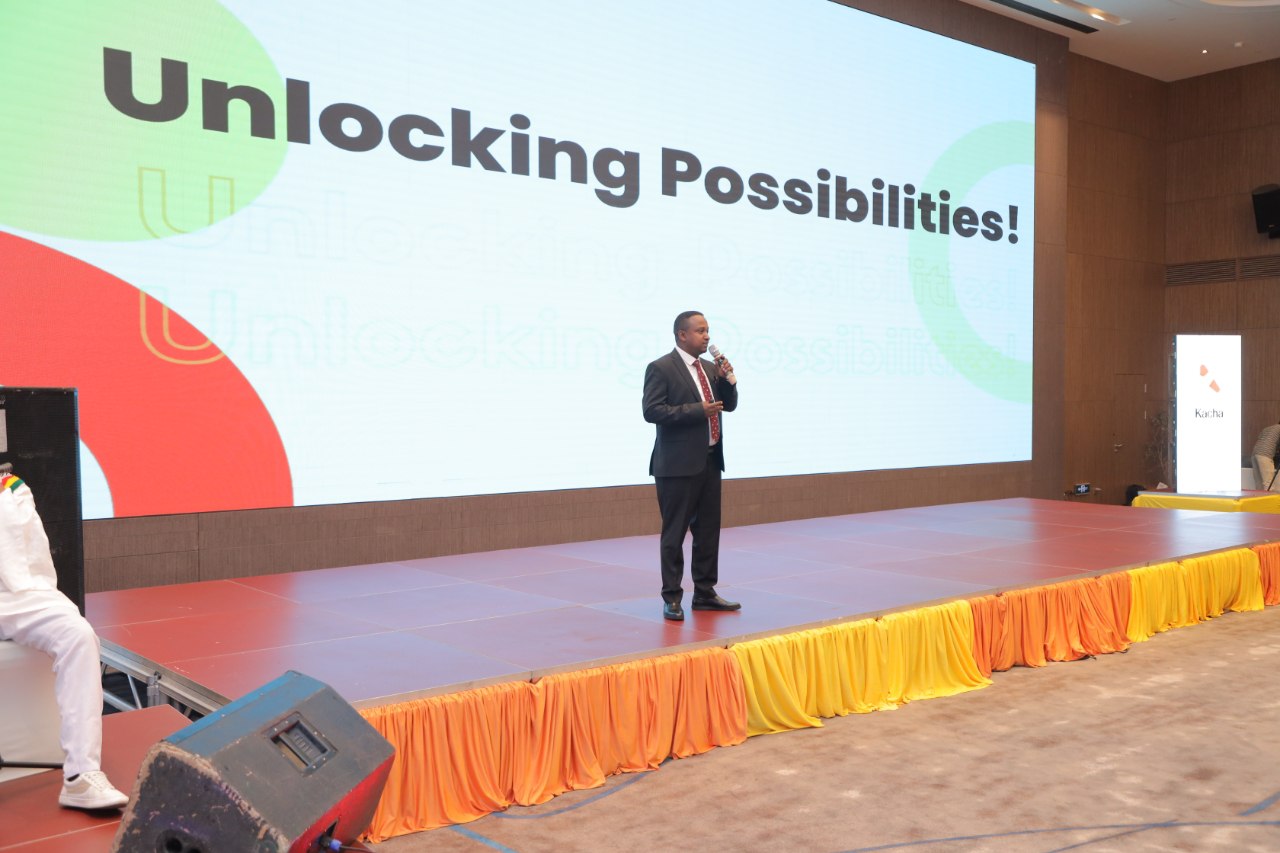
Kacha Digital Financial Services officially began full operations after an inauguration event held at the Skylight Hotel on the evening of November 19, 2023.

The event celebrated Kacha receiving license number PIL002/2022 from the National Bank of Ethiopia last month. This license allows the firm to provide digital payment and financial services commercially.

For the past eight months, Kacha tested its platforms and solutions on mobile networks in partnership with Ethio Telecom and Safaricom. Accessible via USSD codes, and Android and iOS apps, Kacha’s offerings are designed to expand access through digital channels.

Teshome Beyene, Kacha’s Board Chairperson, spoke at the occasion and stressed the company’s dedication to customer-centric innovation, robust data security, and privacy protection. Teshome stated that “Kacha’s goal is to provide our customers with a seamless and secure digital banking experience.”

In attendance at the Skylight Hotel launch were government ministers, diplomats, and heads of Ethiopia’s largest banks.

During the launching Abraham Tilahun, the CEO of Kacha Digital Financial Services S.C, expressed gratitude to the National Bank of Ethiopia for granting Kacha the license to operate as a private payment instrument issuer. 

Kacha demonstrated the features of its digital banking platform, highlighting usability, functionality, and security for customers.

Memorandums of understanding were also signed with strategic partners from the banking and fintech sectors. These aim to develop Kacha’s service ecosystem.

The inauguration marks the official commencement of Kacha’s full commercial operations. The company can now offer digital payment solutions nationwide following regulatory approval.



Fikiru-1280x683.jpg

Fikru Tsegaye Wordofa is a certified insurance and reinsurance professional with two decades of experience in the industry. Fikru has studied and completed three master’s degrees – business administration, human resources and organizational development, and journalism and communications. He also has two bachelor’s degrees, about a dozen certificates, and several high-level specialized trainings in finance, insurance, business and management. At the moment, he is pursuing a Ph.D.

Fikru is the executive officer of strategy and business development and secretary to the board of directors at the Ethiopian Reinsurance (Ethio-RE). He was an acting chief executive officer (A/CEO) of Ethio-Re between September 2020 to March 2021. He also worked as a business development and corporate affairs manager in Ethio-Re. Before joining Ethio-Re, he served as marketing and strategic management director, head of microinsurance, strategic management team leader, principal researcher, and principal customer care and underwriting and claims section supervisor at the state-owned Ethiopian Insurance Corporation (EIC). 

Fikru writes regularly for several magazines and Journals. He has contributed extensively to the world of insurance and reinsurance, and his publications appeared in various Business, insurance, and reinsurance Journals, magazines, and newspapers, including the Journal of African Insurance Organization (AIO), Organization of Eastern and Southern Africa Insurers (OESAI) and African reinsurance publications. 

Fikru is the recipient of various international and national awards and recognitions, including the 2020 Global “Emerging Professional in Takaful and Retakaful of the Year Award” at the African Interest-Free Banking and Takaful Awards, and the AIO Best Book Author, First Rank Award (2023) for his book entitled Islamic Insurance (Takaful) In Ethiopia. EBR has the privilege of discussing with Fikru the state of the insurance business in Ethiopia and how the worsening political instability, war, drought, accident, and COVID made life more uncertain than before and affected the insurance business in Ethiopia. 


Ethiopian Business Review | EBR is a first-class and high-quality monthly business magazine offering enlightenment to readers and a platform for partners.


2Q69+2MM, Jomo Kenyatta St, Addis Ababa

Tsehay Messay Building

Contact Us

+251 961 41 41 41