tigray-in-crisis.jpg

If there is a primary concern of governments in a modern state, it is the wellbeing and safety of its residents. At the heart of all the political turf-wars, reforms, revolutions, and fights, is the improvement of Society’s livelihoods. Nonetheless, the insecurity different social groups in Ethiopia face attests otherwise to the social contract.
Of all the social turbulences, none amount to the damages unleashed in the Tigrai region in northern Ethiopia. Regime changes have brought less for the ordinary people of Tigrai, usually mistaken for the elite rulers. After the lauching of military operations in the region, society has found itself between a rock and a hard place. EBR talked to victims, witnesses, humanitarians, and officials on the social crisis ongoing in Tigrai.


sleeping-giant.jpg

The revision of the existing proclamation regulating different level chambers has caught the attention of the business community. In its final drafting stages, it will largely concern the organization and running of Ethiopian businesses under different chambers and sector-based associations. However, the changes offered in the draft proclamation have garnered stiff reservations and displeasure from the private sector. EBR’s Ashenafi Endale explores the business community’s concerns on the draft proclamation.


woman-accelerating.jpg

Myriam Said, Digital Advisor to the prime minister, is the leading personality behind Ethiopia’s stride towards the digital economy. She coordinates initiatives implemented to advance digital technology throughout the economy, currently at an early stage of development. Myriam’s promotion to advisor to the prime minister in February 2020 came as a result of her dedicated work when serving for nine months as Director of the National Digital Transformation Program at the Ministry of Innovation and Technology. While working as a director, Myriam led a team of experts who developed Digital Ethiopia 2025, an inclusive strategy guiding Ethiopia’s journey from analogue practices where government, business, and social interactions took place in person, to a fully integrated inclusive digital economy and society where exchanges are made faster, cheaper, and more securely through digital technology.


Logistics-partial.jpg

Ever since Ethiopia became landlocked after losing its access to the Port of Assab three decades ago, international trade has remained the Achilles heel of Ethiopia’s economy. The country’s dependency on imports could not be matched by efficient logistics services. Numerous service providers fight it out on one major route, the Ethio-Djibouti route, though it’s primarily primed for the state-owned carrier.
Coupled with low support provisioned, the closure of the logistics sector to foreign investors has stunted its growth.
Following the partial opening-up of the sector since 2018, a number of global shipping groups and logistics service providers are inking deals with local firms. Though late, the move is highly expected to buffer financial and knowhow transfers, long and eagerly awaited for by local players. EBR’s Ashenafi Endale looks into the trophies that could be won and persisting gaps haunting local logistics operators.


foreign-companies.jpg

Daniel Zemichael, a father of three, is Founder and CEO of Freighters International, one of the biggest private shipping companies in Ethiopia. Established 35 years ago with ETB100,000 in capital, and growing to its current ETB20 million; Freighters International is the exclusive agent for Maersk, a Danish shipping company active in ocean and inland freight transportation. EBR sat down with the logistics guru, to converse on the expected impacts of recent governmental moves to allow foreign companies to own a minority stake in local logistics companies amongst other topics.


Fetching-Underground.jpg

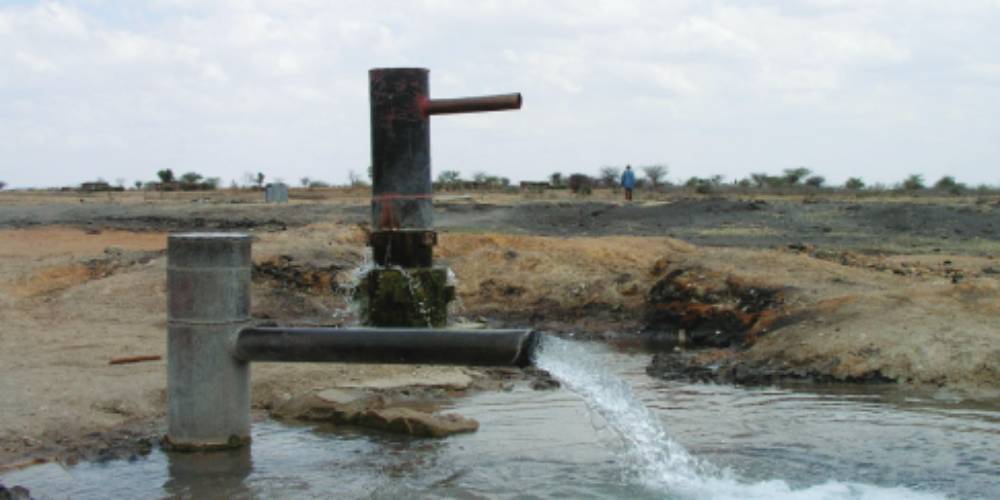
Ethiopia has vast water resources. However, only a fraction of the potential has been realized thus far. Access to fresh water is still a problem in both rural and urban parts of the country. Given the high population growth rate, Ethiopia should utilize groundwater for both agriculture and household use. However, little has been done to tap the huge groundwater resource in the country. EBR’s Mubarek Jemal reports.


Digital-Health.jpg

Digital health is the provision of health care services using digitized health recordings and electronic mechanisms. In developed countries, it evolved into an ecosystem where even surgery operations are remotely operated, or blood is delivered by drones at emergency spots.
But recently, physical distancing measurements introduced under COVID-19 increased the demand for digital health services even in developing countries like Ethiopia, where even the concept of digital health is at an early stage.
A number of medical graduates and computer engineers are teaming up to design applications to solve the completely manual health services of Ethiopia. Newly established startup incubation centers are also targeting idea creation, nurturing, and linking digital health innovators with investors. Nevertheless, they can hardly find financers as a startup, nor favorable support and policy environment from government. EBR explores the opportune moments knocking at the door for digital health innovators, and the monumental task ahead in digitizing Ethiopia’s health system.


afcfta-.jpg

Although the largest trade block, African Continental Free Trade Area, was officially operationalized on January 1, 2021, only Ghana has started tariff free shipments to south Africa and Guinea, so far. 

“surely other countries will start trading, as soon as the covid19 pandemic restrictions are lifted,” Brian Mureverwi, trade advisor at Department of Trade and Industry at African Union, told EBR.

However, Ethiopia is among African states that did not offer the types of goods and services it wishes to trade under tariff free, though it is among the 34 countries who ratified the agreement. Countries are expected to liberalize 90pct of the 5,708 items, to start trading. 

“technically we have analyzed which items we will liberalize now and which will be held as sensitive sectors, which will be liberalized in the course of the next 13 years. However, we are waiting for Ministry of Finance to approve the items. The ministry is reconsidering the offers, in terms of customs revenue loss, and competitive edge,” Muse Mindaye, Director of Trade Relations and Negotiation at Ethiopia’s Ministry of Trade and Industry, and member of the national negotiator team, told EBR.


Mobile-Internet-702x336-1.jpg

Connecting all of Africa to mobile internet by 2030 would add 5.5pct to projected economic growth of the region over the next decade, a latest report by Global System for Mobile Communication (GSMA) indicated. At the end of 2019, the economic benefits generated from mobile technology in Africa accounted for 6.2pct of the continent’s GDP.

Nonetheless, the report also revealed Africa allocate low spectrum but charge higher price.

African governments had licensed an average of around 80 MHz of spectrum per operator and 250 MHz per country, half less than the global average of 150 MHz assigned per operator and 480 MHz per country,

Yet, median prices of telecommunication spectrum in Africa are four times higher than in the developed world and twice as high as the global median. ‘This gap in spectrum assignments has emerged and expanded over the last decade, making it difficult for African operators to offer fast mobile broadband speeds.’

Despite continued progress with the expansion of mobile service and mobile internet connectivity, 50pct of Africans (680 million people) did not use mobile and almost 75pct (950 million people) did not access mobile internet services in 2019.

Ill-advised spectrum allocation policies are affecting spectrum fees operators pay to access spectrum, affecting development of telecom industry, particularly mobile connectivity, according to the report. ‘For instance, when spectrum is auctioned, governments can increase fees by setting excessive minimum prices (i.e. reserves), artificially limiting spectrum supply or creating uncertainty around the future availability of spectrum,’ states the report, which assessed 50 African countries against benchmark of 80 countries around the world, for 2010 to 2019 period.

The report indicated many African countries still have unsold spectrum, which could accelerate connectivity of 3G, 4G and 5G.

‘African governments should assign spectrum that is left over for use in the 900, 1800 and 2100 MHz bands, and further assign spectrum that facilitates 4G coverage expansion, including digital dividend spectrum (700 and 800 MHz bands), as well as capacity spectrum (2300 and 2600 MHz bands). Authorities should also plan to allocate mmWave spectrum, which will be required for 5G,’ recommends the report.


ministry-of-agriculture-and-ata.jpg

PM Abiy Ahmed (PhD) approved an initiative to establish the first agricultural bank in Ethiopia. The idea to create a specialized bank that serves the sector, was imbedded in the draft Agriculture and Rural Development Policy, which is revised and expected to be launched soon.

Though the idea was forwarded by Agricultural Transformation Agency (ATA), while the Ministry of Agriculture has initiated the move and is already in preparation to establish the agricultural bank, Chimdo Anchala (PhD), Senior Director for Production and Productivity at ATA, confirmed to EBR. “employees working in the agriculture sector, and also the private sector engaged in agricultural businesses will be the shareholders. many new banks are being established but none are specializing in agriculture.”

There are over 3,000 people employed in the sector, expected to be shareholders.

“Access to finance is big problem in agriculture. Capital is formed in agriculture sector but invested in other sectors such as construction. It is very difficult to access foreign currency even to import fundamental inputs such as fertilizer, although foreign currency is generated by exporting agricultural commodities. The new agricultural bank will solve these problems, especially in financing agricultural input supply,” said Mengistu Tesfa, Director of Agricultural Inputs and Market Directorate at the ministry.


Ethiopian Business Review | EBR is a first-class and high-quality monthly business magazine offering enlightenment to readers and a platform for partners.


2Q69+2MM, Jomo Kenyatta St, Addis Ababa

Tsehay Messay Building

Contact Us

+251 961 41 41 41