Atnafu-Gebremeskel.jpg

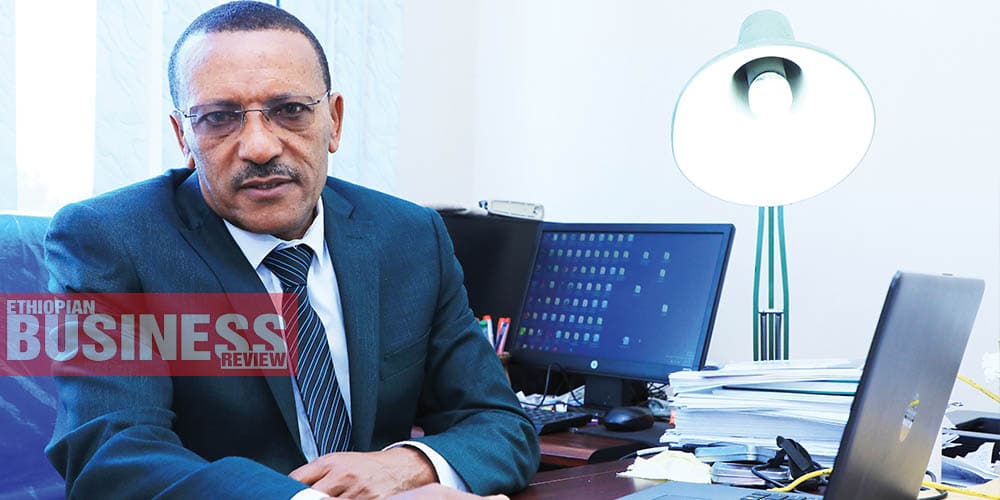
Atnafu Gebremeskel (PhD), is an Assistant Professor of economics at Addis Ababa University and an executive member of the Ethiopian Economics Association. In December 2020, he published a study entitled “Inflation Dynamics and Macroeconomic Stability in Ethiopia” in which he identified key sources of inflationary pressure in Ethiopia through the analysis of commodity price changes observed between 1997 and 2020. It became a timely reference and antidote as inflammatory inflation breaks loose since January.
Atnafu argues the actual permanent inflation rate in Ethiopia during the study time was 38.9Pct, driven by expansionary monetary phenomenon, though government has been underreporting inflation at 15Pct annual average. This problem of denial is keeping the solution at bay. Apart from the persistent as well as immediate causes, Atnafu stresses market responds by increasing price, whenever ineffective government is in charge. EBR sat down with the leading expert on Ethiopia’s inflation dynamism, conversing on his findings and its ramifications towards stabilizing current price hikes.


Housing-Debacle-.jpg

Addis Ababans spend two-thirds of their income on housing. Although there is an additional 250,000 units of new housing demand created every year in the city, only one third is supplied, mainly by government programs.
The contribution of private developers to Addis Ababa’s housing supply is limited to less than 5Pct. The property market is dominated by the land allocation policies adopted to fit only a few as well as the lack of finance and construction materials. Land supply is constrained to generate more revenue for the government, rather than as a vehicle to solve sheltering problems. The city administration is currently finalizing revising the land lease directive, expected to increase land lease prices by several fold.
Government is also devising new state-led property development schemes on state landholdings in the capital, despite inefficiency and resource wastage lessons garnered from condominiums.
In a bid to outmaneuver the land supply grip, private developers are exploiting possibilities in partnering with individual landlords, who contribute their land, to jointly develop apartments and villas. This arrangement has also been picked up by the government which is offering its federal landholdings in the capital to partner primarily with foreign developers to build complexes for housing, business, education, health, and leisure. EBR’s Ashenafi Endale navigated newly surfacing housing options.


pharmasy.jpg

Modernizing and transforming agriculture has been a generational effort skewed in the wrong direction. Production and productivity have been government’s mottos for decades, only to remain lip service. Practically, the farmer’s decision-making power has been overruled by the government with the use of extension programs. Government was not brave enough to consider the farmer as a private and for-profit actor due to political reasons.
As a result, the supply of agricultural inputs, consultancy, and technologies have been monopolized by the government and its extensive extension program. From importation to distribution, from improved seeds to fertilizers, from veterinary drugs to technologies, the agricultural input supply market is monopolized by inefficient state-owned enterprises with the partial involvement of local governments.
Affordable agricultural input is particularly critical for Ethiopia, where the land has been ploughed for millennia. Ethiopia’s small-scale dominated agriculture, where farmers’ per capita land area has diminished to just less than a hectare on average, requires intensive input use to achieve productivity. However, this cannot be achieved when the government is running an inefficient agricultural input market business. Over the last few years, the private sector has been highly interested in installing modern agricultural input shops as a viable business. EBR’s Ashenafi Endale explores the growing potential of private one-stop agricultural input shops in replacing government’s incapacitated role in agriculture.


Lensa-Mekonnen.jpg

Lensa Mekonnen is assigned to lead the Land Bank and Development Corporation (LBDC), the latest SOE established just eight months ago. The corporation audited 3,700 hectares of landholdings under federal institutions and enterprises—constituting 5.2Pct of Addis Ababa’s 54,000 hectares.
The corporation has embarked on a state-led property development endeavor and is already attracting world-class developers and financers towards developing housing projects, convention centers, seven-star hotels, tertiary hospitals, and specialized education centers on 30 prime locations identified in Addis Ababa, including the redevelopment of Ghion Hotel. The LBDC will indulge in a minimum 20Pct equity share in the projects, to be developed under a build, operate, and transfer PPP modality. The corporation has also identified government districts where public institutions will be relocated to in a clustered fashion.
Given the land scarcity in Addis Ababa, LBDC’s efforts are a relief for investors with cash looking for prime locations, although Lensa says international developers are given priority. Yet, her agility in availing public holdings to private developers is showing results faster than previous governmental processes towards land provisioning, where land is owned by the public and government and is very scarce as hens teeth in the market.


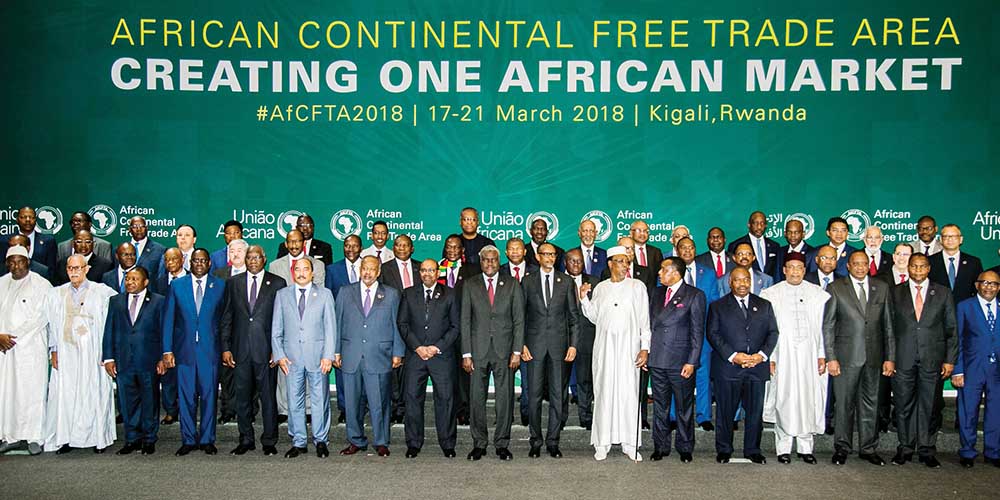
African-continental.jpg

Despite the COVID-19 pandemic and other teething problems, African countries opened their markets in January 2021 under the African Continental Free Trade Area (AfCFTA). The new market, which allows for the duty-free trade of goods and services across borders, is expected to lift up to 30 million Africans out of extreme poverty. It is also expected to boost intra-African trade, promote industrialization, create jobs, and improve the competitiveness of African industries on the global stage. However, the new trade block is encountering problems from its birth. African countries, fearing trading through AfCFTA will immensely cost their economies, are retreating. In fact, more than 20 African nations, including Ethiopia, have not fulfilled necessary requirements to start trading under the agreement. EBR’s Ashenafi Endale explores.


National-Bank-of-Ethiopia.jpg

The National Bank of Ethiopia introduced a new threshold for banks’ minimum paid up capital, raising the bar to ETB5 billion, up from the current ETB500 million. Existing banks are given five years grace period to meet the new threshold, while new banks in seven years, according to Frezer Ayalew, Bank Supervision director at NBE, who said the letter is just dispatched for the commercial banks.


iron-ore.jpg

The first private iron ore mining plant is to kick off in Mekaneselam, Wollo Zone in northcentral Ethiopia. Agodo YO is investing between USD150 and 200 million to install a medium-scale iron ore processing plant using the close to 200 million tons of ore discovered in Mekaneselam. Agodo YO is a sister company of C&E Brothers Steel Factory, engaged in rebar production since 2008. 


gold-altin-e1565705927353.jpg

Ministry of Mines and Petroleum agreed to renew Midroc’s Legedembi Gold Mining license. Midroc Gold is expected to resume production in the next two years.

“Midroc is allowed to start running its mining plant in Legedembi. However, local people who were affected by the project previously must be compensated and reach agreement on how the community get a lasting benefit. Plus, the project cannot resume immediately now, because Midroc has to maintain its machineries, which has been idle,” Frehiwot Fekadu, communications director at MoMP, told EBR.


house-of-peoples-representative-new-logo.png

The House of People’s Representative ratified revised Commercial Code of Ethiopia. The revised code featured various new articles ranging from types of business licenses, online registration and closing, taxation and renewal procedures, ecommerce, trade competition practices, arbitration and tribunals, among others.


IMG_20210325_151855_096.jpg

Sunpay Solutions Plc becomes one of the first two companies requested license from the National Bank of Ethiopia to operate their own Point of sales (POS) and ATM machines. Established with ETB100 million, Sunpay has planned to deploy 60,000 POS machines. The company is also in preparation to launch a digital financial service. The sister company of sunshine Investment Group that includes sunshine construction, planned to start operation by July 2021.  


Ethiopian Business Review | EBR is a first-class and high-quality monthly business magazine offering enlightenment to readers and a platform for partners.


2Q69+2MM, Jomo Kenyatta St, Addis Ababa

Tsehay Messay Building

Contact Us

+251 961 41 41 41