Mechanizing-.jpg

As Ethiopia’s most important sector, agriculture is a fundamental component in addressing the country’s development challenges. While agricultural output is improving, there are still major gaps in productivity that mechanization can help bridge. And while the benefits of mechanization are immense, the introduction of automated farming processes in Ethiopia has been limited. EBR’s Ashenafi Endale explores the issue and highlights the efforts taken to improve the situation.


khat.jpg

Cursed Business, Blessed Money

Khat has become one of Ethiopia’s most lucrative exports, recently surpassing even coffee. However, the impact of Khat becoming more profitable is that farmers are starting to steer away from traditional staple crops in favor of growing it. Even so, the government still doesn’t have a cohesive strategy or supports to ensure that the country is getting the greatest possible benefits, as EBR’s Ashenafi Endale explores.


Construction-Burden.jpg

Until recently, the construction sector has been instrumental in catapulting the nation to higher levels of development. The sector has been catalyzing the burgeoning of all the economic sub sectors such as modern agriculture and manufacturing. However, the construction sector is slowing down nowadays due to various factors such as political unrest and shortages of construction machineries as well as scarcity of finance and hard currency. On top of this, the sector is now confronting another hurdle: shortage of skilled manpower available to handle the maintenance and repair of construction machineries, as EBR’s Ashenafi Endale explores.


bank_in_ethiopia.jpg

Cut throat Price Competitions, Low Capital Base, & Poor Policy Threaten their Growth

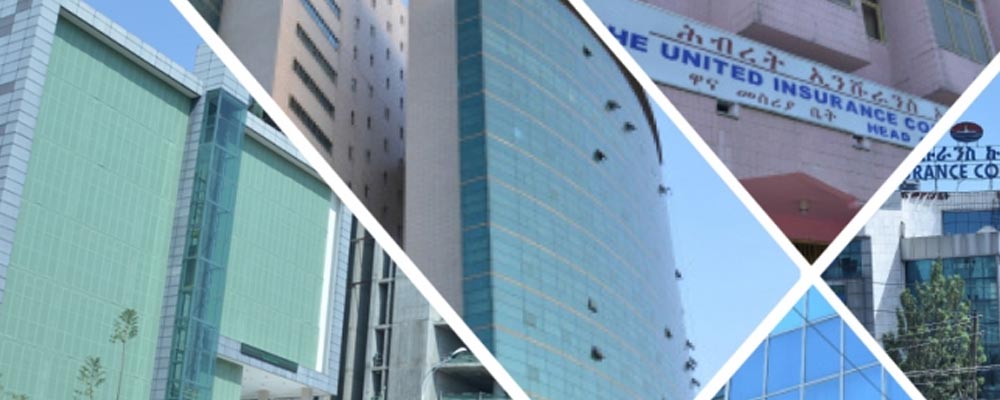
Insurance is one of the key pillars of a modern economy. It contributes to mobilize savings, transfer risks and reduce financial losses.

The history of modern insurance in Ethiopia, especially the private sector driven one, is at its early stage. However, the sector is crippled with lack of innovative products and services. As a result, the industry lags far behind several African countries. The sector’s growth, especially in recent years, is marred with rising claims and declining premium rates. The stiff price based competition in the market contributed to this situation. EBR’s Ashenafi Endale explores the issue to offer this report.


cotten_ebr.jpg

Cotton, a natural fiber, has been grown in Ethiopia for millennia. However, the local production hardly satisfies the demand of textile industries in the country. This is despite the fact that a total of three million hectares of suitable land, which is equivalent to that of Pakistan’s, the fourth largest cotton producer in the world, is available in the country. To reverse the situation, Ethiopia recently started experimenting with Genetically Modified (GM) cotton variety known as BT cotton. 

GM cotton varieties have proven to be successful in India, China, Pakistan and US. Currently, 25 million hectares of land is cultivated around the globe with this variety. Ethiopia is moving in the same direction. However, there is a recent development in which growers’ of the commodity are reverting back to locally improved cotton seeds. EBR’s Ashenafi Endale has delved into the matter and spoken to researchers, policy makers and industrialists to offer this report.


Finishing-Housing.jpg

The buildings sub sector in Ethiopia is booming because of increased private and public investment on projects such as private housing and commercial edifices. The growth of the buildings sub sector has caused skyrocketing demand for construction materials especially on finishing materials such as wood, ceramics, paper, glass, plastic and metals as well as finishing mortars and concretes. Despite the surge in demand, the country is unable to produce enough materials locally to satisfy the demand leaving house developers and contractors with imported items and escalated prices. EBR’s Ashenafi Endale explores the extent of the problem and some of the attempts taking place in the country to substitute imported finishing materials locally.


paper_factory.jpg

As the Ethiopian economy began to significantly expand in the last fifteen years, the demand for paper and paper products has also witnessed huge growth. In 2016/17 the demand for paper was 219,840 tons. However, the country managed to satisfy only 18Pct of the demand. The balance has always been matched by imports.

There are six companies currently engaged in the production of rolls of paper sheets from pulp and recycled paper. Although a small number of companies operate in the paper conversion sector, there is no paper mill company in the country. As a result, the country spends millions of scarce hard currency to import paper products. EBR’s Ashenafi Endale explores the issue to offer this report.


Smart-Gain.jpg

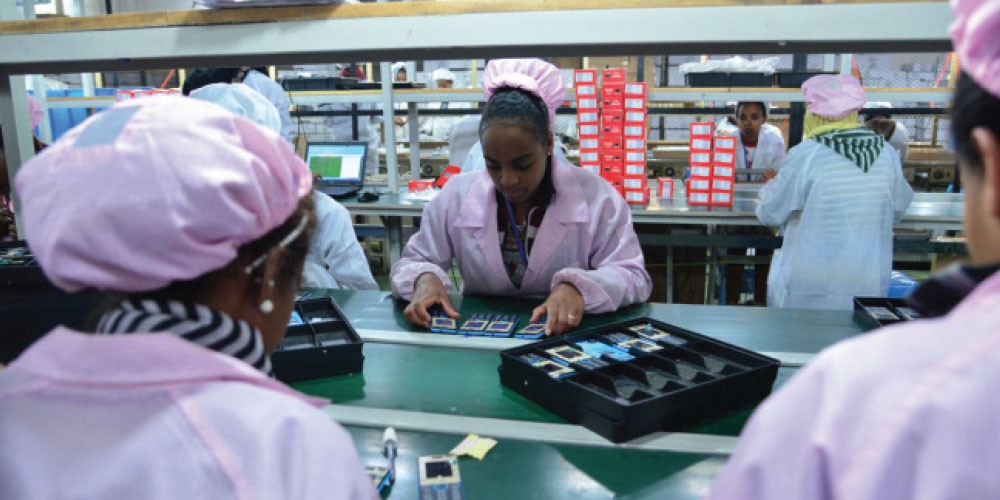
The electronic sub sector is a vital element of the global manufacturing industry. One of the components of the sub sector is the thriving mobile phone production. Despite having a short presence, the sub sector in Ethiopia is performing better, in terms of foreign currency generation, than other manufacturing sub sectors that receive significant government support such as textile and leather. EBR’s Ashenafi Endale spoke with stakeholders about the promise and challenges facing the sector.


Ethiopias-Barren-Esque-Gold.jpg

Because of its geological formations, Ethiopia is endowed with extensive mineral resources such as gold, platinum, niobium, tantalum, nickel, copper, chrome, and manganese, among others. However, the sector is ploughed with a number of challenges that calls for policy interventions. As a result the contribution of the sector to the overall development of the country is low compared with its potential. Especially in recent years, the role of the industry has been declining in export revenue generation. EBR’s Ashenafi Endale has consulted research, authorities and insiders to understand the reasons.


Ethiopian Business Review | EBR is a first-class and high-quality monthly business magazine offering enlightenment to readers and a platform for partners.


2Q69+2MM, Jomo Kenyatta St, Addis Ababa

Tsehay Messay Building

Contact Us

+251 961 41 41 41