
drown_60.jpg

The Growing use of Drones in Ethiopia

The growing use of drones in cinematography is helping to increase the quality of Ethiopian-made films and music videos. However, the laws that govern the import and usage of drones are vague, with many people not aware of the agency that is responsible for regulating them. Many people have even been forced to return the drones they bring in from foreign countries. This has led to smuggled drones becoming the most available on the market. EBR’s Ashenafi Endale looks into the effects that unclear regulations and strict follow up by security forces have on those who work with drones.



sociyt_60.jpg

Can Ethiopia Eradicate Malaria By 2030?

Malaria has been a long reaching challenge for Ethiopia. The state of Afar is one of the areas affected by malaria. About 28Pct of the population of Afar is currently infected with a mosquito-borne infectious disease. To avert the situation, a campaign launched by USAID has been streamlining the distribution of bed nets to at-risk areas including Afar. Other campaigns have also been putting a dent in the prevalence and spread of malaria in the country. However, the fight against the disease is still far from over, as EBR’s Ashenafi Endale reports.


Giveaways-or-stimulus.jpg

The Dilemma Behind Investment Incentives

Many emerging economies like Ethiopia use tax incentives to offset hindrances in the general tax system and as a counterbalance to disadvantages that investors may face. This includes bureaucracies, a weak administration and lack of infrastructure. However, the benefits of such a system have always been questioned by scholars. In Ethiopia’s case, many organizations, including the IMF, have indicated that generous tax exemptions and incentive packages for local and foreign investors present a major challenge to the country’s tax administration system. Just in the first half of the current financial year, over ETB34.2 billion was relinquished to beneficiaries under the duty free scheme, accounting for 37Pct of the nation’s tax revenues. While the figure is mounting year after year, various institutions such as the Federal Ethics and Anti Corruption Commission are signaling incentives’ exposure to misappropriation and corruption. Meanwhile, the government is attempting to enforce proper usage of incentives, and has established a separate office to handle such privileges and prevent abuses, as Ashenafi Endale, EBR’s Staff Writer report. 


Alemayehu-Gelagay.jpg

Alemayehu Gelagay’s books are known for highlighting the least visible members of society: the poor, the elderly, criminals; lifestyles he himself witnessed growing up. Now, with the release of his book “Meleyayet Mot New,” Alemayehu is turning his attention to the national level, encouraging people to look to what unites them, instead of what divides. EBR’s Ashenafi Endale sat down with the author to discuss his views on art, life, and unity.


Medicine-Shortages.jpg

The horrific reality facing patients

Patients with critical illnesses are finding themselves in serious predicaments after the recurring foreign currency shortage began to affect the manufacture and import of medicines. Families are being increasingly forced to turn to unregulated informal market sources to find life-saving medicine now, even as importers and health institutions look for solutions to the problem. However, it may be easier said than done. EBR’s Ashenafi Endale explores the causes of the shortage and what awaits patients in the future.


semera_.jpg

Semera, the capital city of Afar regional state is a microcosm of the region. Growing construction and rising populations are propelling the young capital into the modern age. Investment potential, natural history and other assets are pushing people towards Semera. However, there are still roadblocks ahead for the young city. The reluctance of investors, lack of foreign currency and (growth notwithstanding) a small population, threaten to slow the massive potential that the city, and the regional state as a whole, have. EBR’s Ashenafi Endale was on the scene to explore this growing hub.


qodana_leto.jpg

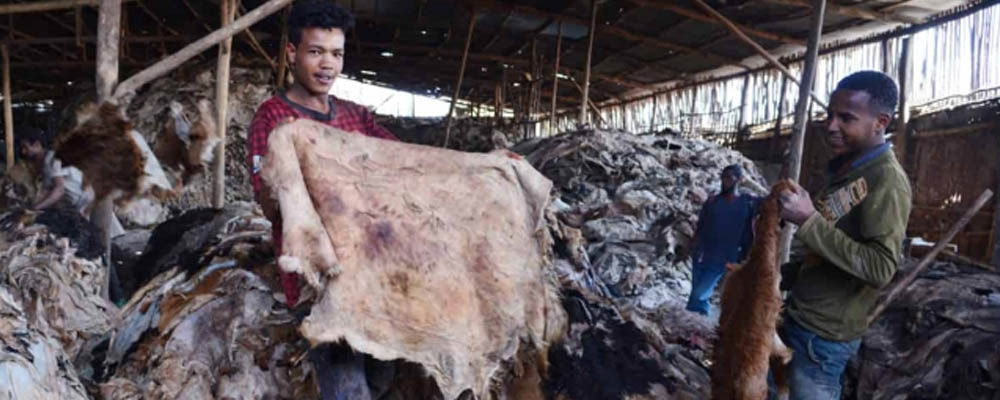
In 2012, the Ethiopian government introduced a 150Pct export tax on hide, skins, and semi-processed leather products in order to encourage local value addition. The following years saw an increase in export revenues from finished leather products. Although the introduction of the tax created an opportunity for tanneries and leather factories by making a large amount of hide and skin available for the local market, a significant percentage of the raw materials available in the local market still remain unused. EBR’s Ashenafi Endale explores the reasons behind this.


Foreign-Currency.jpg

In the first six months of the current fiscal year, the Ethiopian Revenue and Customs Authority (ERCA) collected ETB90.8 billion, which is 83Pct of the target set for the period and 39.5Pct of the target set for the current fiscal year. Officials stress that a growing number of taxpayers are declaring losses or no income on their annual income tax report and Value Added Tax (VAT) refund. Businesses argue that this is due to the slowdown of economic activities attributable to the scarcity of foreign currency, and recent political unrest in the country. Several companies claim that their sales turnover is declining while overhead costs rise, ultimately affecting their capacity to pay taxes. EBR’s Ashenafi Endale explores the situation. 


Tsedenia.jpg

Since 1826, Pittards has been making high quality leather in England. The company set foot in Ethiopia in 2009 when it took over the management of the state owned Ethiopian Tannery. Two years later, the company bought the factory and started supplying leather to the four companies under Pittards Products Manufacturing (PPM). EBR’s Ashenafi Endale sat down with Tsedenia Mekbib, managing director at Pittards Ethiopia, to learn more. 


Solomon-Kidane.jpg

Several attempts have been made by the Addis Ababa City Administration to solve the severe transportation problem in the city. However, the roads are still clogged with traffic congestion and the problem has been worsening by the day. EBR’s Ashenafi Endale sat down with Solomon Kidane (PhD), head of the City Road and Transport Bureau to learn the root causes of the problem and what the administration is doing about it.


Ethiopian Business Review | EBR is a first-class and high-quality monthly business magazine offering enlightenment to readers and a platform for partners.


2Q69+2MM, Jomo Kenyatta St, Addis Ababa

Tsehay Messay Building

Contact Us

+251 961 41 41 41