abay-sime.jpg

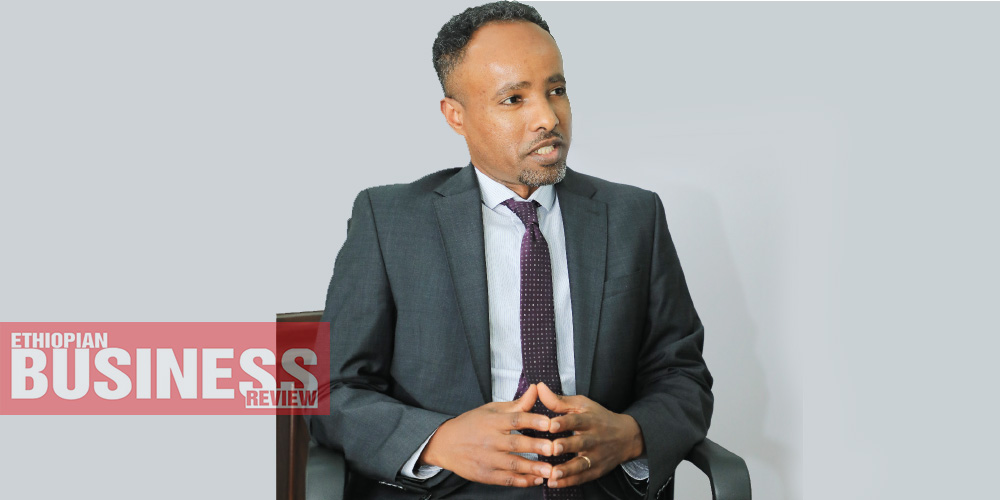
With 18 years of financial sector experience under his belt, Abay Sime is Director of the Online Banking Department of the Bank of Abyssinia, which has over 6 million customers and 1,078 automated teller machines. The bank’s recent growth shows a doubling of its deposit base from ETB32 billion to 82 billion within the past year. The number of customers has also blossomed to its current 6 million. Yet, wide-ranging inclusion remains difficult owing to a variety of reasons, key of which is financial and digital literacy to which he recommends institutionalizing the matter in the nation’s education curriculum. EBR had an audience with Abay, who also argues that banks are competing for the same pie rather than reaching out to unbanked societies.


financial-sector-strives-to-serve-communities-with.jpg

Financial Sector Strives to Serve Communities with Special NeedsIt has been one hundred years since Ethiopia witnessed the first bank that served as a whistle to the launching of the Ethiopian financial sector. Now, with 19 banks and USD20 Billion in assets, the banking sector still falls short in serving special needs communities including the visually impaired. Private financial service providers need to go the extra mile and effort in tandem with the regulatory body which needs to create an environment that encourages innovation for a wider scope of inclusiveness in the financial sector, writes Bamlak Fekadu.


The-Sluggish-Football-Intermediaries-Market-in-Ethiopia.jpg

Sports agents—legal representatives of sportspeople—facilitate contracts and generally consult players and act as middlemen dealing with club management. Globally common, these actors would like to dab into the growing largess of money circulating in Ethiopian football. Yet, reluctance from both players and club management has made their situation difficult. When properly done, football intermediation could lift all boats in the sector, writes EBR’s Abiy Wendifraw.


The recent coordinated move by the Biden-led US government and its Western allies against the Ethiopian people has proven, once again, how far they will go in their attempts to restore their fading global hegemony.
It is no surprise that Ethiopia, a sovereign nation with a history of independence and resistance to colonial authority, is considered a threat to the status of the Western block.

Ethiopia has always been a strong symbol of African liberation and freedom. Because of this status, the West and other global powers believe that leaving Ethiopia’s power unchecked sets a dangerous precedence for the rest of Africa and black people everywhere.


The African Continental Free Trade Area (AfCFTA), launched on January 1, 2021 has been hailed as a “game changer.” By bringing together 55 countries – with a total population of 1.3 billion and a combined GDP of USD3.4 trillion – in a single market, many believe AfCFTA could fuel Africa’s recovery from the COVID-19 crisis, spur structural transformation, and drive rapid industrialization. The World Bank estimates that trade integration could raise Africa’s income by 7Pct by 2035, lifting 30 million people out of extreme poverty.
Those are lofty expectations. Unfortunately, lowering trade barriers alone will not enable Africa to fulfil them.


abdiaziz-hassan.jpg

Abdiaziz Hassan,
CEO, Rays Microfinance

Having grown up in eastern Ethiopia’s Somali Region, a group of six men observed potential in the community that raised them. They saw a zeal for trade and an awareness that embraces technological change and other dynamics. In 2014, they would set out to establish Rays Microfinance to tap that potential and turn it into profits. Having been licensed by the National Bank of Ethiopia, Rays was sabotaged by the region’s previous administration and did not make it into the financial sector. With the coming of the new administration, the company launched its services in 2020 and the founders are marching towards their ambitious goal of realizing a totally cashless society in Somali Region and beyond. EBR’s Addisu Deresse sat down with Abdiaziz Hassan, Chief Executive Officer of Rays, to talk about the journey, challenges, and prospects of the institution and the financial sector in general.


Wello-Livelihoods-Lost-in-Fire.jpg

Ever since federal troops left Tigray in June 2021, the battleground of military engagement between the federal government and regional powers in Tigray has shifted. As Wello, particularly North Wello Zone, of Amhara Region has become the new stage for war, tens of thousands of livelihoods have been lost while economic activities in the various towns is nothing but bleak. EBR’s Trualem Asmare delves into war-induced shattered hopes of small and medium businesses.


Deja-vu-Will-War-Economy-Status-Prolong-to-Shatter-Private-Sector-Hope-2.jpg

The coming of Abiy Ahmed (PhD) to the helm was received with great enthusiasm and hope among the public. The expectation that it carried was that of a stronger private sector, a deviation from the administration of his predecessors. Now after a military engagement with his former bosses, the TPLFites—now designated as terrorists—many are wondering if he could perhaps end up in a similar déjà vu moment like that of his ally to the north, Isaias Afwerki. Will Abiy keep his promise of a strong private sector? Will the current war-economy status totally shatter the glimpse of hope for a vibrant private sector? EBR’s Bamlak Fekadu investigates.


meet-demand-price-hike-challenging-promising-exports.jpg

Meat exports in recent years have been sending promising signals to the export sector. Even though this new trend has shown potential to reverse the long-time narrative of how Ethiopia doesn’t take full advantage of its abundance of live animals, it is still being challenged by a competitive local market. As Ethiopians’ love affair with meat is pushing local prices higher and higher, more attention is advised to solve the hurdles of the sector to fully reap the benefits of meat production, writes EBR’s Bamlak Fekadu.


Ethiopian Business Review | EBR is a first-class and high-quality monthly business magazine offering enlightenment to readers and a platform for partners.


2Q69+2MM, Jomo Kenyatta St, Addis Ababa

Tsehay Messay Building

Contact Us

+251 961 41 41 41