Brewing-Changes.jpg

The beer market is at a turning point. Its value has grown significantly to reach USD620 million during a time when consumption grew by 16Pct annually. Recently, sustained success and the changing demographics of brewery ownership have led to acquisitions and big transactions involving billions of birr in investments. BGI’s recent announcement of a record ETB4.5 billion deal to takeover Raya, the fastest growing brand in the northern parts of the country is just the latest indicator of intensified acquisition activity in the brewery industry. EBR’s Samson Berhane talked to executives, experts, officials and industry insiders, in order to shed some light on the matter.

qodana_leto.jpg

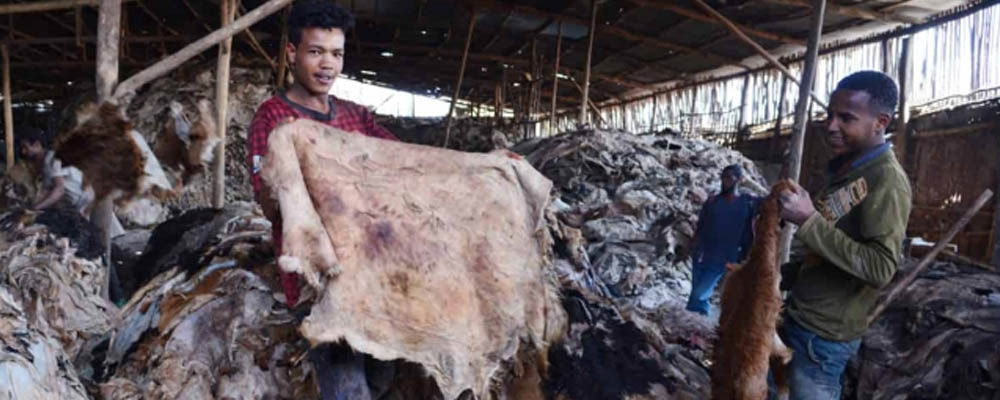
In 2012, the Ethiopian government introduced a 150Pct export tax on hide, skins, and semi-processed leather products in order to encourage local value addition. The following years saw an increase in export revenues from finished leather products. Although the introduction of the tax created an opportunity for tanneries and leather factories by making a large amount of hide and skin available for the local market, a significant percentage of the raw materials available in the local market still remain unused. EBR’s Ashenafi Endale explores the reasons behind this.


shro.jpg

For a long time, restaurants in Ethiopia have been offering a wide variety of stews to their customers. These days, the ‘less is more’ philosophy has taken root in cities like Addis Ababa, where some restaurants are specializing in shiro, while others offer a small handful of options to go with the traditional stew. 


Plug-Play.jpg

An “instant” or “serviced” office is one that is fully equipped and managed by a company that then rents it out to individuals and businesses. Although instant offices are often found in cities worldwide, it is a new phenomenon in Ethiopia. Driven by the increasing number of foreign investors, business travelers, startup businesses, and non-profit organizations, the business model is now gaining momentum. EBR’s Mikiyas Tesfaye explores the issue.


Access to financial services contributes immensely to economic growth. This is why nations come up with the right mix of policies to expand financial services. Ethiopia, too, has been reforming its financial sector for the last two decades. However, the sector remains immature, even in comparison to other Sub-Saharan African countries.

To ameliorate the situation, the government has been intensifying its efforts to expand financial services. In 2014, the National Bank of Ethiopia (NBE) made it a requirement for financial institutions to increase their branches by 25Pct annually. This resulted in an unprecedented expansion of financial services. A year before that, the bank introduced a mobile and agent banking policy. As a result, close to 2 million clients are now using mobile banking, while 16,000 agents operate in the country.


khat.jpg

Cursed Business, Blessed Money

Khat has become one of Ethiopia’s most lucrative exports, recently surpassing even coffee. However, the impact of Khat becoming more profitable is that farmers are starting to steer away from traditional staple crops in favor of growing it. Even so, the government still doesn’t have a cohesive strategy or supports to ensure that the country is getting the greatest possible benefits, as EBR’s Ashenafi Endale explores.


ice-cream.jpg

Addis Ababa has long been a friendly place for more dessert minded people. With cafes and bakeries on almost every corner catering to all kinds of tastes, sweets are a cherished part of everyday life. However, in the last few years, ice cream, an afterthought in cafes and relegates to the status of children’s treat, has started to make a comeback. With higher standards for quality, and more variety in flavour, ice cream has started to come back into the consciousness of city residents who have fond memories of it from their childhoods. New shops, dedicated solely to ice cream, have started to spread across the city, as EBR’s Menna Asrat reports.


food-security.jpg

As population keeps increasing and fighting poverty becomes a top global agenda, the need to increase agricultural production has become a priority especially in developing countries like Ethiopia. For that, experts advise policy interventions that can help to increase productivity and production. Using improved technologies and increasing farm size have for long been advised to increase output. Ethiopia has been going in the same direction.

Yet, there is one thing that it was not well thought of to improve food security – managing post harvest loss. The intervention — which can be achieved without major cost — can help avoid much of the loss of output which reaches up to 50Pct in some products.  Post harvest loss for major cereal crops, except Teff, is around 24Pct in Ethiopia; the loss for oilseeds is between 15Pct and 25Pct while vegetables and fruits incur the highest loss of about 50Pct. This occurs almost at every stage of the supply chain. EBR explores the issue.


Finishing-Housing.jpg

The buildings sub sector in Ethiopia is booming because of increased private and public investment on projects such as private housing and commercial edifices. The growth of the buildings sub sector has caused skyrocketing demand for construction materials especially on finishing materials such as wood, ceramics, paper, glass, plastic and metals as well as finishing mortars and concretes. Despite the surge in demand, the country is unable to produce enough materials locally to satisfy the demand leaving house developers and contractors with imported items and escalated prices. EBR’s Ashenafi Endale explores the extent of the problem and some of the attempts taking place in the country to substitute imported finishing materials locally.


India-Eyes-Africa.jpg

Ram Nath Kovind, the 14th and serving President of India, in office since 25 July 2017, made his debut official trip abroad recently with a first leg landing in Djibouti. Kovind’s visit to the horn of Africa’s tiny state, which in recent years is attracting significance due to the strategic geopolitical changes in the region, surprised many since there has never been a previous visit to the country by an Indian Head of State. His visit to Ethiopia, however, was less controversial because India at present is one of the top three sources of foreign direct investment in Ethiopia. Not only that, Ethiopia is also a significant bilateral trading partner of Asia’s third biggest economy. EBR’s Samson Hailu explores the reason behind the President’s visit.


Ethiopian Business Review | EBR is a first-class and high-quality monthly business magazine offering enlightenment to readers and a platform for partners.


2Q69+2MM, Jomo Kenyatta St, Addis Ababa

Tsehay Messay Building

Contact Us

+251 961 41 41 41