Smart-Gain.jpg

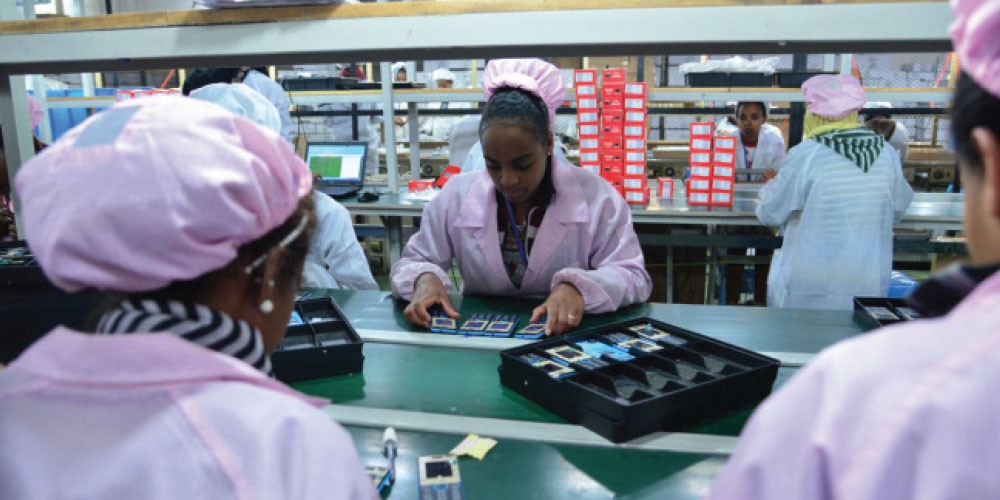
The electronic sub sector is a vital element of the global manufacturing industry. One of the components of the sub sector is the thriving mobile phone production. Despite having a short presence, the sub sector in Ethiopia is performing better, in terms of foreign currency generation, than other manufacturing sub sectors that receive significant government support such as textile and leather. EBR’s Ashenafi Endale spoke with stakeholders about the promise and challenges facing the sector.


Digital-war.jpg

Is Ethiopia Ready for Cyber Warfare?

With the growing use of information communication technologies, more and more organizations are increasingly becoming efficient. Business, education, even health care services are also getting more accessible. However, the battle between online protagonists and antagonists is at its highest point now than before. Ethiopia is no exception. EBR’s Ashenafi Endale consulted with technologists, government officials and research to explore the extent of the problem that the country could face and analyses its readiness to avert the challenges.


Fishery.jpg

Ethiopia depends on its inland water bodies for its fish supply. The growing number of dams has increased its country’s potential of fishing. Though the culture and dietary tradition does not favor fish consumption throughout the year, the rise of population, urban centers and overall growth of the hospitality industry, in recent years, are creating a favorable condition. As a result production of fish ascended to 50,148 metric tonnes last year, up from 17,047 six years ago. The per capita consumption has also reached to 500grams in the year from less than 150 grams a decade ago.
However, with the rise of population whose purchasing power is fast growing and dietary culture changing, a big demand is being created. The ever burgeoning hospitality industry is also creating further demand. As a result, the significant growth of production did not match the supply especially in urban areas like Addis Ababa. EBR’s Ashenafi Endale consulted stakeholders and researches for this report.


Flexible-Packaging.jpg

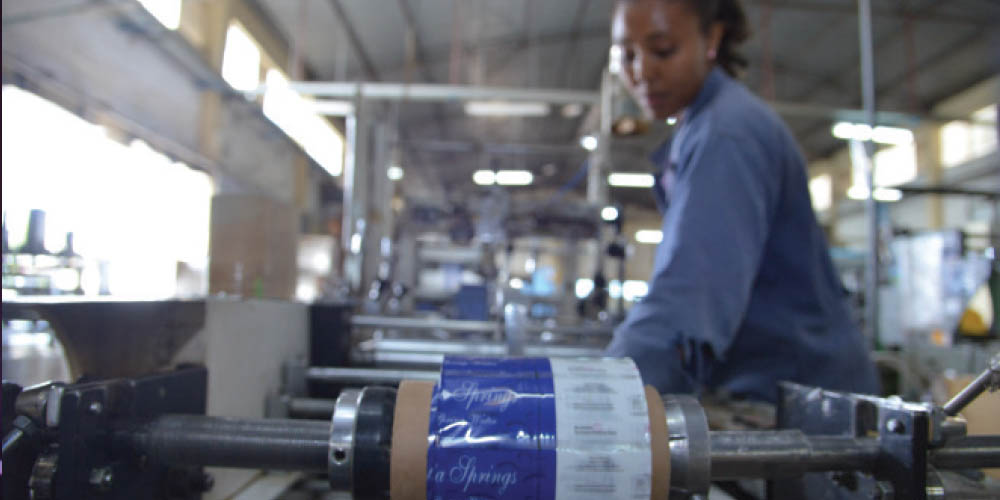
Flexible packaging materials are known for making products more convenient, enjoyable, and safer for consumers. These add value and marketability especially to food and beverage products.
Triggered by the country’s ambitious plan of industrialization, the demand for flexible packaging is growing in Ethiopia. However, the few companies in the country produce less than 10Pct of the local demand. EBR’s Hiwot Salelew explores the pushing factors for the surge in demand and how companies are responding to this.


Moringa.jpg

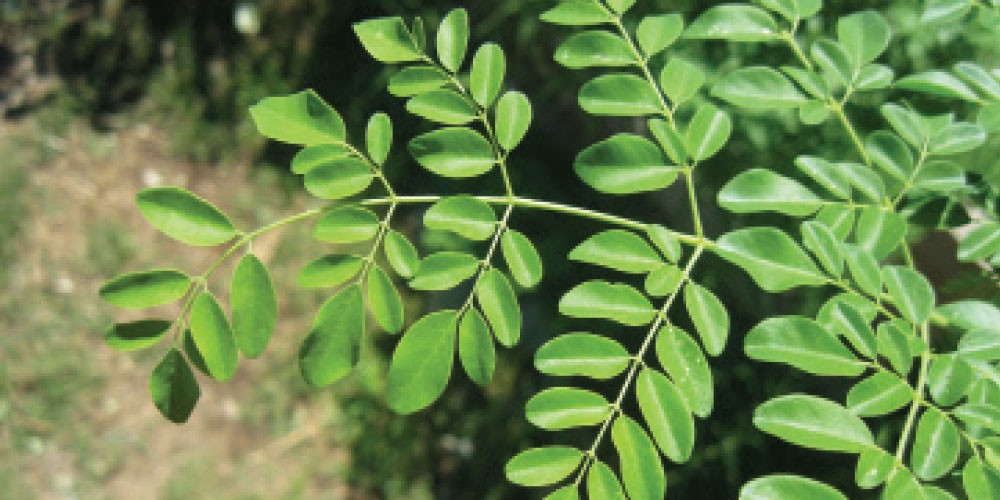
Moringa is a commercial crop; it is cultivated extensively in India and some parts of Africa. It would be challenging to find a region in the tropics or subtropics where Moringa is not grown as a backyard tree for leaf and pod consumption and medical purpose. Although the demand for the commodity has been minimum in the past, due to the growing awareness, its demand is picking up. As a result, the private sector is beginning to invest on Moringa. However, stockholders still stress the lack of proper attention to the crop continues as a major bottleneck to its development. EBR’s Tamirat Astatkie explores the issue to learn more about it.


Fail-to-Start-Operation.jpg

More than Half of the Registered Investment in Ethiopia

Foreign Direct Investment (FDI) has many advantages to host countries. Especially in developing countries like Ethiopia, FDI provides scarce resources – finance, technology and management expertise.
Ethiopia has realized these decades ago and has since implemented structural reforms and trade liberalisation to attract more FDI. Accordingly, it has managed to attract a good deal of investment particularly in recent years.


T-Bill-Conundrum.jpg

Investors Shy Away T-Bills Due to Low Interest

As Ethiopia attempts to lay the foundations for economic transformation, it has embarked on highly ambitious development programmes. While heavy state-led investment has helped the economy grow at double digits for over a decade; there are costs attached to it. The huge finance needed to cover the construction of large infrastructure has created financial pressure leading to budget deficit.


To-Graduate-or-Not.jpg

Ethiopia’s Race to Middle Income

Middle-income countries are nations with a per-capita gross national income between USD1,036 and 12,615. Nations with lower per capita income than this are classified as low-income countries. This group – least developed countries (LDCs) – comprises 48 vulnerable countries including Ethiopia.
With a per capita income of around USD100 for much of the period before 2000, Ethiopia plans to become a lower middle-income country by 2025. In tandem with that, the country has been investing hugely in infrastructures and provision of basic social services.
The result has been robust as the country achieved double-digit economic growth for over a decade. Per capita income reached USD794 in June 2016. According to the WHO, life expectancy also reached to 64.8 years in 2015 from 47 in 1991. These astonishing performances compel many to believe that the country will achieve a middle-income status in nine years.
However, a recent UN report says Ethiopia will not graduate from LDCs list by 2025. EBR’s Ashenafi Endale delved into the details of this delicate issue by refereing research findings and consulting experts as well as government officials to offer this report.


Harar.jpg

Located 532km east of Addis Ababa, the Harari Regional State (HRS) is the smallest member of the Ethiopian federation – both in population and area size. Uncommon elsewhere, 54.18Pct of the state’s population lives in urban areas. With a great number of historical sites, mosques, shrines, cultural attractions and relatively robust tourism, it is regarded as an open museum.
The city of Harar, the seat of the HRS was founded in the 7th Century as the seat of the Adal Muslim State and reached its peak during the 16th century whereby the Jegol Wall, one of the world’s heritages inscribed by UNESCO in 2006, was built in 1552 by Amir Nur bin Mujahid to defend the city from intruders. For centuries, the fortified city served as a trading hub due to its strategic location and metropolitan culture.
Since its founding, Harar’s 72 successive amirs established independent state and government until 1887, which marked its incorporation to Ethiopia by Emperor Menelik II.
Harar won the UNSECO Peace Prize in 2002 and 2003 for accommodating faith with love. In many places globally, where religious antagonism is increasing, Harar demonstrates an astonishing opportunity of peaceful coexistence of different religions. This could be easily witnessed by the physical proximity of Catholic and Orthodox churches in the city along with mosques in few hundred metres radius in Jegol Wall; but never in history have their differences caused major conflict. EBR’s Tamirat Astatkie visited the historical city, described often as the fourth holy city in the Islamic world after Mecca, Medina, and Jerusalem, to learn more about its development.

Glasshalf-Empty.jpg

Many Think NBE Bill Will Make Private Banks Grow, but Fear Liquidity Crunch

In March 2011, the National Bank of Ethiopia (NBE) came up with a policy insisting private commercial banks to buy bonds, using 27Pct of their annual loans and advances, to help finance loans from the Development Bank of Ethiopia. The NBE says this was necessary to strengthen the private sector. Since then close to ETB50 billion has been sacked out from private banks and used to finance investment in manufacturing.
Although the requirement of purchasing NBE bill had negative and significant impact on the liquidity and profitability of the banks, insiders say it has stirred competition in the industry, thereby contributing to improved performance – increased deposit mobilisation and financial inclusion. EBR’s Ashenafi Endale explores the issue further.


Ethiopian Business Review | EBR is a first-class and high-quality monthly business magazine offering enlightenment to readers and a platform for partners.


2Q69+2MM, Jomo Kenyatta St, Addis Ababa

Tsehay Messay Building

Contact Us

+251 961 41 41 41