labor-market-witnessing-new.jpg

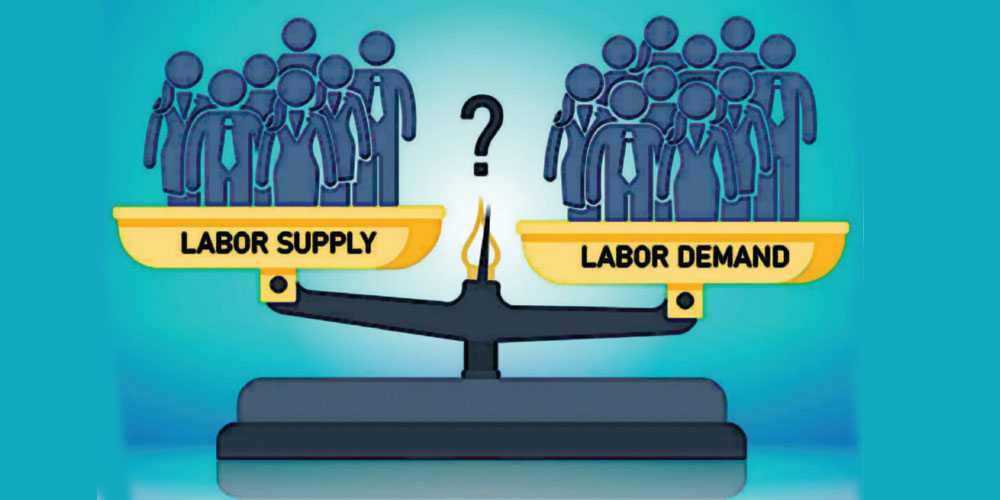
With the opening of dozens of universities and the ever-increasing graduates flooding out of these new institutions, unemployment and underemployment have been typical in Ethiopia’s labor market for more than the past decade. With new graduates continuing to rise, the labor market seems to be experiencing other developments, as well. While some sectors like education are dealing with a dwindling interest of employees, the financial sector seems to be entertaining a contrasting and dynamic interest. As the labor market continues to shape itself away from a mainly agrarian economy, new graduates are also preferring to work for themselves or as freelancers over full employment, writes Eden Teshome, EBR Staff Writer.


connecting-the-construction-addis-build.jpg

The BIG 5 Construct Ethiopia is to be held at the Millennium Hall in May 2023. Endorsed by the Ministry of Urban Development and Infrastructure, the exhibition will showcase opportunities across Ethiopia’s construction sector, which currently contributes 5Pct towards Ethiopia’s workforce, according to the Central Statistics Service (CSS).

Organized by dmg events and its local partner Ethel Events and Communication, and part of The Big 5 global series of events, the three-day exhibition is to host local, and international attendees that are intent on taking part in Ethiopia’s growing construction sector. The goal of The Big 5 Construct Ethiopia is to accelerate construction industry innovations and complement Ethiopia’s economic growth, investment, and a sustainably built environment.


samuel-kalew-abela.jpg

Samuel Yalew Adela
Ethiopia Country Head, Mastercard Foundation

Samuel Yalew, as head of Mastercard Foundation – Ethiopia, leads a massive youth employment drive of one of the world’s largest foundations with global commitments of around USD4.4 billion. Holder of a Master of Arts from Addis Ababa University, he has over 25 years of experience in education, child rights advocacy, public health, and youth employment while working at public, private, and non-governmental organizations—with many in senior leadership roles in various large and multi-year projects in Ethiopia, Namibia, Canada, and Uganda. Samuel joined Mastercard Foundation in 2015 and is said to have played an essential role in developing vital strategic interventions and programs, including the foundation’s Young Africa Works strategy. Prior to his current engagement, in August 2019, he moved to Kampala, Uganda, to set up the foundation’s branch and Young Africa Works strategy there, which he successfully delivered. As of August 2021, Samuel has been the Country Head for Ethiopia, working towards the effective implementation of the Young Africa Works strategy to enable 10 million young women and men access dignified and fulfilling work which earns them the respect of their families and communities. In this interview with EBR’s Addisu Deresse, he talks about the foundation’s ambitious goal of creating millions of jobs in the decade


shifting-trend-in-furniture-industry.jpg

The making of household materials using wood has been part of Ethiopian history for centuries. Furniture manufacturing has also seen a rise in the last decade. With the ever-growing construction of hotels and residences of different types, furniture business has been entertaining quite a surge in demand in recent years. However, the expected benefits of this rising demand have been lost to imports with little appetite for locally manufactured furnishings. However, a slowly shifting interest of the public to locally manufactured furniture might see a more expanding local sector with a potential for exports, writes EBR’s Trualem Asmare.


dispute-saga-slowing-the-race-2.jpg

The various Olympic events, international championships, and other regional and global athletics contests used to be venues for Ethiopian runners to shine. These used to be moments for Ethiopians to shed tears while the rest of the world would watch in admiration. As of recently however, that has not been the case. It has been some time now since Ethiopians began losing races which they had been so accustomed to winning. Various reasons can be presented with one definitely being dispute and power struggles among various institutions tasked to lead and support the sport towards success. In this article, Abiy Wendifraw, who accompanied the Ethiopian team to the Tokyo Olympics, looks back at the deficiencies of the games and the dispute that followed.


glinting-matrimonies.jpg

The rampant pandemic has hurt businesses worldwide of all sizes and types. As if that is not enough, Ethiopia has been rocked by a series of security challenges imposing unimaginable challenges on business activities across all sectors. In Ethiopia, a wedding is not just a matter for the couple—it calls for a number of small businesses to make the big day happen. From the decorators to the DJs, and from the photographers to event managers, they all play their part on that special day. As Covid restrictions are easing and weddings are finding their return, these businesses seem to be entertaining the reinvigorated atmosphere of social gatherings, writes Bamlak Fekdu.


the-women-shaping-clay.jpg

Pottery—the art of molding clay soil into various shapes of products—is bringing business to women at a center in Addis Ababa’s Gulele district. In the center, pottery is giving both livelihoods and life to the more than 300 women involved, though not as modernized as one would have liked. As much as the practice is giving a good look to people’s living rooms as well as giving high service in Ethiopian kitchens and homes, the craft still struggles to improve the society’s bad impression of it as a profession, writes Trualem Asmare.


Ethiopia is the largest country in the world with a closed capital account and a functioning capital market. The current underdevelopment of its capital markets starkly opposes the vibrant money and securities market during the 1960s under the Share Dealers Group. The group was a network primarily composed of large banks such as the Commercial Bank of Ethiopia, Development Bank of Ethiopia, Addis Ababa Bank, and other private companies and individual investors. The increased transaction of financial assets prompted the state bank to formalize the Share Dealers Group and the National Bank of Ethiopia opened a department that oversaw its operation under its board chairmanship. Through the market, various entities were able to sell their shares to the public and had access to short-term capital by using equity securities as collateral. However, the group ceased to exist in 1975 following the nationalization of most of the member companies, stymying the development of the financial infrastructure.


Independent Regulatory Authority:
The What and Why
The necessity for regulation and supervision of the insurance sector is deeply rooted in the legal, sociological, and economic importance of insurance. Regulators are deemed as reactors, makers, and breakers of the insurance industry since they control and or facilitate the operations of insurers and related parties from their establishment up to their liquidation. This makes them highly responsible for the success or failure of the insurance market.


Global crises have grown in frequency and intensity over the past 20 years, with worrying implications for future economic development. The World Bank warns that the effort to reduce poverty has suffered its “worst setback” in a quarter-century, owing to the COVID-19 pandemic. Inequalities are deepening within and between countries, and across many key sectors, from education to health.


Ethiopian Business Review | EBR is a first-class and high-quality monthly business magazine offering enlightenment to readers and a platform for partners.


2Q69+2MM, Jomo Kenyatta St, Addis Ababa

Tsehay Messay Building

Contact Us

+251 961 41 41 41