Financial-Institutions-Delving.jpg

In the current dynamic business environment where technology changes quickly and customer demand escalates, staff training plays a crucial role to increase productivity, improve efficiency and meet customer expectations. This is especially true for financial institutions operating in Ethiopia under dynamic and volatile business environment. To facilitate this, the National Bank of Ethiopia (NBE) in 2016 instructed banks and other financial institutions to spend two percent of their expenses, excluding capital expenditure, on human resource development. However, financial institutions failed to live up to expectations initially. In the 2017/18 fiscal year, seven banks failed to invest two percent of their expenditure that totally amounts close to ETB40 million on staff training. Through time, financial institutions began to realize the importance of training and started to give their employees frequent trainings. However, some still have doubts on the quality and efficiency of the training. EBR’s Kiya Ali reports. 


Livestock-Insurance-failure.jpg

In developing countries like Ethiopia, where the majority of the population is small scale farmers and pastoralists, livestock and crop insurances play a vital role in minimizing the risk of climate shock and drought. However, livestock and crop insurance remains a luxury in Ethiopia. Even though livestock and crop insurance policies were introduced in Ethiopia 20 years ago by the state owned Ethiopian Insurance Corporation, the number of beneficiaries is insignificant. Currently, there are only three insurance companies that provide livestock and crop insurance in the country. The situation is getting worse when it comes to micro insurance since it still remains in pilot testing stage dependent on aid from foreign NGOs. EBR’s Kiya Ali spoke with various stakeholders to shed light on the reasons behind.


Hiking-Rising-Above.jpg

There is a new found love for hiking in Addis Ababa. Suddenly, expats and Ethiopia’s emerging middle class have started to gather themselves in groups and hike the mountains in and around Addis Ababa. The activity has picked up pace in the past few years and companies have now jumped in to tap into this growing business. EBR’s Kiya Ali looks into the growth of the business and the challenges it is prevailing over.


Yared-School-of-Music.jpg

Yared School of Music is one of the oldest educational institutions in the country. The School has achieved a lot over its 74 years of service. Institutions that operate for such a long time mostly transcend to a higher level of excellence and push themselves further to explore the possibilities that could shape the future. However, the situation in Yared does not seem to adhere with that. EBR’s Kiya Ali explores.


The-Struggle-to-Keep-Heads-Above-Water.jpg

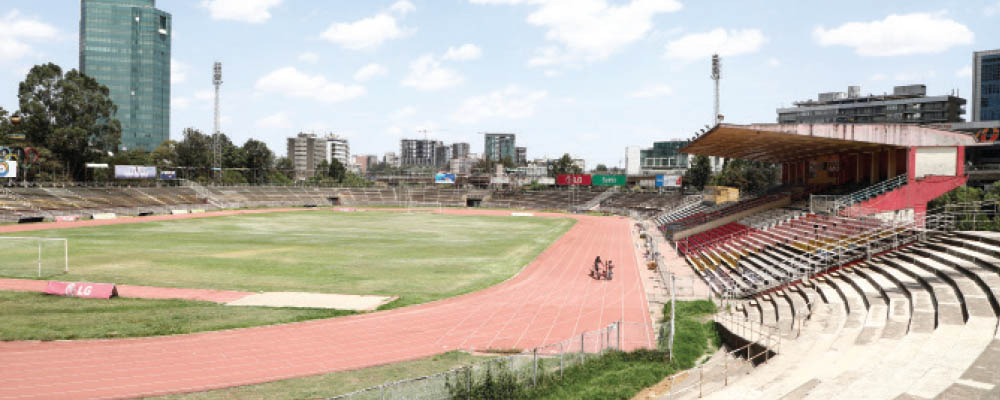
COVID-19 has steadily expanded its empire around the world, claiming all national territories as its victims. Although some of these nations suspended their sporting activities at different times, they have almost entirely succumbed to the anti-social traits of the virus. It has been weeks since sports competitions were suspended in Ethiopia. EBR’s Abiy Wendifraw looks into the struggle to stay afloat in the country’s athletics and football federations.


As it spread from one country to another, the novel coronavirus paid no attention to national frontiers or “big, beautiful” border walls. Nor were the ensuing economic effects contained. As has been obvious since the outset, the COVID-19 pandemic is a global problem that demands a global solution.


COVID-19 could trigger a global shift and therefore alter our ‘normal’ in the following ways. It potentially presents a new cultural hegemony that could threaten the current world order and economy. It also challenges current social aspects such as lifestyle, values and perceptions. The management of the pandemic has also shifted the narrative on leadership and crisis management acumen.


wheat-farm-eth.jpg

The government plans to harvest 880,000 quintals of wheat in lowland areas during the coming Meher Season. The expected yield is almost six times the amount harvested during the same period last year.

The irrigation project, which is being implemented with the help of the Ethiopia Institute of Agricultural Research in lowland areas, including Awash, Shebelle and Omo, aspires to fully substitute imports of wheat within two years.


Ethiopian Business Review | EBR is a first-class and high-quality monthly business magazine offering enlightenment to readers and a platform for partners.


2Q69+2MM, Jomo Kenyatta St, Addis Ababa

Tsehay Messay Building

Contact Us

+251 961 41 41 41