

Time Travel to Ethiopia: Turning Heritage into Economic Gains
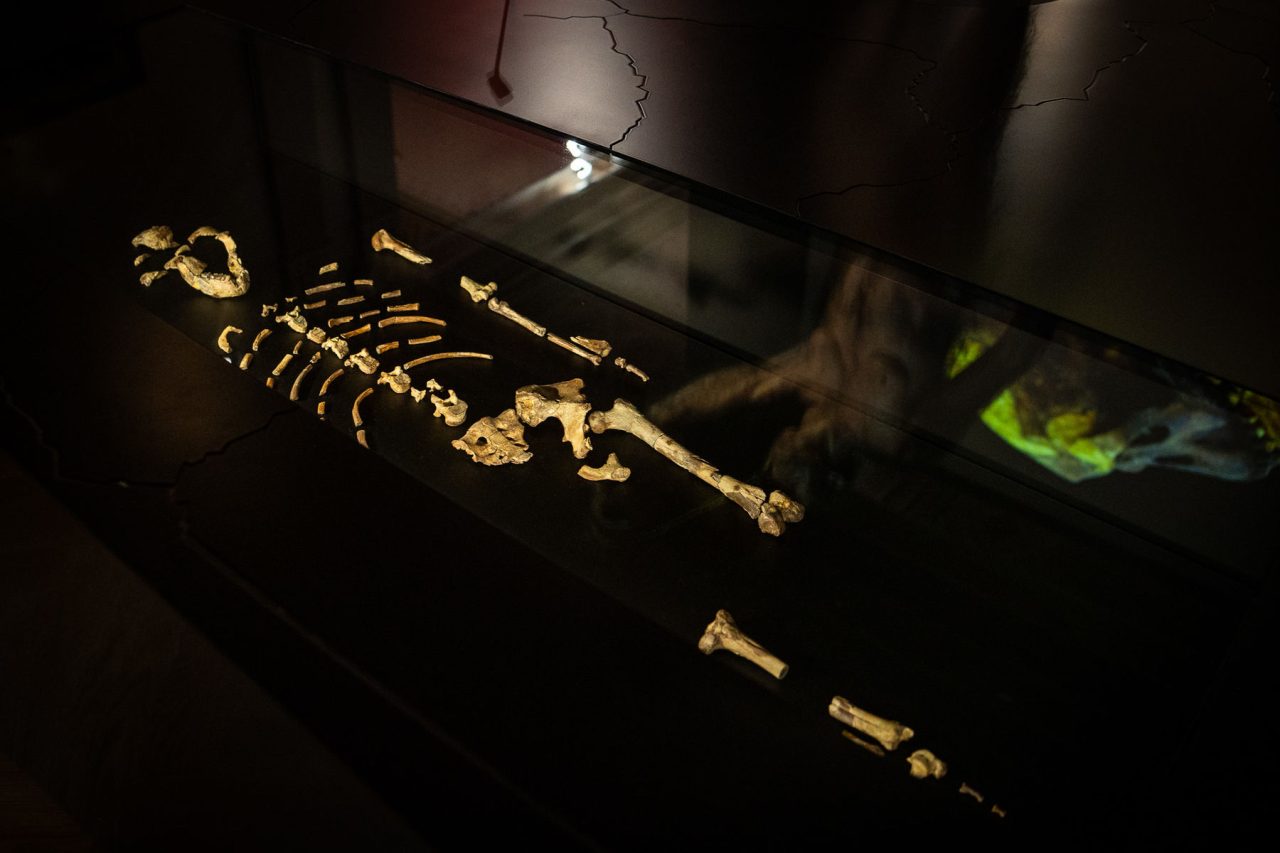
Few objects carry the gravity of science, the symbolism of heritage, and the utility of tourism diplomacy all at once. Ethiopia’s most famous ancestors, Lucy (Dinknesh) and Selam, are attempting exactly that in Prague, where they stand at the heart of an ambitious exhibition, People and Their Ancestors.
The Czech government has wrapped them in a staggering 150 million dollar state-backed insurance guarantee, a figure that quantifies both their fragility and their irreplaceable worth. For Ethiopia, the decision to send them abroad is more than a cultural loan. EBR’s Betegbar Yaregal explores if this calculated wager on whether heritage can be transformed into tourism marketing and long-term investment can be done without repeating past missteps.
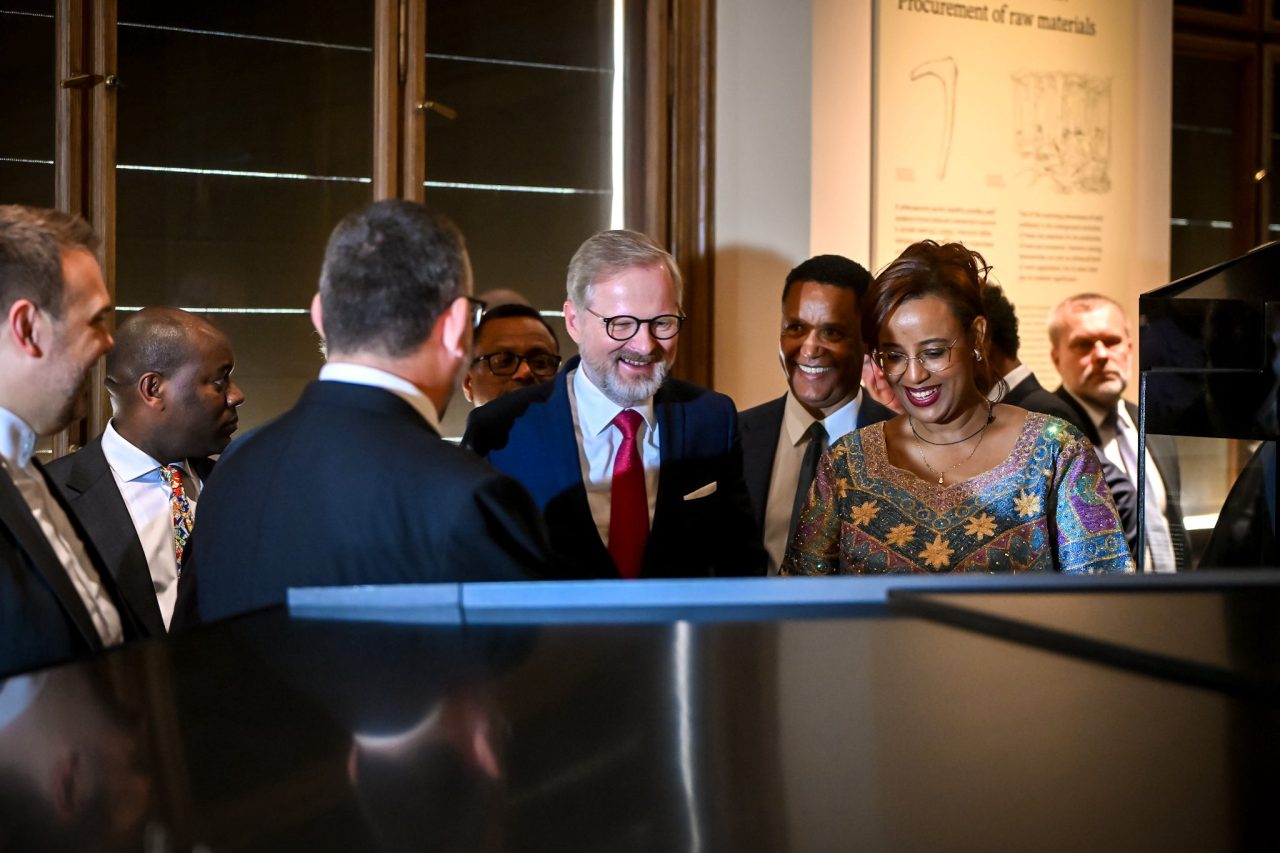
“Would you like to time travel?” Selamawit Kassa, Ethiopia’s Minister of Tourism, asked a packed audience at the National Museum in Prague.
I say come to Ethiopia and experience exactly that.
Her line was the rhetorical highlight of the opening ceremony, where Lucy and Selam were unveiled as star attractions. The exhibition promises visitors a journey through seven million years of human history, from tree-dwelling hominins to modern humans.
Considering the pace of growth, investment and potential for further development, tourism is recognised as one of the top five strategic economic sectors in Ethiopia. Together with culture as a cross-cutting sector, the government has set up strategic directions to enhance the role that tourism and culture play in socio-economic and political development initiatives.
Positioning Ethiopia as the “Land of Origins” is one goal of the Ministry of Tourism, while facilitating research on the conservation and development of its natural and cultural heritages is another.
As part of the tourism quest, the Prague agreement is backed by a $150 million insurance policy from the Czech government. The agreement also includes long-term investments, such as funding and expertise for Ethiopia’s first children’s museum in Addis Ababa.
The exhibition is organised like a timeline. The first section narrates human evolution, showcasing casts of Lucy and Selam. The next immersive experience takes visitors back to prehistoric life, featuring artefacts from Neanderthals in Gánovce and early modern humans in Koněprusy Cave. Later sections display jewellery, figurines, dwellings, and tools from early European farmers.
Lucy, the 3.2-million-year-old Australopithecus afarensis, was a revelation when found. Standing barely over a meter tall with 40% skeleton preserved, she bore traits that bridged ape and human: a chimp-like torso paired with unmistakably upright walking hips and legs. Her discovery by Donald Johanson and his student Tom Gray as the Beatles’ song “Lucy in the Sky with Diamonds” played on camp radio, changed textbooks and reset humanity’s origin story.
Nearly 3.3 million-year-old Selam offered another perspective. Preserved with 60% of her skeleton intact, including a skull, she allowed scientists to study growth and development in early hominins. Discovered by Zeresenay Alemseged, Selam quickly became one of the most celebrated child fossils in evolutionary science.
Together, they embody Ethiopia’s tourism slogan “land of origins” as a scientific reality.
The Ethiopian Heritage Authority was also part of the endeavour in taking the fossils abroad. According to Sahilesilassie Melaku, head of the Department and Research Associate in the Palaeontology and Paleoanthropology Desk, this is a unique, one-time event, with no current plans to send the fossils to any other country.
He oversees the technical aspects of the exhibition in Prague, which include how the artefacts are displayed, positioned, and secured, as well as coordinating matters related to visitor management and security.
The exhibition runs until October 23, 2025.
Interest has been intense. The Czech National Museum introduced premium tickets at 360 CZK (USD 15.50) for adults and extended opening hours to accommodate demand. Queues to see the Ethiopian fossils formed before the museum even opened.
Director General Michal Lukeš called it “a dream come true,” noting the extraordinary security measures, such as impact-resistant boxes, armed escorts, and nonstop monitoring, that were taken to protect the fossils.
“It’s an honour,” he said. “These fossils rarely leave Ethiopia.”
For Selam, the remains of a two-and-a-half-year-old child, this was the first journey outside Ethiopia. But unearthed in 1974, Lucy has travelled before on a six-year tour of the United States, which at the time sparked controversy. In 2006, the Houston Museum of Natural Science struck a deal to host her in a blockbuster travelling exhibition, Lucy’s Legacy: The Hidden Treasures of Ethiopia.
The business case was ambitious. Inspired by Egypt’s “King Tut” exhibitions, which grossed over $100 million, officials projected similar revenues. They envisioned funds flowing into museum upgrades at home.
But the reality was disappointing. The tour visited four U.S. cities (Houston, Seattle, New York, and Santa Ana) but drew smaller crowds than anticipated. Major institutions like the Smithsonian and Chicago’s Field Museum boycotted on ethical grounds, citing a growing international consensus: original hominid fossils should not be shipped for display unless there is a compelling scientific reason.
The East African Association for Paleoanthropology and Palaeontology (EAAPP) codified this principle, with Ethiopian scholars such as Berhane Asfaw and Yohannes Haile-Selassie among its architects. Co-founder of the Association Zeresenay Alemseged, Selam’s discoverer, warned that such tours risked undermining Africa’s scientific sovereignty.
By 2013, Lucy returned to Addis Ababa, and official accounts revealed just $1.5 million in revenue had been generated for Ethiopia, far short of projections. Science magazine summed it up bluntly as “fizzled exhibition.” The saga left a bitter lesson. Lucy had been marketed as a cultural cash cow but returned with little to show beyond controversy.
The Prague arrangement looks different from the outset. Rather than an open-ended travelling tour, it is a fixed, time-bound exhibition anchored in a bilateral agreement. The Czech government’s $150 million insurance policy signals the recognition of fossils’ value.
Officials note that the deal includes forward-looking investments such as funding and expertise for Ethiopia’s first children’s museum, to be built in Addis Ababa’s Friendship II Park. For Minister Selamawit, this is the long-term dividend.
“The museum will allow children to learn history and culture creatively while developing their skills,” she said, casting it as a permanent return on a temporary loan.
Her framing was deliberate. Lucy and Selam are scientific artefacts and “ambassadors of a forward-looking Ethiopia,” dispatched to Prague to inspire visitors while advertising the country’s landscapes, heritage sites, and tourism potential.
Ethiopia has reason to chase visibility. Before the pandemic, tourism was one of the country’s fastest-growing sectors, contributing nearly $4.8 billion to GDP and attracting over 1.4 million visitors in 2019. Strategic investments in airports, roads, and marketing campaigns had begun to reposition Ethiopia as a premier cultural and adventure destination. COVID-19 reversed the gains. International arrivals collapsed by 84% in 2020, to just over 228,000 visitors. Revenues plunged. Recovery has been uneven, hampered by conflict, security concerns, and limited infrastructure.
Still, projections are bullish. By 2030, arrivals could surpass 2 million, generating over $5 billion annually, if investments in infrastructure and safety hold. According to Statista, the travel and tourism market in Ethiopia is expected to reach $2.49 billion by 2025, growing at a rate of nearly 9% annually through 2030. Shiferaw Muleta (PhD), a tourism development expert, sees the Prague exhibition as innovative marketing.
“The primary benefit is destination promotion,” he argues.
According to Shiferaw, although some heritage sites remain underutilised due to peace and security issues, Ethiopia showcases its tourism potential directly to Europeans by sending these priceless fossils abroad.
As Lucy and Selam travelled abroad, Ethiopia was once again rewriting evolutionary history. In March 2025, researchers announced discoveries at the Ledi-Geraru site: 13 fossil teeth from a previously unknown species of Australopithecus, dated to 2.6–2.8 million years ago. The find proved Lucy’s kind was not alone. Early Homo species and other australopithecines coexisted, painting a picture of a crowded, experimental evolutionary landscape.
“The image of ape-to-human as a straight line is wrong,” said Kaye Reed, a paleoecologist at Arizona State University. “Evolution is a bushy tree, not a march of progress.”
For Ethiopia, the discovery was another reminder that the soil beneath its feet continues to yield world-shaping science. Fossils may leave for diplomacy, but the future of paleoanthropology remains firmly rooted at home. At the Prague exhibition, founders of Lucy and Selam (Donald and Zeresenay) were panellists in an hour-and-a-half opening show. Donald posed the essential question, “Why is it necessary to dig up bones more than three million years old in 50-degree heat?” His answer: “Because you cannot have the future without understanding the past.”
Participants agree. Czech anthropologist Sara Polak argues that if humanity hopes to survive another 800,000 years, archaeology and anthropology must stop being treated as a niche.
“They are a window into the future. Civilisation must shed dogmas, challenge failed patterns, and build resilience, and that begins with understanding where we come from,” she said.
Beyond science, experts note that the value of tourism exports is utilised as a potential economic gain. For experts like Worku Tuffa (PhD), the fossils are more than windows to the past; they are assets for the future.
“These fossils are resources that can create wealth,” he noted.
Instead of waiting for the world to come to the site, he applauds the move to bring the highest-value product to new markets.
“It’s an innovation in market access,” he said.
The true return on investment, he argues, lies in brand positioning. He observes that most Europeans know little about Ethiopia, which will inspire them to visit with this marketing. While Worku notes that other nations create attractions from very little, Ethiopia has an abundance but underpromotes it.
“This move can change the narrative,” he told EBR.
Ethiopia’s fossils have long existed at the fault line between preservation and promotion, science and commerce, sovereignty and diplomacy. Lucy’s previous tour revealed the pitfalls of treating heritage as a quick cash generator. Prague is an attempt to recast the strategy, pairing spectacle abroad with infrastructure at home.
Whether the gamble pays off depends less on how many visitors queue in Prague than on what Ethiopia does next: investing in museums, protecting dig sites, and telling its story on its own terms.EBR
 Ethiopian Business Review
 Mintesinot Nigussie