The-Enduring-Worth-of-National-Prayer.jpg

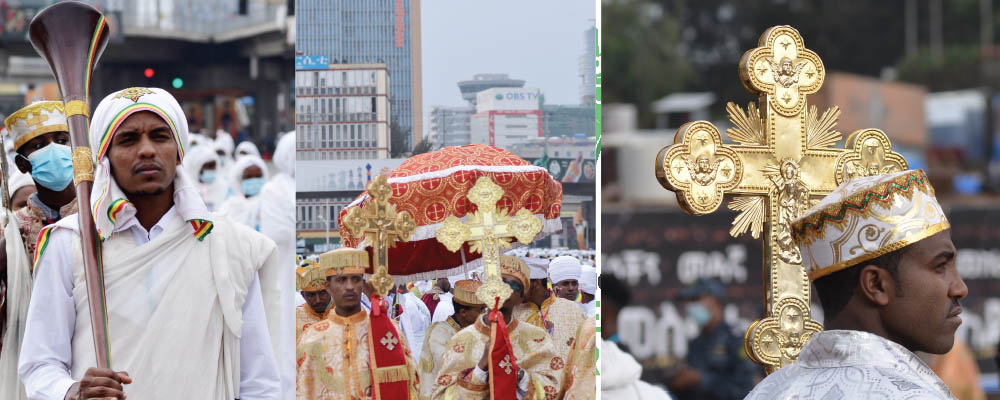
This month hosts both Abiy Tsom and Ramadan, the biggest fasting seasons for Christians and Muslims in Ethiopia. Thousands pray longer and harder every day in this season, more restrained from worldly activities and more in tune with the purification of the body, mind, and soul. This remains Ethiopia’s social capital for centuries gone and to come. Beyond a personal and spiritual experience, religion remains the frame embodying nationalism and a defining concept for unity, culture, art, and perseverance. Specially, the reputed St. Raguel Ethiopian Orthodox Church and Anwar Mosque, located next to each other in Mercato, Addis Ababa are symbols of harmony particularly in the crowded fasting seasons.


cleaning-heros.jpg

The life of waste collectors in Addis Ababa is not dissimilar to a burning kindle. They make the capital clean and bright while their very lives are hung by a thread. Each day, they move from door to door with pushcarts to collect garbage, just to get ETB0.71 per kilogram of collected waste. They have families but are homeless and excluded from social structures.

However, even that has become luxury for the close to 400 residents of a garbage collection site who recently lost everything in a fire accident and have to return to the streets with babies, elders, and pregnant women. Ironically, the city administration, local officials, and NGOs are all silent even a month after the major fire accident damaged all that they had. The fairy Addis Ababa is deaf to a number of flaws in its urban texture, all the while being a diplomatic hub. EBR’s Mersha Tiruneh investigates how the lives of hundreds of Addis Ababa’s cleaning workers have gone down the dust bin.


tigray-in-crisis.jpg

If there is a primary concern of governments in a modern state, it is the wellbeing and safety of its residents. At the heart of all the political turf-wars, reforms, revolutions, and fights, is the improvement of Society’s livelihoods. Nonetheless, the insecurity different social groups in Ethiopia face attests otherwise to the social contract.
Of all the social turbulences, none amount to the damages unleashed in the Tigrai region in northern Ethiopia. Regime changes have brought less for the ordinary people of Tigrai, usually mistaken for the elite rulers. After the lauching of military operations in the region, society has found itself between a rock and a hard place. EBR talked to victims, witnesses, humanitarians, and officials on the social crisis ongoing in Tigrai.


The-Fulani-Empire-In.jpg

Foreigners residing in Addis Ababa usually have no choice but to fit into the status quo. Irrespective of their social makeup and which continent they are from, they blend fast and move on with the existing spectra. This is mainly due to an absence of room to socialize. Especially Africans have less options since more venues emulate western cities than African values. Finding their original staple food and drink, authentic gestures, art, and language in Addis means ending homesickness. House of Fulani, is the pan-African make-believe unveiled in the heart of Addis Ababa, to serve the growing African community in the capital. Kiya Ali, paid a visit.


Rahel-Tsegaye.jpg

For long, Rahel Tsegaye has been troubled with the lack of studying and learning materials available for kids in the country. Although she believes quality education starts from an early age, Rahel could not find one for her babies. One day, an idea came to mind that she can prepare kids’ education tool kits. Then, Rahel, also a social entrepreneur, established Fidel Tiru, a company that produces teaching materials using illustrations and puzzles for kids aged 1-7 and kids with special needs. EBR’s Danait Kahsay explores her work.


irreechaa-redemption.jpg

Ireechaa is one of the centuries-old thanksgiving celebrations in Ethiopia. Nature adorns itself with its trade mark color of green and sprinkles colors from the rainbow over that background during spring. Spring also marks the end of the gloomy days of winter and heralds the beginning of the era of beauty. The Oromo people come together to praise Waaqaa, the Almighty God, for renewing life and refreshing nature. Embellished in cultural attire and flowers, they ceremonially march to the Hora, water body, near them.


meskel-breaking.jpg

Meskel is one of the holidays in Ethiopia that is celebrated in a unique euphoric way. Despite the nationwide celebrations, some communities designate the holiday an elevated status than the rest. In such communities, Meskel is a time for people to get back to their homelands and spend some quality time with relatives and loved ones. Celebrated with special food and drinks, Meskel has assumed a notable socio-economic role in many communities. The COVID-19 pandemic has, however, disrupted the tradition in some of these areas. EBR’s Ermias Mulugeta looks into the relatively somber celebrations this year.


addis-ababa-city.jpg

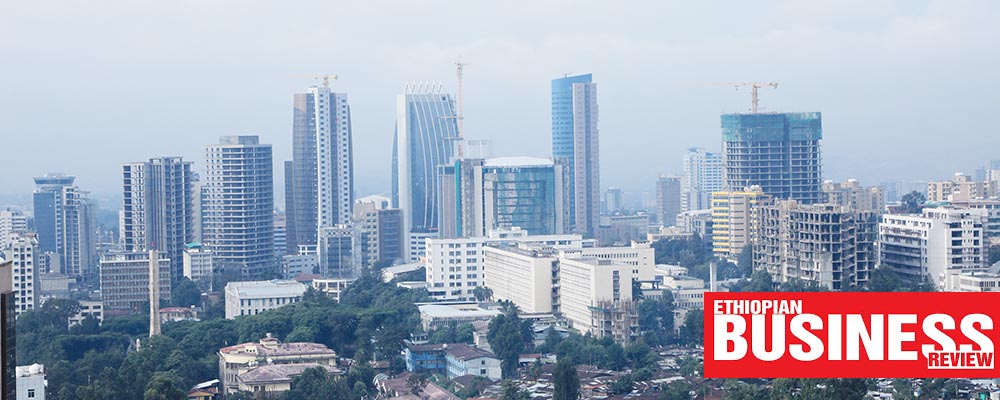
The liberal free market economy Ethiopia adopted under the reign of the Ethiopian People’s Revolutionary Democratic Party (EPRDF) has been a start of the growth of the private sector. Under such an economy, major public and private companies (especially those operating in finance) access the bulk of money pumped into the market. Then, this huge money trickles down under small pours to the society at large. As has been evident in cities that have made the transition to metropolitan status, the skyline of Addis has welcomed high rising buildings serving as the headquarters of the elite companies in the country.


Carrying-the-Weight.jpg

It has been nearly six months since the Coronavirus made its landmark in Ethiopia. As has been the case around the entire world, businesses have crumbled under the immense pressure the pandemic has exerted upon economic and social life. With the Ethiopian new year up on us, the pressure seems to have persisted as the sectors hit hard by the realities of a world under pandemic have not recovered enough or recovered at all. Kiya Ali looks into the business side of the social celebrations associated with the new year.


Ethiopian Business Review | EBR is a first-class and high-quality monthly business magazine offering enlightenment to readers and a platform for partners.


2Q69+2MM, Jomo Kenyatta St, Addis Ababa

Tsehay Messay Building

Contact Us

+251 961 41 41 41