Discrimination-Behind-Bars.jpg

The Predicament women face in Prison

The number of women and girls caught in the criminal justice system has skyrocketed in recent years. Out of the total 200,000 prisoners found in Ethiopia, currently, 3.7Pct are women. Women prisoners face multi layer challenges such as discrimination and treatment with cruelty and violence in detention centres and police stations. On top of these, problems including gross overcrowding and inadequate food, water, sanitation, as well as medical care, put female prisoners in danger. To make matter worse, many of women are imprisoned with their children, whom they have to raise within the prison compound. EBR’s Ashenafi Endale who visited Kaliti Prison recently reports the difficulty faced by women prisoners.

bid.jpg

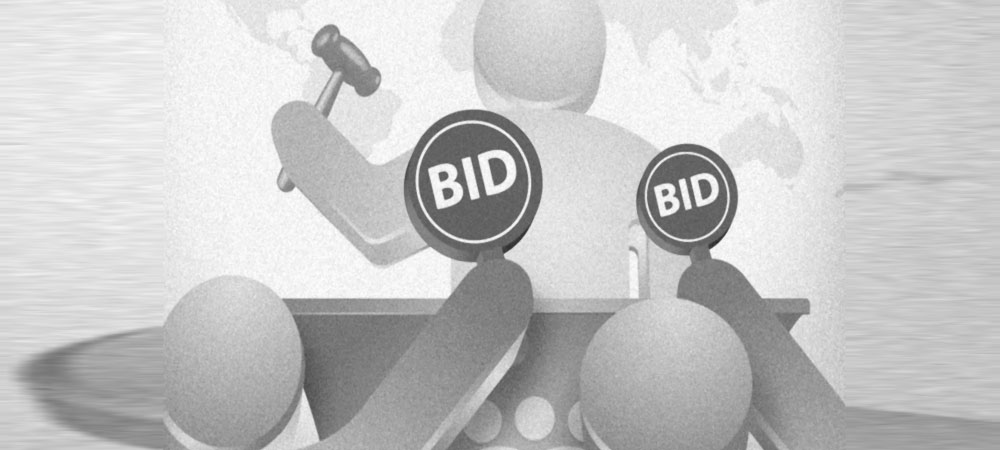
Public procurement has long been a subject of discord in Ethiopia. While other developing countries have managed to use public procurement as an avenue for growth, the procurement system in Ethiopia seems to have become a hotbed of corruption. The arrests of almost 100 government officials to do with mega projects threw the issue further into the public eye. But now, there has been a push to reform the procurement regulations and address the gaps that created an opportunity for improper conduct. EBR’s Ashenafi Endale reports.


Hotel-Business.jpg

The Fate of the Hotel Industry After Turmoil

The hotel industry in Ethiopia has been reeling over the last couple of years, following political unrest in various parts of the country, and a drop in tourist numbers. Room occupancy rates dropped, and hotels found themselves losing money hand over fist. But now the industry is starting to revive, as political stability returns to the country. EBR’s Ashenafi Endale spoke with some in the industry to find out what’s next for hospitality in Ethiopia.


Pay-Shy.jpg

Manufacturers feel the heat due to high staff Turnover

Staff conditions in factories and industrial parks in Ethiopia have long been a subject of debate. From pay scales to working conditions and safety, many of the issues connected to working in factories have led workers to leave their employment in droves. In addition, a lack of skilled manpower has become another hurdle that factory managers have had to contend with. EBR’s Ashenafi Endale explores.


face-to-face.jpg

Can it help commercial banks mobilize more deposits?

Commercial banks in Ethiopia are currently engaged in ever-more stiff competition to mobilize deposits. Most notably, almost all of the banks have begun to use face to face marketing to gain the attention of new customers. It is now not unusual to see tellers from various commercial banks pleading with people in streets, cafes and other public places to open bank accounts at their respective branches. Experts argue that such methods of deposit mobilization are not effective or sustainable, and criticize banks for not coming up with products and services for the unbanked population, as EBR’s Samson Berhane writes.


industrial-park.jpg

Shortcut to Industrialisation?

The recent unveiling of the industrial park in Adama was just the latest in Ethiopia’s bid to open an industrial park in every region. The plan for industrial parks has always been to attract foreign investment into the country, and thereby start Ethiopia on the road towards industrialization, and eventually to middle-income status. However, many experts warn that the problem of industrializing the country reaches further than just providing a place with reliable electricity and infrastructure. In the face of nearly overwhelming optimism about industrial parks, some still have reservations.


Ethnicity-Trap.jpg

Can Ethiopia Break Free?

With the escalation of violence resulting in the death and displacement of millions of people, the humanitarian situation in Ethiopia has deteriorated over the past six months. The number of internally displaced people in the country, which started to increase last December, reached an historic peak in April 2018. Many attribute the problem to the ethnic based politics that the country has been pursuing since 1991. Since then, politicians have especially been using ethnicity as an instrument to advance wide ranging political and economic interests. EBR’s Samson Berhane explores.


Bonus.jpg

Incentive, Burden

Globally, various bonus schemes are used to keep employees satisfied and motivated. This strategy is increasingly seen adopted by banks, insurances and corporations in Ethiopia. It is becoming common to witness banks and insurance companies showering two to four months of salaries on employees as bonuses. Although these companies are benefiting from the strategy, there are still concerns, as EBR’s Ashenafi Endale writes.


Acidic-Soils.jpg

A Daunting Task waiting Ethiopia

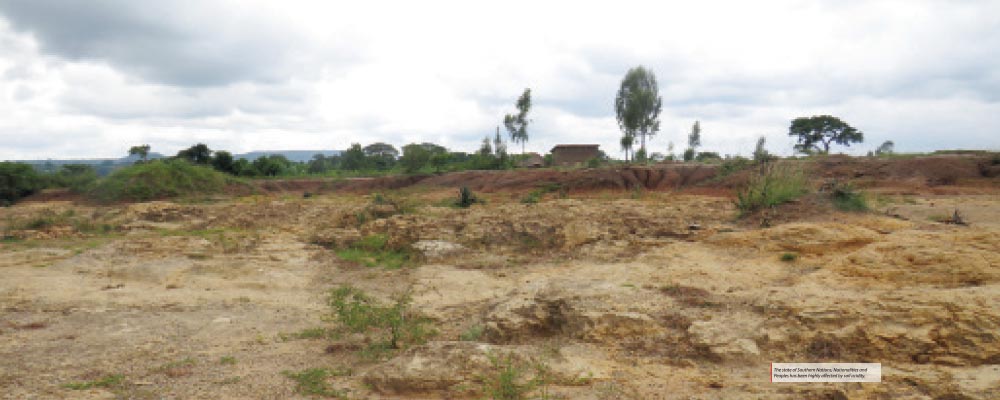
It has been over a decade since the government discovered that a little more than 40Pct of the total arable land of Ethiopia is affected by soil acidity. As a result, the fertility of most Ethiopian soil has already declined posing another challenge to crop production. Soil acidity affects crop growth because acidic soil contains toxic levels of aluminum and manganese and characterized by deficiency of essential plant nutrients such potassium, calcium and magnesium, among others. Had acidic soils been neutralized the country would have increased the production of crops such as cereals four folds. Yet this does not seem like it will be realized soon. EBR’s Ashenafi Endale reports.


ertria_focus_3.jpg

Home to just over half a million people, Asmara has been the capital city of Eritrea since the early 19th century. Although its evolution dates back centuries, many parts of the city were built during the Italian colonial period. Referred to as ‘Little Rome’, its impressive architecture and well designed buildings make Asmara distinct from other cities in the horn of Africa. However, not everything in the city has stood the test of time. From the decaying and severely damaged heritages to poor economic conditions and tough business environment, Asmara is currently struggling to maintain the artefacts of its golden era. EBR’s Samson Berhane visited the city to discover what makes it exceptional: both in a good and bad ways.


Ethiopian Business Review | EBR is a first-class and high-quality monthly business magazine offering enlightenment to readers and a platform for partners.


2Q69+2MM, Jomo Kenyatta St, Addis Ababa

Tsehay Messay Building

Contact Us

+251 961 41 41 41