addis-ababa-city.jpg

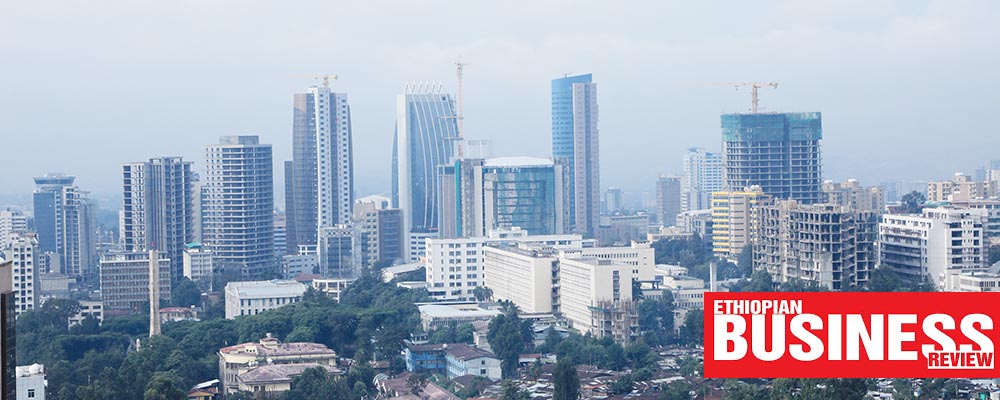
The liberal free mar-ket economy Ethiopia adopted under the reign of the Ethiopian People’s Revolutionary Demo-cratic Party (EPRDF) has been a start of the growth of the private sector. Under such an economy, major public and private compa-nies (especially those operating in finance) access the bulk of money pumped into the market. Then, this huge money trickles down under small pours to the society at large. As has been evident in cities that have made the transi-tion to metropolitan status, the skyline of Addis has welcomed high rising buildings serving as the headquarters of the elite com-panies in the country.


mobile-banking.jpg

It has been quite a long time since mobile banking started in Ethiopia. However, its penetration is still very small considering the potential size of the market. With branch expansion taken as the primary goal of banks to expand their services to people in all corners of the country, mobile and agent banking seem to be in the back burner. However, poor banking infrastructure outside of the capital Addis Ababa seems to have raised the relevance of mobile banking in some regions of the country. EBR’s Kiya Ali looks into the expanding mobile banking market in the country.


The-Dangers-of-Ethiopias.jpg

Ethiopia, along with countries like China and Bangladesh, is one of the fastest growing economies in the world. The second African most populous country achieved a commendable economic trajectory in the last two decades. Although the rate is a subject of debate among scholars and policymakers, the government claims an average of 9.9Pct growth was achieved in the past 10 years. This was corroborated by the various mega construction and other major infrastructural projects implemented during the period. Though this has helped the country achieve the title of ‘African Tiger’, it has piled up the country’s debt, both external and domestic. EBR’s Kiya Ali explores the dangers of domestic debt piles.


Housing-Market.jpg

Acquisition of Fixed Assets

Buying houses from real estate developers incur 15Pct Value Added Tax and six percent title deed transfer fee of an actual price tag. Additionally, real estate developers take more time to deliver housing units which further escalate cost of construction that ultimately push price tag further.

This makes houses built by real estate companies more expensive for the vast majority of Addis Ababans. As a result, house buyers have been looking for affordable options.


Desert-Locust.jpg

Hunger Hovering By

A swarm of locusts is pushing millions in East Africa to the brink of food insecurity. In Ethiopia alone, over a million people have so far become food insecure and in need of urgent assistance. About 3.5 million quintals of crop has been destroyed by the locust that damaged state and private farms. With predictions the locust attack may increase 400 times in the times ahead, disastrous damages are expected unless preventive measures are taken in time. EBR’s Ashenafi Endale explores.


outlook-tax-reve.jpg

States across the world are experiencing a drastic fall in government revenue and unmatched growth of expenditure due to COVID-19. Ethiopia is no different. So far, the government has approved over ETB50 billion as a response to the COVID-19 crisis. USD1.6 billion is also required to further boost the country’s potential to overcome the crisis. Meanwhile, businesses are struggling to pay their taxes, a situation which is likely to result in a fall in government revenues from taxes. This is expected to widen the budget deficit, presenting yet another macroeconomic woe for the government that is already challenged by inflationary pressure and unemployment. EBR’s Kiya Ali explores.


Repatriation-the-Destructive.jpg

Gross domestic savings are generally very low in least developed countries such as Ethiopia. That paved the way for foreign investment to emerge as an alternative source of bridging the gap between savings and the required investment after 1992. Since foreign firms bring not only financial capital but also managerial techniques as well as entrepreneurial and technological skills, foreign direct investment (FDI) is regarded as one of the major components of Ethiopia’s economic growth over the past decade. However, it’s not all been rosy. Although initial investment by foreign firms improves the current and capital accounts of the host country, in the long run, repatriation of profit, interest, royalties and management fees may harm its foreign exchange position. This is exactly what is happening in Ethiopia. A minimum of USD1 billion is requested by locally operating foreign companies that repatriate profits annually. However, a fraction of this amount is availed by commercial banks operating in the country. This phenomenon traps foreign companies, forcing them either to wait for a long time to repatriate their profits or reinvest it as EBR’s Ashenafi Endale found out.


left-at-the-mercy.jpg

In the aftermath of free market policies and the subsequent lifting of price caps in Ethiopia, setting the price of commodities seems to be left solely to suppliers and traders. With barely any institutional set ups to protect the rights of consumers, the prices of goods and services has soared in folds with the trend showing no end in sight. The Trade Competition and Consumer Protection Authority established seven years ago seems to be a failure. EBR’s Ashenafi Endale looks into the problems in consumer protection and the road ahead.


Chocking-the-Life-Out-of-Plastics.jpg

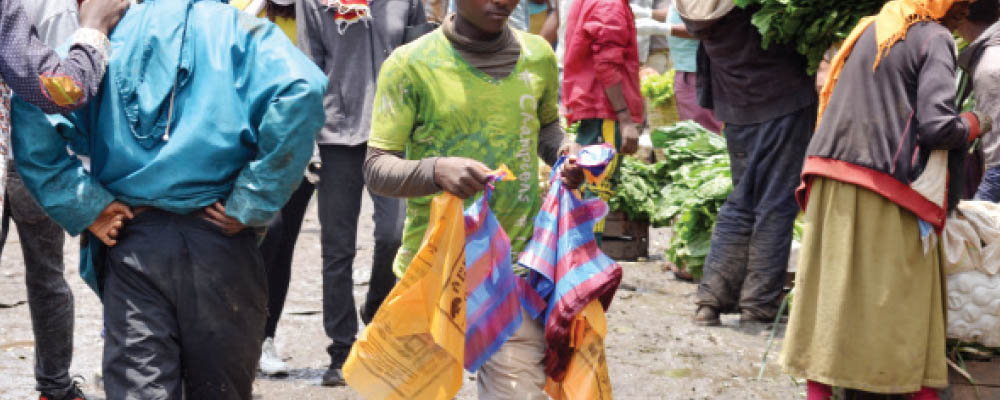
Using plastic bags is a common practice in Ethiopia, a country that aspires to build a carbon free economy by 2025. Although Ethiopia declared producing plastic bags of below 0.03mm illegal long ago, the proclamation has not been put into practice. Retailers openly trade bags below the recommended amount throughout Ethiopia. With that precedent in mind, the government has drafted a new law that totally bans plastic bags. While this is expected to be legislated in the next three months, producers complain such a measure would put them in a precarious situation. EBR’s Ashenafi Endale explores.


The-Uphill-Battle.jpg

The reliance on remittance has scaled up globally from household level to national economies following the massive workforce flow in the contemporary global economy. Ethiopia, a country that just woke up to this reality, has countless reasons to regard remittance as its biggest source of foreign currency. Especially in the last decade, remittance flows increased significantly surpassing export revenue. The annual remittance flow currently stands at USD5.3 billion. However, the annual remittance sent via official channels doesn’t match the huge number of Ethiopians residing abroad. EBR’s Ashenafi Endale investigates the reasons behind.


Ethiopian Business Review | EBR is a first-class and high-quality monthly business magazine offering enlightenment to readers and a platform for partners.


2Q69+2MM, Jomo Kenyatta St, Addis Ababa

Tsehay Messay Building

Contact Us

+251 961 41 41 41