
Fast-Forwarding-Evolution.jpg

The transformation of humanitarian organizations into financial institutions in 1997 was the beginning of operation of Micro Finance Institutions (MFIs) in Ethiopia. From then on, MFIs have showed remarkable progress in number, outreach, coverage and performance. Currently, 40 MFIs operating in the country serve close to 10 million clients nationwide while 15 more are in the making. Breaking the trend in the rest of the world, Ethiopia’s microfinance industry is born and raised in rural parts of the country. However, MFIs are currently conquering urban Ethiopia and providing credit especially for business establishments. Urbanites now make up close to 10Pct of the clientele of MFIs. The four pioneer MFIs, whose capital is way larger than most small and mid sized banks, are planning to mold themselves into conventional banks. On the other hand, the rest are pushing up their credit limits in order to capture the attention of the large segment of the unbanked population. Although most MFIs in Ethiopia have reached maturity and success, they are not immune from problems. EBR’s Ashenafi Endale reports.


The-Bumpy-Road-to-Affordable.jpg

Community Based Health Insurance (CBHI) is still an emerging concept for the majority of Ethiopians though it has been piloted for many years. However, the scheme is benefiting 22.5 million Ethiopians who are living under extreme poverty excluded from formal insurance schemes. Even in Addis Ababa, where the scheme started two years ago, close to 200,000 people are getting financial protection against the high cost of healthcare services. EBR’s Kiya Ali explores.


food-insecurity.jpg

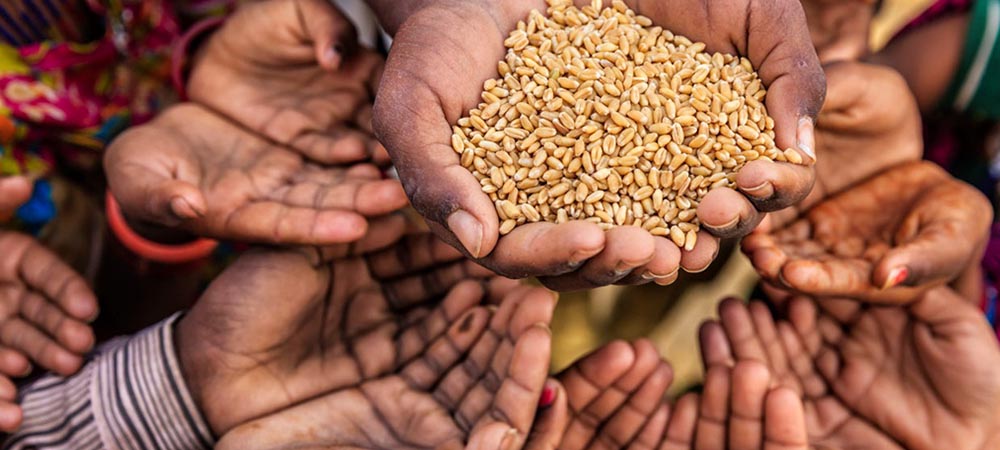
Food insecurity remains a key challenge for Ethiopia. More than eight million people are in need of urgent assistance and 70Pct of the country’s population earns below USD1.9 a day. More than 30,000 children, on average, with severe acute malnutrition (SAM) are admitted for treatment every month. Internal conflicts and climatic shocks adversely impact people’s livelihoods, making them unable to meet their basic needs, while exacerbating the food insecurity situation in the country. The failure to transform the agriculture sector, whose contribution to the economy has declined but remains a source of revenue for over three-fourths of the population, has made many food-insecure. EBR’s Ashenafi Endale explores.


civil-service.jpg

As Ethiopia attempts to gain middle-income status by 2025, building an efficient government structure run by accountable and efficient civil servants has become nothing short of vital. The civil service is, however, nowhere near these lofty standards. Inefficiencies of the public service cost the country hugely, resulting in the delay of mega projects that led to the dissatisfaction of the private sector and citizens. As bureaucratic hurdles are stacked denser, doing business has become more difficult. While low wages and benefits are listed as a primary obstacle to public sector efficiency, political involvement of the ruling party in the bureaucracy has had its own shares, among others. EBR’s Kiya Ali explores.


corona-2019-ebr.jpg

The world is once again in shock with the spread of the deadly novel coronavirus, which has killed around 3831 while infecting close to 110,625 people as of March 9, 2020. With the number astonishingly rising every day, confirmed cases of the virus have been reported in around 90 countries, despite travel bans and several other restrictions put to prevent its spread. The outbreak has also disrupted supply chains across the world. Ethiopia is not immune to the problem. Over the past two months, trading businesses are suffering from supply shortages. Construction projects have been halted due to raw material shortages. Hotels are also reporting a decline in occupancy rates as the cancellation of meetings and visits have become common. EBR’s Samson Berhane probes into the matter.


Import-Business.jpg

For long, import business has been lucrative in Ethiopia, fetching relatively higher profits in a short period of time. However, this reality has been changing lately. With the persistent foreign currency shortage and import-discouraging policies of the government, many importers are now closing their doors, shifting to other sectors in search of better fortunes. EBR’s Ashenafi Endale explores.


Setting-up-Stock.jpg

A Step in the Right Direction?

Establishing a stock market has been a hot issue under discussion in Ethiopia for almost two decades. While some argue that there is a need for a capital market, citing the existing shortage of finance both in local and hard currencies, others disagree, mentioning the immature financial reporting and fragile corporate governance systems, absence of the required legal framework, and a very weak private sector. Meanwhile, the government’s position is firm: setting up a stock market in no less than a year, if possible, before the end of 2020. EBR’s Samson Berhane investigates to find out whether the country is ready to institute a stock exchange.


graduate.jpg

Having one of the largest reserves of human and natural resources, Ethiopia should have had a prosperous economy. However, it is one of the poorest countries in the world, as manifested through low per-capita income and low human-development index. The vast expansion of education and health services over the past two decades has not solved the problems of farmers and pastoralists or changed the lives of the overwhelming majority. As a result, the contribution of human capital to economic growth remains insignificant in Ethiopia. EBR’s Ashenafi Endale explores to shed light on the matter.


doro.jpg

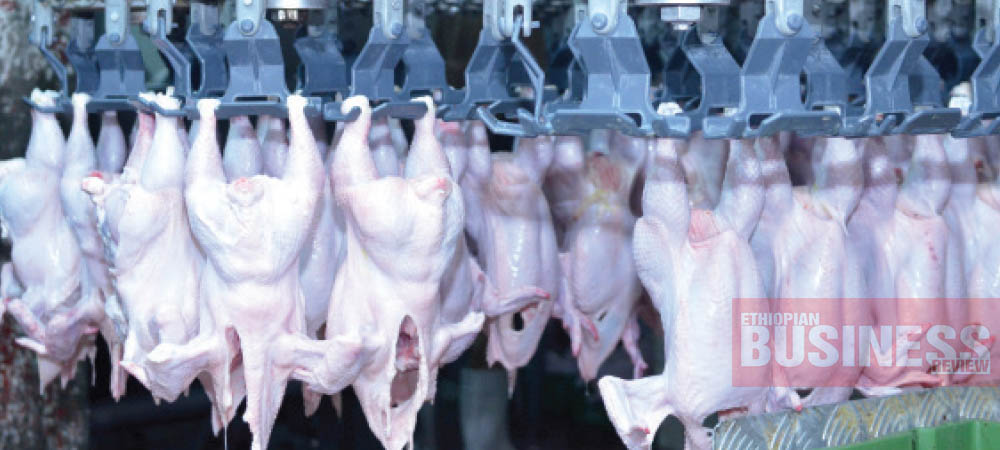
Despite having an immense potential, poultry farming is still at its infancy in Ethiopia. Commercial poultry production is characterized by a large number of small-holder farms, and few medium to large scale poultry farms. Production is concentrated mainly in the Addis, Bishoftu and Adama areas, with some small concentrations around northern and southern rural towns. Farmers lack basic knowledge on good poultry keeping practices and the inputs needed (feed, vaccines, drugs, and hardware such as drinkers and feeders) are scarcely available. Meanwhile, the demand for poultry is growing in a market which is characterized by seasonally fluctuating prices owing to religious fasting periods. EBR’s Ashenafi Endale explores.


Thanks to big corporations and financial companies, Addis is becoming a city with a high number of buildings compared to east African cities. Many of these buildings were constructed by local contractors that were able to learn fast in the past two decades, though not free from flaws. Majority of buildings constructed by local contractors lack quality and basic infrastructures and have very similar designs. Frustrated, many builders are now turning their backs on local contractors, while strengthening their ties with the foreign ones, particularly those from China. Almost all big buildings, roads and dam projects throughout the country are being handled by Chinese contractors. EBR’s Ashenafi Endale investigates.


Ethiopian Business Review | EBR is a first-class and high-quality monthly business magazine offering enlightenment to readers and a platform for partners.


2Q69+2MM, Jomo Kenyatta St, Addis Ababa

Tsehay Messay Building

Contact Us

+251 961 41 41 41