
remodeling-football-business.jpg

When the Ethiopian Premier League SC was established and began commercializing the televising of local football matches as of last year, many bet that Ethiopian football dependence on municipality budgets would end, with abundant commercial revenue now coming from DSTv.

Now, the league company is on another march to end its governmental dependency for good. The league company is currently conducting a study—the Ethiopian Premier League Development Plan—by hiring a consulting firm in a bid to build its own capacity and be able to attract more sponsors and partners and work in an ever-sustainable way and to never look for handouts again. EBR’s Abiy Wendifraw explores.

ewbetu-taye.jpg

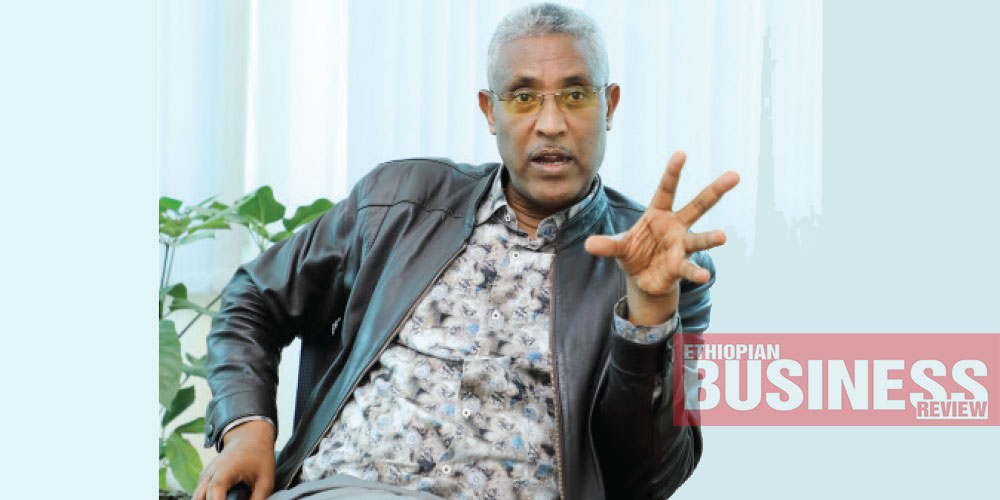
Ewnetu Taye is Deputy Director of the Logistics Transformation Office (LTO), established to transform and solve lingering sectorial problems which have long hampered Ethiopia’s development. He sees Djibouti still holding the key position going forward even with its numerous military bases which are incomparable to benefits bestowed by economic relations with Ethiopia. Alongside developing sea outlets, liberalizing the sector within Ethiopia is registering heavy developments. EBR sat down with Ewnetu to learn about the current status of the logistics sector in Ethiopia.


ethiopia-searches-for-alternative-outlets.jpg

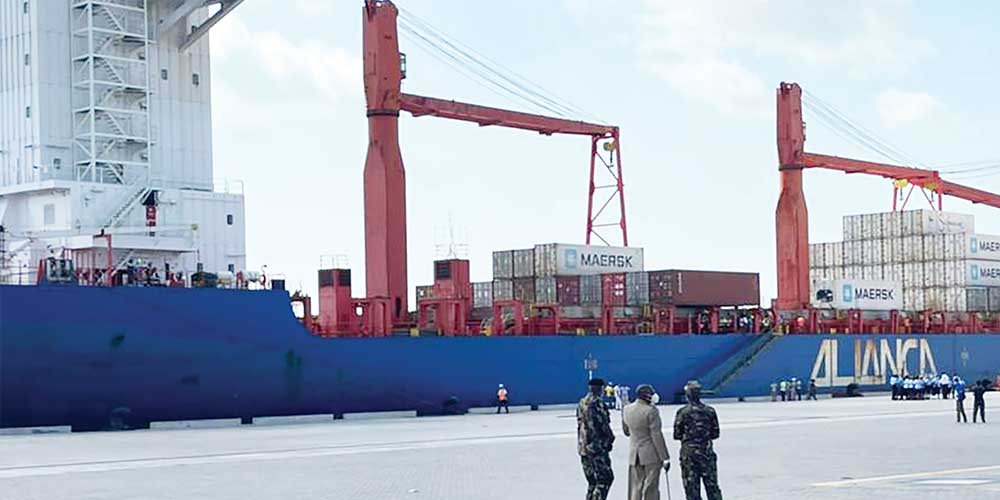
Ethiopia used to rule all ports on the western side of the Red Sea, until it lost its last one to Eritrea in 1991, joining the pack of landlocked African economies. Over 90Pct of Ethiopia’s international trade—forecasted to almost double from the current 17.1 million tons to 30 million metric tons by 2030—has been utilizing the Port of Djibouti.

However, Ethiopia is currently exploiting additional ports in Kenya, Somalia, Djibouti, Sudan, and Eritrea. Following the opening of the Ethiopian logistics sector to foreign investors, these ports are planned to be linked with dry ports and economic and logistics facilities across Ethiopia. To that end, the Logistics Transformation Office, is currently finalizing the first Ethiopian logistics masterplan, which envisages interconnecting the nation through infrastructure including ports, roads, rail, aviation, pipelines, and transboundary rivers. Ashenafi Endale explores.


In the period leading up to the 2008 global financial crisis, a few prescient voices warned of potentially catastrophic systemic instability. In a famous 2005 speech, Raghuram G. Rajan explicitly cautioned that although structural and technological changes meant that the financial system was theoretically diversifying risk better than ever before, it might in practice be concentrating risk. At the time, Rajan was mocked; former US Treasury Secretary Larry Summers was not alone in thinking him a “Luddite.”


Arbitration-Commercial-Dispute-Settlement-Mechanism.jpg

Legal friction amongst businesses is a naturally occurring phenomenon. However, if there is no equally-dynamic venue and avenue to solve those frictions, business activity will get stuck. The normal court system which handles criminal cases and takes months and years to conclude, is too slow for business.

Though arbitration is globally preferred as the best business dispute settlement mechanism, Ethiopia has not had the necessary legal frameworks in place. Usually, business arbitration awards rendered in any country across the world are acceptable by the highest courts. However, this was missing in Ethiopia until the nation signed the 1958 New York Convention in 2021.

Until now, most business conflicts arising from contracts between Ethiopian businesses and foreign partners, have been arbitrated outside of Ethiopia. This has its costs in terms of undue foreign currency consumption, inability to receive fair arbitration, and misconception of Ethiopia as business unfriendly. Ashenafi Endale explores the new changes after the ratification of the convention, as well as the new local arbitration proclamation.


Muluneh-Lema.jpg

Muluneh Lema, is a founding member and General Manager of Mintu Investment Group (MIG) as well as President of the Ethiopian Millers Association. Educated in the US, he took the initiative to turn his family’s legacy of a candy factory and flour wholesaling into a gigantic group of factories. Under the group, companies engaged in the manufacturing, food processing, real estate, import, export, and pharmaceutical sectors, operate. Wakene Food Complex, Mintu Plast, Menoria Real Estate, Mintu Export, and Mintu Pharma are his leading companies. With ETB800 million in annual turnover, the group has doubled its investment capital to ETB1 billion over the last six years. Formed by four brothers, MIG succeeded mainly because the siblings specialized in different sectors.

The plastic factory has especially managed to substitute imports of plastic bottles and caps for water bottlers in Ethiopia. It has also substituted the import of PVCs and other plastic products used as construction and agricultural inputs. Wakene Food Complex, on the other hand, has the lion’s share in Ethiopia’s wheat and flour market.


meskel_5.jpg

Photo Credit: Samuel Habtab


image001.jpg

The Economic Commission for Africa (ECA) and International Chamber of Commerce (ICC) have jointly launched Centres of Entrepreneurship in Africa (CEA).

With strategic locations across Africa, the ECA – ICC Centres of Entrepreneurship will work with various stakeholders, including businesses, chambers of commerce, academic institutions, intergovernmental and governmental agencies, to connect local entrepreneurs to global markets and enhance regulatory conditions for SMEs to thrive.


Ethiopia-Eritrea-Plans-One-Stop-Border-Trade.jpg

Ethiopia is in preparation to set up one stop border service with Eritrea, in a bid to utilize Assab port.

“we have prepared customs protocol and the Ethiopian government has already submitted it to the Eritrean ministry of foreign affairs. We have finalized every preparation on Ethiopian side and we are waiting responses from Eritrean side,” said Debele Kabeta, commissioner of Ethiopian Customs Commission (ECC).


Eighteen-Banks-to-Share-Loan-Pie-from-Afrexim-Bank-2.jpg

African import-export bank has approved USD500 million, which will be shared among 18 commercial banks in Ethiopia.

“I have also asked Afrexim bank to open office in Ethiopia,” said Yinager Dessie, governor of National Bank of Ethiopia (NBE), after launching a two-day technical discussion between Afrexim and Ethiopian banks, on how to utilize and return the loan.


Ethiopian Business Review | EBR is a first-class and high-quality monthly business magazine offering enlightenment to readers and a platform for partners.


2Q69+2MM, Jomo Kenyatta St, Addis Ababa

Tsehay Messay Building

Contact Us

+251 961 41 41 41