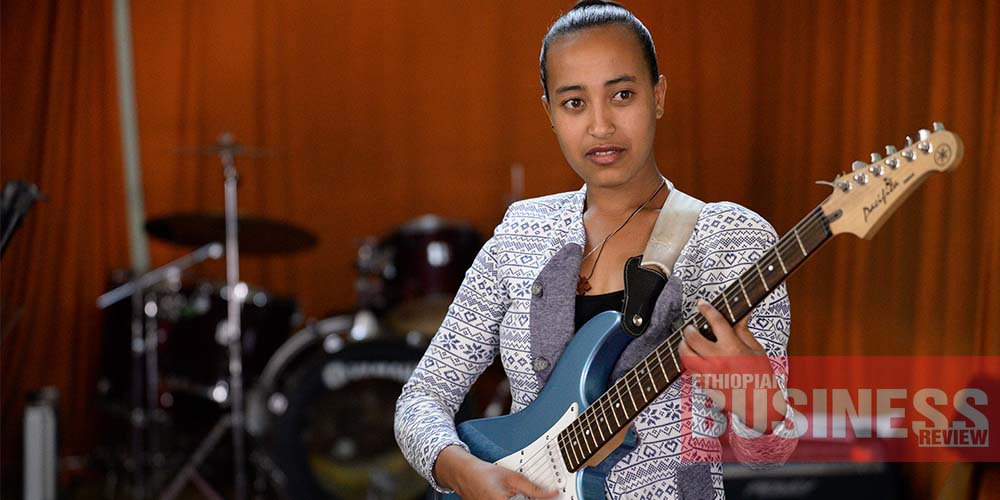
Why-are-Women-Underrepresented-in-Music-Performance.jpg

Despite the fact that women have achieved greater equality in recent decades with regard to increased employment opportunities, the realm of music performance still remains overwhelmingly dominated by men. This trend isn’t exclusive to Ethiopia: countries in the West also feature predominately male orchestras and bands that perform at prestigious musical venues. EBR’s adjunct writer Meseret Mamo spoke with musicians and explored the issue further to parse through the different explanations behind why women are underrepresented as instrumentalists. This article is a rerun from EBR 38.


fresh-attacks-on-women-retreats-gender-fight.jpg

In Ethiopia, the idea of women fighting against physical, psychological, and sexual abuse is far from becoming a mainstream thought. Even though the country has been praised in decreasing maternal death and other key indicators of women’s health, preventing or getting justice during abuse still remains a complication. A series of conflicts in various parts of the country is only pulling the little progress made in preventing the trauma these abuses have been causing. Even beyond the impact of the conflicts, fresh attacks in urban settings are becoming part of the news bulletin, leaving little hope for a better day, writes Trualem Asmare.


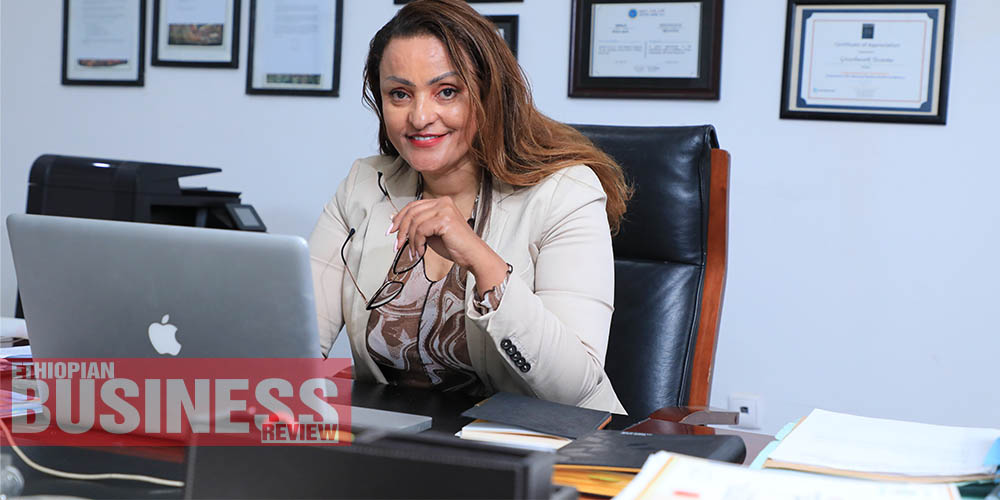
Gizeshwork-Tessema.jpg

Gizeshwork Tessema

Born and raised in Addis Ababa, Gizeshwork grew up dealing with her own version of ‘the woman’s challenge’. Yet, she identifies them not as such but rather as experiences that may bring forth opportunities.

Gizeshwork founded Gize PLC—a logistics company, about 25 years ago—and is also a contributor to the World Bank’s Doing Business Index as well as member of the United Nations Global Compact—a community of 8,000 CEOs from all over the world that convenes once a year to chart innovative ways for entrepreneurship for a better world.

She is a familiar face in the business scene as well as spearhead of the fundraising committee for the Grand Ethiopian Renaissance Dam (GERD), for which she has taken a keen interest in as it is a project of pride for her and the nation.

Entrepreneurial and making business from solving problems from her start, she is of the firm belief that one should not stay put with accomplishments but rather always push for more success. From a stationary to a travel company and from construction inputs to freight and logistics services, Gizeshwork has made her living and name in Ethiopia’s business sphere as a strong woman that overcomes her problems by providing solutions to her customers and clients—and gaining financially from it. She gave an audience to EBR’s Addisu Deresse on her experiences as a woman, an entrepreneur, and one that assumes roles in global institutions.


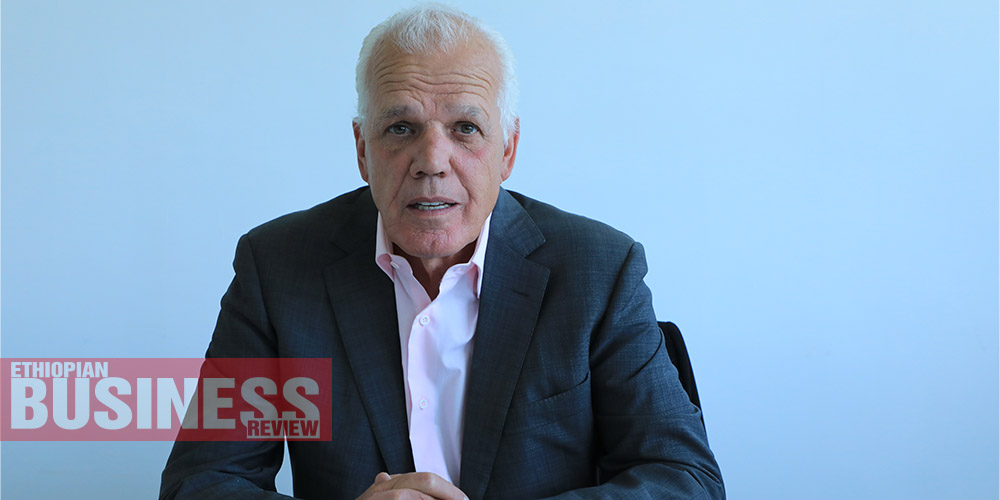
Joost-Heij.jpg

Joost Heij is Country Manager of Tradin Organic, a global supplier of organic ingredients with 13 global offices. Subsidiaries under the company’s Ethiopian operations include Selet Hulling PLC and Sunvado Manufacturing PLC. Joost has more than 25 years of working experience in finance, trade, and management, including 13 years as an entrepreneur.

Globally experienced in Africa, the former Soviet Union, and Asia, he worked at Peja International BV and Africa Juice BV before becoming General Manager of the decades-old Upper Awash Agro-Industry Enterprise. He holds a bachelor’s degree in law from the University of Groningen and a master’s in international banking and management from INSEAD in Fontainebleau, France.

Currently, Joost heads Sunvado Organic Avocado Oil, a processor and exporter of premium cooking oil with operations 300 km from Addis Ababa in Yirgalem. Joost talked to EBR’s Addisu Deresse on agricultural exports and the challenges of the sector in general.


commendable-export-diversification-moves.jpg

If two words could summarize typical challenges of the Ethiopian economic landscape, forex shortage would do it. And if two words could encapsulate expert recommendations to alleviate the long-time challenge—export diversification suffices. Ethiopia is gifted with abundant natural resources of adequate landmass with fertile topsoil and mineral-rich crust.

It is Africa’s water tower and has the continents largest livestock population. Its favorable climate and young population are also assets. Yet, most of its resources are not properly identified, well-managed, and well-exploited in a way that can resolve its forex crunch which has defined its economy for decades. It is with this challenging past and conditions that the last few years have seen revitalized efforts to shake up the sector and add more items to the exportable list, write Selome Getachew.


Manufacturings-Continuous-Failure-to-Launch.jpg

The Ethiopian manufacturing sector is still far from being an engine of growth and economic transformation despite potential and assurances from various actors to the contrary. It plays a marginal role in employment creation, exports, and output. It is also short of stimulating domestic linkages and is dominated by small firms, resource-based industries, low-value and technology products, and weak inter-sectoral linkages.

Ever since 1945, when strategic planning for industrialization first begun, successive administrations have been unable to oversee the take-off of the nascent manufacturing sector. Notwithstanding micro-level problems, legacy issues including foreign currency shortages, electrical power interruptions, and sectoral linkages still linger. But now, adding salt to the wound is the current administration’s tinkering with tariff privileges for factories. Selome Getachew reviews the issue with input from Bamlak Fekadu.


To sustain economic growth and development, we need to tap the potential of all people, giving women opportunities not just to work, but also to lead. What better moment to transform women’s role in the economy than now, when the world is pursuing another economic transformation, toward a green economy?


shuttle-commerce-helping-create-independent-women.jpg

Women have always shouldered social and economic burdens facing their families. Even though there are encouraging signs of more and more of them going to work and earning for themselves, the challenge of raising children is always present in slowing down any progress made, to the point of pushing women out of economic activities. In recent years in Ethiopia, women seem to have found a way of earning by traveling to Dubai and other places.

This line of business has been providing decent income for women and their kin, all the while contributing to their independence as these women plan, manage, and deliver through shuttle or travel commerce. A new tax directive seems to be existentialist, however. This and, to a lesser extent, the receding pandemic are challenging the ladies’ fight for economic self-sufficiency, writes Eden Teshome.


A few weeks ago, I facilitated a discussion for the members of a forum of women leaders in the public sector. Throughout the day, I helped these women of power explore the gender dimensions of their public roles as well as the ways in which they can foster strategic sisterhood as a means to strengthen the impact of their roles. As our conversation deepened, a few phrases came up repeatedly: strength, sacrifice, and service. I joked with the women that representation by such superwomen should transform Ethiopia in the very near future, but I worried at the narrative that expects so much from women leaders while almost expecting them to fail. One of the women called this the “‘yihew, eyiwat’ or ‘watch her fail’ syndrome.”


IMG_202204117_105517267.png

Dashen Bank and EagleLion System Technology signed a Memorandum of Understanding (MoU) to establish a new mobile app, DubePay. The collaboration has a mission to shift the financial sector ecosystem which mostly serves large enterprises and only 10Pct of households, leaving the remainder without credit.

The application allows a DubePay user of any commercial bank to purchase items on credit from suppliers and merchants enrolled on the platform, including flight tickets, home appliances, apparels, electronic equipment, and others. Therefore, it was announced that it will provide modern services by removing traditional credit services.

Buy-now-pay-later (BNPL) is a short-term consumer financing method allowing customers to buy items and pay for them in installments with minimal or no additional costs.

Users can review their accounts by simply logging into the DubePay app and granting access to their account using the credentials supplied by the bank when the account was created. Bersufikad Getachew, Techpreneur and Owner of EagleLion, is known for his disruptive innovations in areas including education, hospitality, travel, and banking. He stated that “the application is accessible for both iOS and Android users and in five different languages.”

Once signed up, users may see their credit amount, minimum monthly payment, payment due date, payment summary, credit increment request, payment alternatives, and other features. Merchants can collect receivable payments and analyze transaction history.



Ethiopian Business Review | EBR is a first-class and high-quality monthly business magazine offering enlightenment to readers and a platform for partners.


2Q69+2MM, Jomo Kenyatta St, Addis Ababa

Tsehay Messay Building

Contact Us

+251 961 41 41 41