
yetnebershe.jpg

In a country where disability is perceived as inability by many, there are few people who demystify this old established stereotype. Indeed Yetnebersh Nigussie is one among these very few brave personalities. The 35 years old advocate of human rights, inclusiveness and gender equality lost her eyesight at the age of five. 

However, her disability has never deterred her from moving up in education. It did little to stop her from rising to global prominence. It indeed didn’t hamper her from achieving her dreams and aspirations, and making contributions to the betterment of societies.


kirose_inter.jpg

Africa Insurance Company is one of the oldest private insurers established in Ethiopia after the partial liberalization of the financial sector. Established in 1994 with ETB15 million paid up capital, the company has been engaged in all classes of insurance — general and life insurance. 

As the industry is being challenged due to the growing cut throat price based competitions and rising clams, some insurance companies are witnessing a declining profit, Africa Insurance is one of them. EBR had a brief discussion with its managing director, Kiros Jiranie, to learn about the company and the overall development of insurance business in the country. 


horticulture-potential.jpg

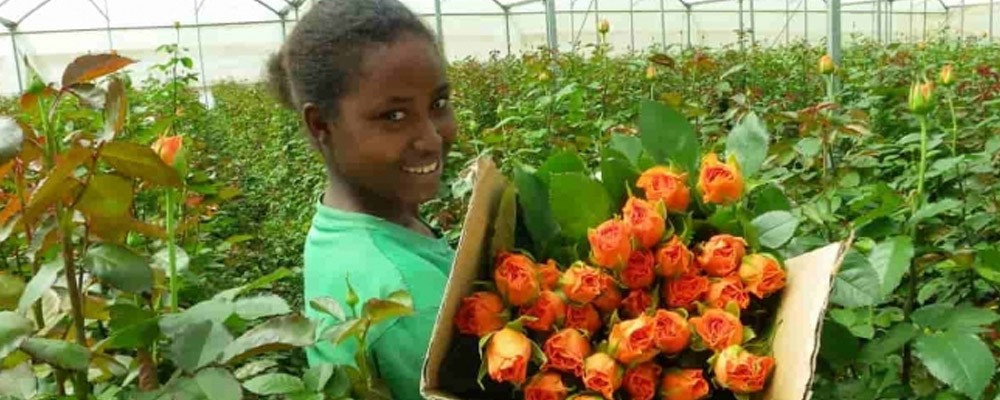
Ethiopia is endowed with extensive natural resources such as fertile soil, abundant water resources and favorable climatic condition that make the country suitable for the development of different varieties of flowers, vegetables, fruits and herbs. Despite this, the country has not benefited from the sector as expected. 

Lack of adequate attention given to the sector by the government, years of insufficient investment by the private sector, and the absence of skilled human resource and technologies are among the major factors that thwart the country from reaping the benefits of its potential in the sub sector.

To avert the trend, Ethiopia, the second largest flower exporter in Africa after Kenya, recently launched the National Horticulture Development and Transaction Strategy. The strategy highlights the plan to create conducive environment for modernized horticulture development. EBR’s Mikiyas Tesfaye has gone through the document and conversed with major stakeholders to offer this report.


breast-cancer.jpg

Primary prevention, screening and appropriate follow-up, treatment and provision of palliative care reduce the burden of breast cancer. Ethiopia is also focusing on these preventive methods to reduce the fatal effects of the disease.

However, poor awareness, inadequate cancer-treatment infrastructure and cancer-management options are challenging the country of estimated 104 million from effectively addressing the issue. EBR’s Hiwot Selalew explored the interventions.


food-security.jpg

As population keeps increasing and fighting poverty becomes a top global agenda, the need to increase agricultural production has become a priority especially in developing countries like Ethiopia. For that, experts advise policy interventions that can help to increase productivity and production. Using improved technologies and increasing farm size have for long been advised to increase output. Ethiopia has been going in the same direction.

Yet, there is one thing that it was not well thought of to improve food security – managing post harvest loss. The intervention — which can be achieved without major cost — can help avoid much of the loss of output which reaches up to 50Pct in some products.  Post harvest loss for major cereal crops, except Teff, is around 24Pct in Ethiopia; the loss for oilseeds is between 15Pct and 25Pct while vegetables and fruits incur the highest loss of about 50Pct. This occurs almost at every stage of the supply chain. EBR explores the issue.


The world is becoming increasingly urbanized, as more people are choosing to live in towns and cities than ever before. The trouble is, most urban areas are unprepared to manage the influx.

Cities around the world face a looming investment crisis that makes them less livable than they should be. The maintenance of vital social and economic infrastructure, not to mention development planning, is being delayed because of a lack of cash. With local governments’ finances burdened by continuously expanding spending commitments, public resources in many cities are highly constrained.


cotten_ebr.jpg

Cotton, a natural fiber, has been grown in Ethiopia for millennia. However, the local production hardly satisfies the demand of textile industries in the country. This is despite the fact that a total of three million hectares of suitable land, which is equivalent to that of Pakistan’s, the fourth largest cotton producer in the world, is available in the country. To reverse the situation, Ethiopia recently started experimenting with Genetically Modified (GM) cotton variety known as BT cotton. 

GM cotton varieties have proven to be successful in India, China, Pakistan and US. Currently, 25 million hectares of land is cultivated around the globe with this variety. Ethiopia is moving in the same direction. However, there is a recent development in which growers’ of the commodity are reverting back to locally improved cotton seeds. EBR’s Ashenafi Endale has delved into the matter and spoken to researchers, policy makers and industrialists to offer this report.


Since the early days of modern trade there has been anxiety about the future of local businesses.  It’s safe to assume that many Ethiopian companies haven’t experienced such a state of flux and uncertainty. Yet, as the economy positions itself to further integrate with the global economy and open its doors to more foreign investors, we must question the sustainability of continuing with the entrenched “business as usual” approach as a long-term option.


Ethiopia is currently the second populous country in Africa. This can be an exceptional opportunity to strengthen its economy and fight poverty. However, this potential for growth, prosperity and development could be lost if the country is unable to support the job creation and business opportunities to absorb the growing youth population. In fact, improving infrastructure, especially access to electricity, is critical to expand business opportunities and job creation in Ethiopia.


Since the 2008 financial crisis, policymakers and international institutions have regularly expressed concerns about widening income inequality and its unwelcome political consequences. More often than not, they attribute the problem to “exogenous” factors such as global trade and new technologies.

While policymakers have intensified their focus on trade and new technologies, they have missed an even more potent driver of inequality: the endemic rent-seeking that stems from market concentration, heightened corporate power, and regulatory capture.


Ethiopian Business Review | EBR is a first-class and high-quality monthly business magazine offering enlightenment to readers and a platform for partners.


2Q69+2MM, Jomo Kenyatta St, Addis Ababa

Tsehay Messay Building

Contact Us

+251 961 41 41 41