

 Dawit Arega (MBA -IB)
Learning and development (L & D) has continued to be the most mission critical and expensive human resource management function. Companies spend millions of dollars to fast track talent development. According to Deloitte insight, nearly every CEO and CHRO report that their companies are not developing skills fast enough or leaders deeply enough. In today’s highly competitive global economy and intensely competitive talent market, the C-suite clearly understands that companies that do not constantly upgrade skills and rapidly build leaders will not be able to execute their business plans. In today’s business environment, learning is an essential tool for engaging employees, attracting and retaining top talent, and developing long-term leadership for the company. However, research has shown that money spent on L & D is often wasted.
 Ethiopian Business Review
The Fourth Industrial Revolution is reshaping the world of work. While policymakers in the West are struggling to respond, the task facing African governments appears even more daunting. In navigating the challenges and opportunities of the digital age, the continent’s policymakers must be willing to adapt and experiment.
 Amanyehun R. Sisay
Dear Readers,
The Ethiopian Business Review (EBR) is a new English business magazine. It will be published every two months by Champion Communications. We just started the magazine at a time Ethiopia is undergoing historic changes.
It is so saddening that Ethiopia lost Prime Minister Meles Zenawi, its present architect at this point of time. Meles lived and served the cause he believed in. That was worthwhile. Through the way, he has done many great things. Although his passing away at the age of 57 is so saddening, Meles has accomplished much that would keep his legacy alive. On behalf of our editorial team and myself, I would like to extend our deep grief. We wish his soul to rest in peace.
Between 1997 and 2008, average non-tax revenue has been increasing in Africa largely driven by the global commodity price boom. Nevertheless, especially after 2012, non-tax revenue declined sharply due to dropping commodity prices. Despite this, the non-tax revenue collected by African countries reached a staggering USD133 billion in 2017, which is much higher than the USD100 billion the continent reportedly loses annually in the form of illicit financial flows.
 Ashenafi Endale
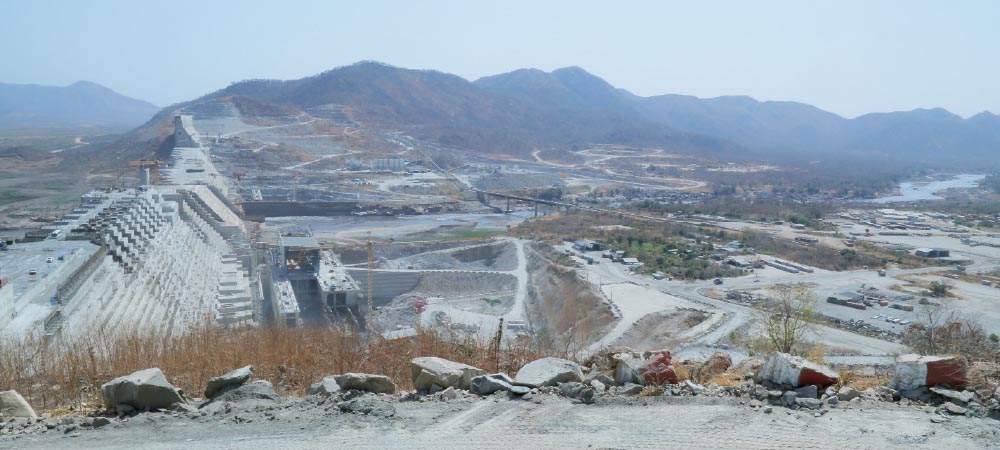
Grand Ethiopian Renaissance Dam
Eight years ago, when Ethiopia announced its bold decision to build the biggest possible dam on the Nile River, to which it contributes 86Pct of the water volume, with financing from domestic resources, the issue grabbed global headlines. Despite considerable consternation in Egypt and Sudan, the country was able to embark on the Grand Ethiopian Renaissance Dam (GERD), which will be the largest hydropower plant in Africa, and the seventh globally upon completion.
Seven years later, however, the Metal and Engineering Corporation (MetEC), the contractor for the electromechanical and hydraulic steel structure work on the project, became a focus of controversy amid allegations of delay, corruption, resource wastage and all sorts of mismanagement. The controversies have since put the GERD on the spotlight; and many even doubted the completion of the project. This was further complicated with the untimely death of Simengew Beleke (Eng.), manager of the project who was found dead of a gunshot wound on July 26, 2018, at Meskel Square, Addis Ababa.
Last year, the government cancelled all the contracts awarded to MetEC and signed contracts with five Chinese, French, and German companies to undertake the electro mechanical works. With this, the government seeks to start the project with a fresh schedule and finish the project in 2022, six years after its initially planned year of completion. However, there are still uncertainties over the finalization of the grand project. EBR’s Ashenafi Endale, who visited the game-changing power project, reports.

Nassir Dino (PhD), associate professor of software engineering, is chairman of the organizing committee of ‘Zamzam Bank’. He is also the cofounder and president of Higher Learning Center of Excellence (HiLCoE), a specialized centre of excellence in education, research and consultancy in the field of information and communication technology (ICT). The Centre was established in 1997 and has since graduated thousands of skilled professionals.
Thirteen years ago, Nassir started to establish Zamzam, the first Islamic bank in Ethiopia. However, his effort did not bore fruit because the National Bank of Ethiopia (NBE), the financial regulatory body, denied them license to start operations in the final hours.
After 13 years of patience, however, his effort got favorable response from the administration of Prime Minister Abiy Ahmed (PhD). During the holy month of Ramadan, on May 22, Yinager Dessie (PhD), the new governor of NBE, met the founders of Zamzam; and informed them the good news. After more than a decade of stall, the Governor told them to resurrect Zamzam. On the same day, the Premiere also reaffirmed his support for the realization of the bank. This was announced in a historic speech the PM made at the grand Iftar at the Millennium Hall. For Nassir, his team and the tens of millions of Ethiopian Muslims, the ecstasy the news created was unprecedented and is still afresh.
Zamzam has already started floating shares and is set to start operations in about a year. EBR’s Ashenafi Endale discusses with the professor who also studied Islamic Banking and Islamic Insurance in London, the UK, about the prospect of the bank.
 Kiya Ali
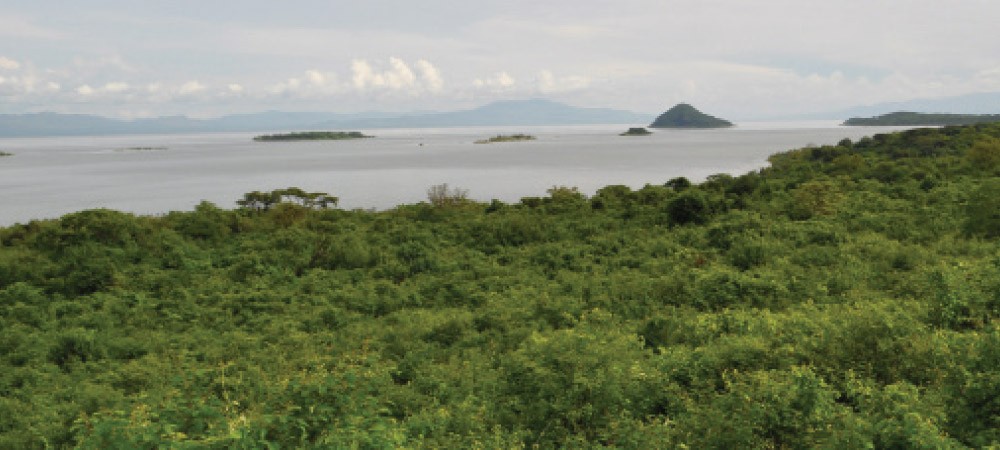
A Town Blessed by Nature Facing Modern Challenges
Located 454km from Addis Ababa in the southern part of Ethiopia, Arba Minch is home to more than quarter a million people. The town is also a habitat for various aquatic and wild animals. Because of the good climatic condition, the area is also conducive for several varieties of fruits and vegetables.
Arbaminch’s natural endowment is a great factor for the growth of tourism in the town. This has contributed for a burgeoning hospitality industry which has grown by leaps and bounds in recent years. However, mainly because of human factors, these natural resources are at risk of perishing. EBR’s Kiya Ali, who visited the naturally endowed town recently, reports.

Brews Inflation, Exacerbates Balance of Payment Problem
The budget deficit for 2019/20 fiscal year stood at ETB97.1 billion, twice the amount registered two years ago. Despite the escalating figure, the government claims it is under control since it accounts for only three percent of the gross domestic product (GDP).
Nevertheless, experts stress that the deficit goes as high as 17Pct of the GDP when the money borrowed by public institutions is included in the equation. As the budget deficit grows, there is a fear money supply would rise, which will ultimately lead to a rise in inflation, which has already reached 15.4Pct. The consequence will further exacerbate balance of payment problem, which is already at alarming stage. EBR’s Ashenafi Endale spoke with officials and experts to shed light on the matter.

The Likely Impact of Interest Free Banking on the Financial Sector
In 2010, there were few Islamic banks under establishment in Ethiopia. However, they failed to open their doors because the government prohibited the provision of full-fledged interest free banking in 2011. Until now, interest free banking services are provided by conventional banks at a single window level. However, things have started changing after Prime Minister Abiy Ahmed (PhD) gave a green light to the formation of the much awaited banks recently. Consequently, five Islamic banks are preparing to float shares, while few more are under establishment. Will the entrance of these new financial institutions change the banking industry? EBR’s Ashenafi Endale & Kiya Ali report.

Even under normal banking operations, not all loans can be collected fully because loans are not free of risks. This affects the financial performance of any bank because it leads to an increase in non-performing loans (NPLs). This is exactly what is happening in Ethiopia at the moment. Due to macroeconomic and bank specific factors, borrowers are increasingly finding it difficult to pay back loans. Industry insiders say the average NPL figure has now reached eight percent. The National Bank of Ethiopia (NBE) has set five percent as the upper limit any bank’s NPLs may go. EBR’s Ashenafi Endale examines the causes.
