
Tadesse-Kiros.jpg

A consultant and attorney at law, Tadesse Kiros has had decades of experience in a wide range of legal expertise such as taxes, mergers and acquisitions, and energy as well as infrastructure finance, among others. Tadesse served as deputy chief justice of the Supreme Court of Ethiopia under the Transitional Government of Ethiopia. Prior to that he served as a member of the Legal Committee formed under the Office of the President of the Transitional Government between 1991 and 1992. He later established the Tadesse Kiros Law Office, one of the most successful de-facto law firms in the country, and a leading service provider, both in coverage and organizational capability.

face-to-face.jpg

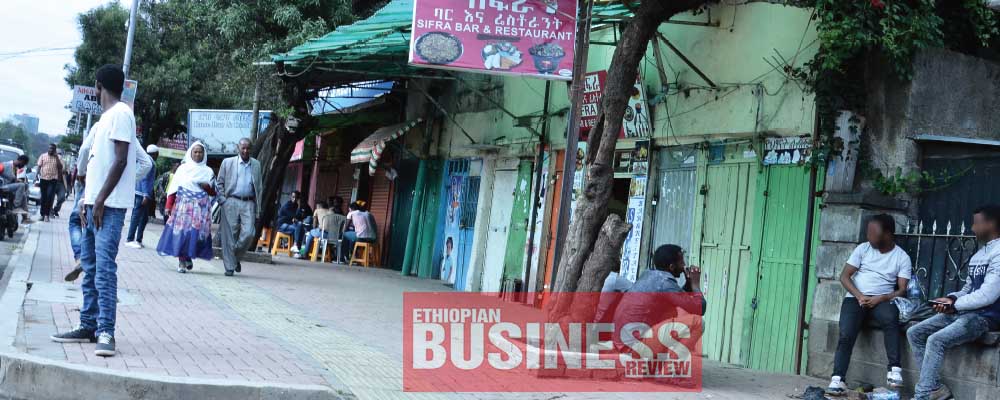
Can it help commercial banks mobilize more deposits?

Commercial banks in Ethiopia are currently engaged in ever-more stiff competition to mobilize deposits. Most notably, almost all of the banks have begun to use face to face marketing to gain the attention of new customers. It is now not unusual to see tellers from various commercial banks pleading with people in streets, cafes and other public places to open bank accounts at their respective branches. Experts argue that such methods of deposit mobilization are not effective or sustainable, and criticize banks for not coming up with products and services for the unbanked population, as EBR’s Samson Berhane writes.


Uphill-Climb.jpg

Fight Against Illegal Currency Trading

Over the recent months, the government has undertaken several measures to wipe out the parallel exchange market. But none of the measures were effective in arresting the spread of black market transactions. The first step was spreading a false rumor that the government would adjust the exchange rate. In doing so, it managed to temporarily weaken the black market and narrow the gap between it, and the official exchange market to as low as five cents. This was short-lived though. Black market players, who saw that the government did not keep its word, started raising the exchange rates again. Frustrated by their actions, the government, in an unprecedented move, shut down businesses engaged in the informal exchange market. But that also didn’t work, as the gap between the parallel and official market widened by almost eight birr. EBR’s Samson Berhane investigates.


Ethnicity-Trap.jpg

Can Ethiopia Break Free?

With the escalation of violence resulting in the death and displacement of millions of people, the humanitarian situation in Ethiopia has deteriorated over the past six months. The number of internally displaced people in the country, which started to increase last December, reached an historic peak in April 2018. Many attribute the problem to the ethnic based politics that the country has been pursuing since 1991. Since then, politicians have especially been using ethnicity as an instrument to advance wide ranging political and economic interests. EBR’s Samson Berhane explores.


Martin-Plaut.jpg

Martin Plaut is not new to the geopolitics of the Horn of Africa, having amassed more than three decades of experience in the region, starting as a journalist with the BBC World Service in 1984. He has reported from most of East Africa, as well as some parts of West Africa, and but his specialty lies in the Horn of Africa and Southern Africa. He later served as the Africa Editor for the BBC World Service News and published extensively on African affairs. Currently, he is working as an adviser to the United States Department of State and Senior Researcher at the Institute of Commonwealth Studies.


Service-Exports.jpg

Why Exports of Ethiopian Services Remain Stagnant

The service sector in Ethiopia has suffered from a lack of government attention for a long time. It is still not part of the government’s strategy, even though it contributes close to 40Pct of the country’s gross domestic product. In Ethiopia, earnings from service export have long been dominated by traditional sectors- mainly travel and tourism services. This has undermined the competitiveness of firms that export services and the country’s ability to boost its service export earnings. Although service exports have potential, they have not grabbed the attention of policy makers so far, as EBR’s Samson Berhane reports.


Scramble.jpg

Gulf Nations Cast a Shadow Over the Horn of Africa

The Horn of Africa is one of the most unstable regions in the world. It has long been known for economic, political and humanitarian crises. However, these challenges have not repelled global and regional powers, chiefly because of the region’s strategic geopolitical importance for global security and international trade. This makes the region a battleground among global actors whose economic and security interests exceed their national boundaries. The United States, France, China, the United Arab Emirates, Turkey and Iran have already set up military bases in the region. Germany, Japan and India are also focusing on the area. More recently, with the security bloc formation, spearheaded by Saudi Arabia and Iran respectively, the region has further become a battle of religious, economic and security influences. In fact, the Horn countries have been highly influenced to side with either of the two blocs. Despite this influence, Ethiopia has remained neutral for many years. Recently, however, worries are mounting that Ethiopia will likely side with the bloc led by Saudi Arabia. However, the government claims that it is firm in its neutral position. EBR’s Samson Berhane investigates.


ertria_focus_3.jpg

Home to just over half a million people, Asmara has been the capital city of Eritrea since the early 19th century. Although its evolution dates back centuries, many parts of the city were built during the Italian colonial period. Referred to as ‘Little Rome’, its impressive architecture and well designed buildings make Asmara distinct from other cities in the horn of Africa. However, not everything in the city has stood the test of time. From the decaying and severely damaged heritages to poor economic conditions and tough business environment, Asmara is currently struggling to maintain the artefacts of its golden era. EBR’s Samson Berhane visited the city to discover what makes it exceptional: both in a good and bad ways.


ertria_focus_2.jpg

Asmara Keren And Massawa Through Ethiopian Eyes

Although optimism about the future of Eritrea was high in the 1990s, Eritrea now exists in isolation; the lives of ordinary Eritreans is tough and many cities remain underdeveloped. In fact, Eritreans now make up a significant portion of those migrating to Europe on dangerous crossings through Libya. EBR’s Samson Berhane, who travelled to Asmara, Keren and Massawa explores the lives of Eritrean residing in these cities.


Cycling-In-Eritrea.jpg

A Sport Like No Other

Cycling is a culture in Eritrea. From the youth to the elderly, Eritreans use cycling as their primary mode of transportation. Introduced by the Italians during colonial rule, the sport has currently enabled the nation to be one of the top professional cycling countries in Africa, and the world. For instance, the national team won the African Championships for eight consecutive years. However, there are uncertainties behind the successes. Many Eritreans who aspired to follow the path of their friends into professional cycling have not been able to pursue their dreams because of financial constraints, as EBR’s Samson Berhane reports.


Ethiopian Business Review | EBR is a first-class and high-quality monthly business magazine offering enlightenment to readers and a platform for partners.


2Q69+2MM, Jomo Kenyatta St, Addis Ababa

Tsehay Messay Building

Contact Us

+251 961 41 41 41