ertriya_1.jpg

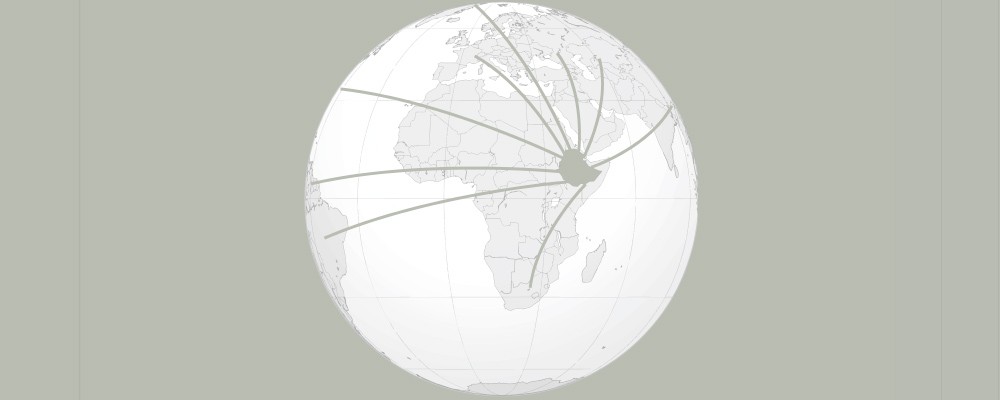
Before the 1880s, Eritrea was part of Ethiopia. It was the advent of colonial rule that created a historic divide between them. Global developments after the second World War and diplomatic efforts by Emperor Haileselassie helped the reunion of the two countries in 1952 through federation. However, the federation was abolished in 1962 and subsequent internal power struggles ignited the Eritrean liberation movement. In a war that spanned for 30 years, Eritrea finally became an independent state in 1991.

The two countries established formidable relations since then. That close relationship, however, was short lived, because of a bloody two-year war between the two countries brokeout in 1998.

feature_64.jpg

If anything has cast a pall over the Ethiopian economy, it is the foreign currency shortage, which reached historic lows just three months ago. This has prompted businesses to look for alternative means to alleviate the problem, such as transacting using diaspora accounts. The accounts are offered to non-residential Ethiopians, as well as Ethiopian-born foreign nationals who have been working and living abroad for more than a year. This has opened a window of opportunity for legal as well as illegible account holders to access foreign currency without waiting for the approval of letters of credit. EBR’s Samson Berhane reports.


Michael-Joseph.jpg

Michael Joseph is a pioneer of mobile money in Kenya. He is credited with the remarkable success of the M-PESA mobile payments system that has helped Kenya develop its rural economy. In the ten countries where M-PESA operates, networks of thousands of small shops and businesses allow mobile customers to swap physical cash for electronic credits. The network now has over 30 million active users. EBR’s Samson Berhane sat down with Joseph, who is currently Vodafone Group’s Director of Mobile Money and Board Chairperson of Kenyan Airways, on the sidelines of the launch of Dashen Bank’s new mobile money platform (Amole) one month ago, to discuss his success in deploying one of the world’s most successful mobile money services and his views towards Ethiopia’s banking as well as telecom sectors.


kid_negli.jpg

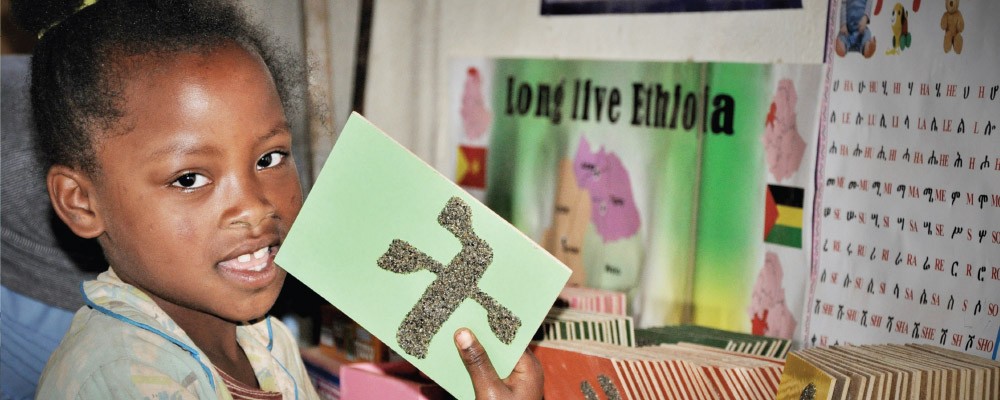
Although the government incorporated a pre-primary school program into the Education and Training Policy in 1994, attention is still not being paid to the sector. Instead, the major focus for the government has been scaling-up primary, secondary and tertiary schools. Shortages and high turnover of teachers, a lack of clear direction to develop early education and budgetary shortages have been the major problems keeping pre-primary school programs from expanding as EBR’s Samson Berhane reports.


Foreign-Exchange.jpg

Peter M. Sullivan has been the managing Director and head of the Public Sector Group for Africa at Citi Bank since 2007. The Public Sector Group is committed to facilitating global best practices and success transfers among its client base including central banks, multilateral development banks and sovereigns.

Peter, who is responsible for developing business and structuring and delivering product solutions for sovereigns, state-owned enterprises and multilateral institutions in Sub-Sahara and North Africa, has 27 years’ experience in the banking industry with Citi including the coverage of Global Financial Institutions, Industrials and Sovereigns.


Urban-Safety.jpg

For a long time, rural poverty has been a big concern in Ethiopia. Compared to rural standards, the urban population, which was estimated at over 20 million last year, might live in better conditions. But, recently, poverty among the urban population reached a point where it can be considered a crisis. Due to this, the World Bank, in partnership with the Ethiopian government, implemented the first Urban Productive Safety Net Program last year, at a cost of USD450 million, to reduce urban poverty. EBR’s Samson Berhane evaluates the success of the program.


Abiy-Ahmeds-First.jpg

For most of the past two years, Abiy Ahmed was best known for being one of the major driving forces behind the economic revolution and reforms in the state of Oromia. But for the last 90 days, his actions as the new Prime Minister of Ethiopia have been grabbing the headlines.

Since he took power, changes and reforms have been announced almost every day. Among these reforms were the decision to fully or partially privatize key state owned enterprises; unconditional acceptance of the Algiers agreement-a peace agreement between the governments of Eritrea and Ethiopia signed on December 12, 2000, in Algiers, for the formal end of the Eritrean-Ethiopian War, which lasted from 1998 to 2000; and the release of thousands of inmates charged with and convicted of corruption and terrorism. He also negotiated the release of thousands of Ethiopian prisoners in neighbouring countries.


Elias-Geneti.jpg

Elias Geneti, President of AACCSA

Elias Geneti has been the president of the Addis Ababa Chamber of Commerce & Sectoral Associations (AACCSA) since 2014. Having received his masters of science in soil engineering in 1992 from the Ukrainian Agriculture University, he returned to Ethiopia in the 1990s. Elias took a job as a business development officer for ODA Share Company, ending up as deputy Chief Executive Officer, before setting up a trading company to export oil seeds and pulses in 2005.

Elias served as the president of Ethiopian Pulses, Oilseeds & Spices Processors-Exporters Associations for eight years. He sees better prospects for the private sector in the years ahead and believes the recent measures of the government to privatize key state-owned enterprises is a sign of radical change. EBR’s Samson Berhane sat down with him to discuss chambers, the benefits of privatization and challenges of the private sector.


New-Laboratory.jpg

Ever since the Food, Medicines & Healthcare Administration and Control started implementing a new rule that requires the inspection of 18 food items, such as pasta, noodles and edible oil, imported into the country, businesses are crying foul over the surge in laboratory cost. The new measures, which are said to be part of the Authority’s five-year plan, forces importers to wait weeks in order to get test results, as well as raising the cost of laboratory tests. For a single 20-foot container, the cost of testing has increased by an average of 14pct, reaching as high as 100Pct, depending on the nature and type of imported food items. This has discouraged many importers and supermarket owners engaged in the wholesaling and retailing of food products. EBR’s Samson Berhane spoke to retailers, importers and government officials to explore the issue.


Debt stress has always been a contentious matter in Ethiopia. As the country pursues billions of dollars worth of infrastructural development projects, external debt stock has been growing proportionally, now accounting for almost 30Pct of the GDP. While the risk to debt sustainability escalates, several challenges limit the prospects for bucking this trend. This includes the wide gap between investment and savings, and the underperformance of the export sector. With such factors in mind, the International Monetary Fund (IMF), changed the debt stress rating of Ethiopia from moderate to high recently, hinting that the chance of defaulting on loans is increasing. Although the government is able to take corrective measures such as refraining from taking commercial loans, experts say that is too late. EBR’s Samson Berhane spoke to government officials, macroeconomists and financial analysts to probe into the matter.


Ethiopian Business Review | EBR is a first-class and high-quality monthly business magazine offering enlightenment to readers and a platform for partners.


2Q69+2MM, Jomo Kenyatta St, Addis Ababa

Tsehay Messay Building

Contact Us

+251 961 41 41 41