
it-is-more-challenging.jpg

Hilina Belete is one of the few entrepreneurs in Ethiopia who have managed to take a family business to the next level, making it a successful and strong contender in the food industry. She is the CEO of Hilina Enriched Foods Processing, at which she worked in various posts before taking it over from her father. It took Hilina more than a decade to be what she is today. When the 32-year old entrepreneur took the CEO post, the company was not well-known as it is now. But after a joint venture agreement with ONYX.S.A.S (Group Nutriset) of France, overseen by Hilina, the company pioneered the production of high quality nutritional and fortified foods for both the institutional and commercial market in Ethiopia and East Africa region. This includes Plumpy‘nut (RUTF), Plumpy’ sup (RUSF), Sheba Peanut Butter and Sheba Peanut Splits. With hundreds of employees and through its network of local suppliers, Hilina attempts to fill the gap in the country’s efforts to raise food security.
doubting-danger.jpg

Investors Fail to React to Political Risks

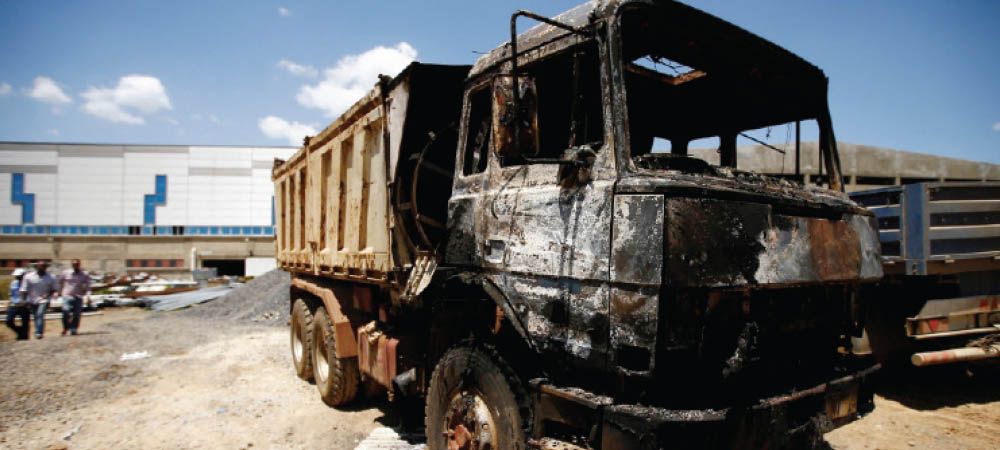
During the political unrest that has plagued the country over the last three years, many businesses were burned, looted and damaged by protestors. Investors lost hundreds of millions of birr in property. Capitalizing on these opportunities, insurance companies have started introducing new policy known as political violence and terrorism insurance. At first, there was high demand for the new policies, but that was short lived. The renewal rate is low, while new investors are disinterested in the coverage. EBR’s Samson Berhane explores.


the-unceriaing-future.jpg

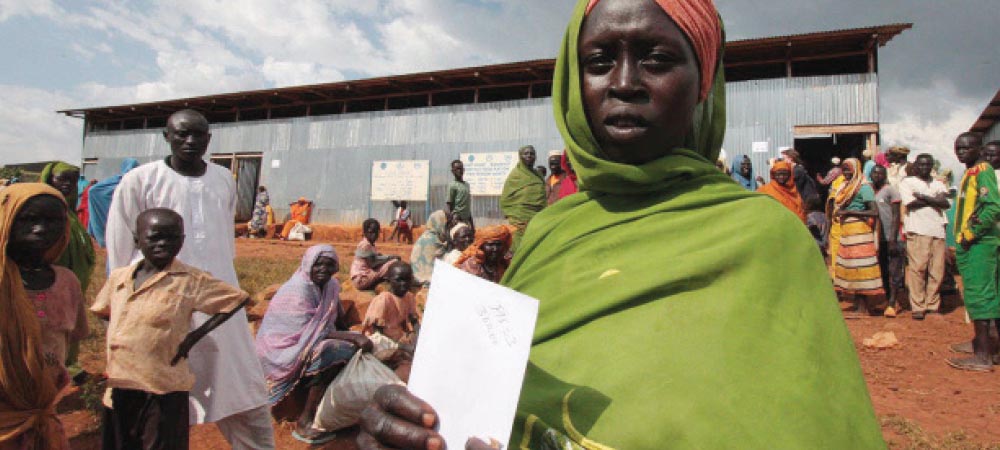
Ethiopia hosts one of the largest refugee populations in Africa, and in the world. Right now, almost a million refugees live in Ethiopia. The majority of the refugees, especially those living in the states of Somali and Gambella, have lived in Ethiopia for over a decade. Yet, many of them remain unemployed and are in a situation where they are unable to change their future. To ease the problem, Ethiopia recently adopted a new law to allow refugees to get work permits and even citizenship. But many in the refugee community and the communities that host them don’t think the measure will work. EBR’s Samson Berhane reports.


jigjiga.jpg

Rising From the Ashes

The two-century old Jigjiga has been the capital of the state of Somali for twenty years. Home to more 300,000 people, the city is known for being a center of the contraband and khat trade. But trade activities have slowed down in recent years, mainly because of administrative measures and civil violence. Although the city was rocked by some of the worst incidences of violence in the country nine months ago, Jigjiga and its residents are now trying to heal from past wounds. EBR’s Samson Berhane, who visited Jigjiga, reports.


fashion-is-not-all.jpg

When Anna Getaneh made headlines in late 1980s, the modelling industry in Ethiopia was almost non-existent. Born in Sweden as the second child of an Ethiopian career diplomat father and a fashion designer mother, Anna is one of the few Ethiopians who have become successful on the global modelling stage.
She briefly lived in Ethiopia at the age of four, but it was only after she earned a bachelor ‘s degree in business and marketing that Anna realized her potential in modelling. Subsequently, she pursued it as a part time job. Soon, she met with an agent who persuaded her to work as a model in Italy and then London. After that, modelling became her full time job.


ride.jpg

Architect of A Successful Woman-Led Tech Startup

Samrawit Fikru is the creator of Hybrid Design, a company behind the most popular taxi hailing app in Ethiopia, Ride. Samrawit is always trying to identify problems and respond accordingly. It was likely this quality that was the key to her success. Transformed from an SMS-based on demand service to a mobile app, Ride is now used by more than 1,300 drivers and has been downloaded over 50,000 times. EBR’s Samson Berhane sat down with the 29 year old entrepreneur to learn about her journey to success and the challenges she has faced so far.


merkato-topic.jpg

Ethiopia’s Economic Slowdown Takes A Toll

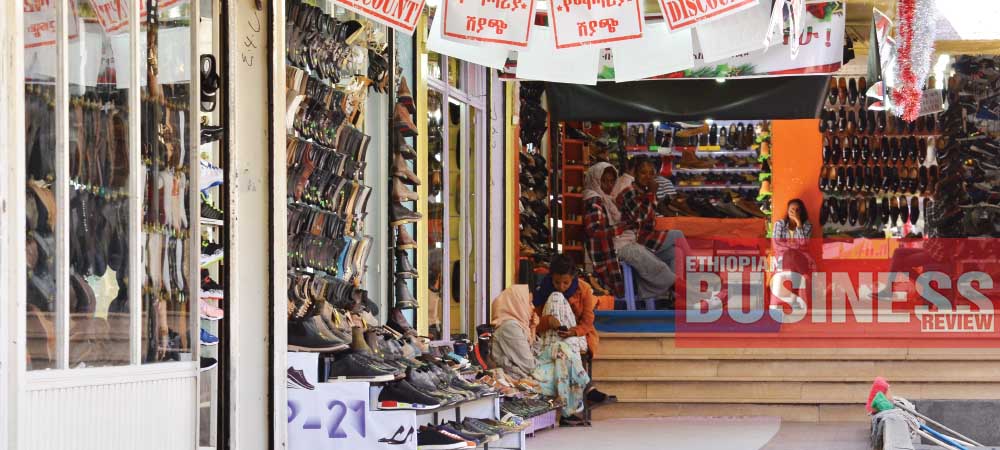
Ethiopia been praised by the global community for its outstanding economic performances for decades. Although the country has registered one of the highest economic growth rates in Africa, the economy has been slowing down in recent years. In December 2018, the International Monetary Fund announced that Ethiopia’s economic growth dipped to 7.7 pct in 2017/18, due to political uncertainty and severe foreign exchange shortages. Now, Ethiopia’s economy seems to be at a crossroads. While the decline of exports, a rise in prices, a drop in construction activities and the disruption of main trade routes signal that the economy is indeed slowing down, experts are worried that decreasing state involvement, coupled with the drop in government spending, will make the problem worse, as EBR’s Samson Berhane reports.


Tewodros-interview.jpg

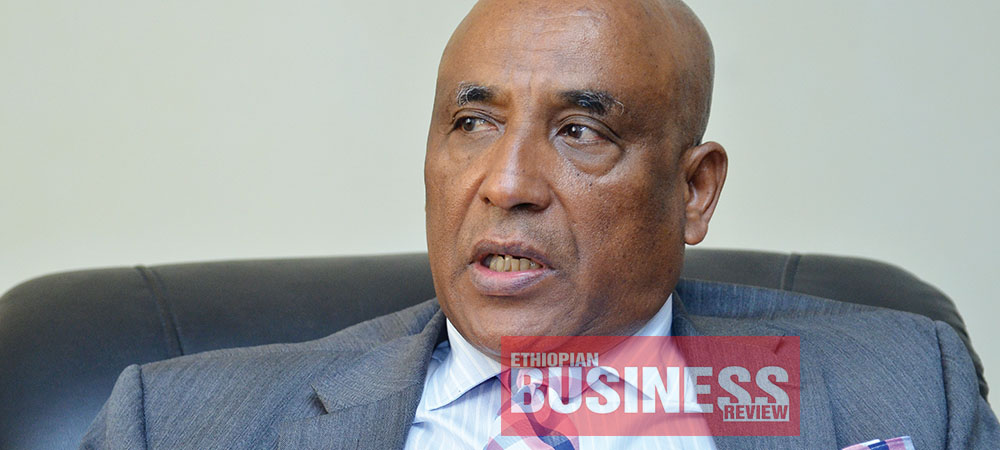
Tewodros Shiferaw, 44, is a businessman with a huge appetite. The father of four lived in Japan and China for 12 years working as an exporter and importer, among other activities. In 2008, he came to Ethiopia and established Rosetta General Business, a company engaged in real estate development, hotels, import and export as well as media and communication. Tewodros, who is in the real estate sector, built 142 villas and transfered them to the owners on time despite the huge inflation at the time. However, not all his endeavours have been successful. In fact, two of his hotel projects in Addis Ababa and Hawassa didn’t materialise because the authorities couldn’t give him land on a lease basis. He is now more visible in the broadcasting industry. In fact, Tewodros was a partner at ARTS and a year ago acquired Nahoo TV, a privately owned entertainment TV channel operating in Ethiopia. EBR’s Samson Berhane sat down with Tewodros to learn about his successes and failures


Addisu-Habba.jpg

Addisu Habba, president of Debub Global Bank (DGB) is the current president of the Ethiopian Bankers’ Association (EBA). He was re-elected by the professional association of bankers in March 2018 to continue in the post for the next three years. Addisu, a married father of two, has had immense experience in the banking sector. He is a graduate of Economics from Addis Ababa University and holds Master’s degree in Banking and Finance from Italy. In the past, Addisu held several positions at the former Construction and Business Bank, including as a credit clerk and internal auditor, before rising to the post of President. He then became president at the Bank of Abyssinia and served for five years. Three years ago, he joined DGB, one of the later entrants into the banking sector. EBR’s Samson Berhane sat down with him to learn more about the challenges and successes of the industry, as well as the activities of EBA.


money-Flooded.jpg

Commercial banks in Ethiopia are currently finding themselves with more liquidity than they can work with. While this is a good moment for those who have been desperately looking for credit, it has pushed commercial banks to sit on resources that come with a high cost. As a result, many banks are being forced to find alternatives to invest their extra liquidity, including introducing mortgage schemes with various real estate companies. EBR’s Samson Berhane spoke to bankers, experts and businesses to shed light on the matter.


Ethiopian Business Review | EBR is a first-class and high-quality monthly business magazine offering enlightenment to readers and a platform for partners.


2Q69+2MM, Jomo Kenyatta St, Addis Ababa

Tsehay Messay Building

Contact Us

+251 961 41 41 41