Ethiopia is currently the second populous country in Africa. This can be an exceptional opportunity to strengthen its economy and fight poverty. However, this potential for growth, prosperity and development could be lost if the country is unable to support the job creation and business opportunities to absorb the growing youth population. In fact, improving infrastructure, especially access to electricity, is critical to expand business opportunities and job creation in Ethiopia.



Despite the collapse of global commodity price and political instability that have slowed growth in North Africa, most African countries are still moving forward. In fact, Africa was among the world’s fastest growing continent with more than 5Pct average annual rate of growth over the past decade. In 2016, Africa has also become the second most attractive investment destination in the world, standing next to North America, according to the World Bank.


Import-Substitution.jpg

Rajeev Kumar Sharma is the general manager of Anmol Products Ethiopia, an Indian based company engaged in paper converting business in Ethiopia since 2009. The company was established with ETB 76 Million. The Indian investor also serves as deputy chairman of Indian Business Forum, an institution established in Ethiopia to represent Indian investors in different platforms. EBR sat down with Sharma, who was also part of the Ethiopian business delegate that went to India last year, to learn more about the trade and investment relationship between the two countries, the existing challenges and what both countries are doing to uplift the level of partnership.


Glass-ceiling.jpg

Known as one of the pioneer female painters in Ethiopia, Desta Hagos has been an inspiration to many young women with the desire to pursue their dream of becoming artists. She fell in love with painting and drawing at a very young age. At the age of 18 she became the first female visual arts student to graduate from the then Addis Ababa School of Fine Arts and Design. Taught and mentored under the famous Gebre-Kristos Desta, she has over the years earned a name as one of the most distinguished painters in Ethiopian history. She has more than 50 solo and group exhibitions and numerous honors and recognitions. EBR’s Hiwot Selalew talked to Desta about her life and career.


India-Eyes-Africa.jpg

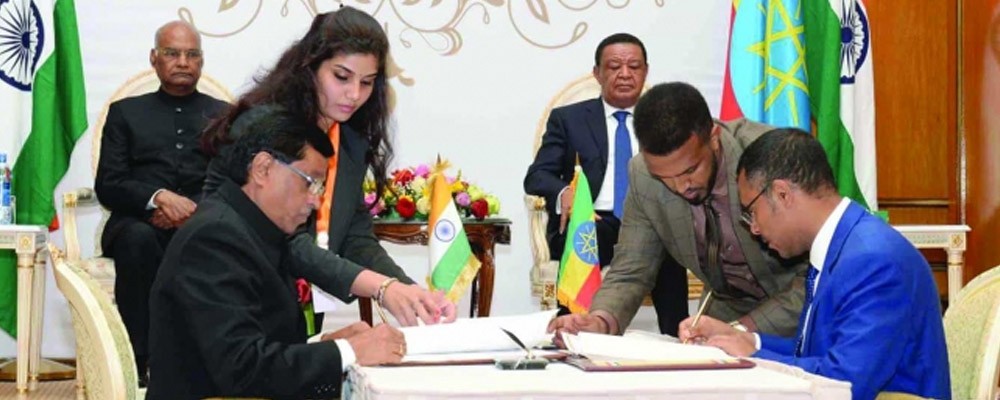
Ram Nath Kovind, the 14th and serving President of India, in office since 25 July 2017, made his debut official trip abroad recently with a first leg landing in Djibouti. Kovind’s visit to the horn of Africa’s tiny state, which in recent years is attracting significance due to the strategic geopolitical changes in the region, surprised many since there has never been a previous visit to the country by an Indian Head of State. His visit to Ethiopia, however, was less controversial because India at present is one of the top three sources of foreign direct investment in Ethiopia. Not only that, Ethiopia is also a significant bilateral trading partner of Asia’s third biggest economy. EBR’s Samson Hailu explores the reason behind the President’s visit.


Counting-the-DEAD.jpg

In Ethiopia, road traffic accident (RTA) has been among the main causes of death. For example, 4,500 people died of RTA in 2016/17. The problem seems staggering in Addis Ababa. In fact, it became one of the top ten causes of deaths in the city in the last decade. The number of deaths due to RTA rose from 395 in 2006/07 to 463 in 2016/17. The city administration, which introduced road traffic safety strategy in March 2017, has launched its action plan recently. With primary targets of halving deaths and injuries by 2023; and providing sustainable transport systems for all by 2030, the action plan establishes a framework to implement a successful road safety programme. EBR explores the strategy and the potential developments to come.


Endalkachew-Sime.jpg

Ethiopian Chamber of Commerce and Sectoral Associations (ECCSA) was re-established in 2003 to safeguard the overall rights and benefits of its members, and serve as a bridge between the business community and the government. ECCSA is an apex organization of chambers and sectoral associations that represent close to 520,000 business enterprises across the country.
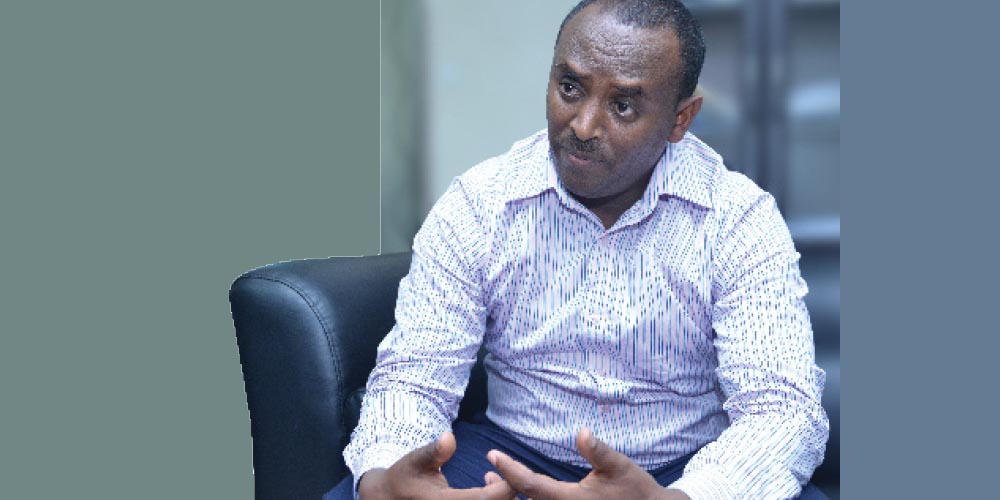
The Chamber unifies the voice of the private sector and promotes the sector’s leading role in the economy through advocacy, trade and investment promotion and capacity building. EBR sat down with Endalkachew Sime, the young and dynamic secretary general of the national chamber to learn about its core activities and challenges and the interventions needed to make the private sector the true engine of Ethiopia’s economy.


Harry-A.-Adams.jpg

Harry A. Adams is Executive Chairman of KEFI Minerals. The mogul is also founder and co-founder of a number of other businesses including the Citicorp Capital Investors Australia, Pilatus Capital, Australian Gold Council, EMED Mining and Cyprus-based Semarang Enterprises. He has overseen a number of start-ups principally through the roles of chairman, deputy chairman and managing director. EBR sat down with the tycoon to discuss about KEFI Minerals investment in Ethiopia.


Heavy-Industry.jpg

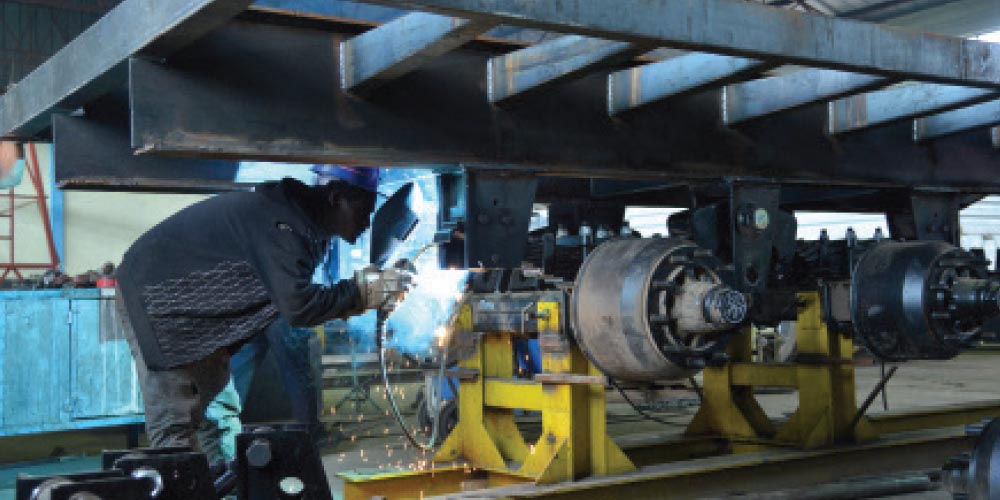
Ethiopia has vigorously embarked on the expansion of light manufacturing industries. For that reason, it has been building industrial parks throughout the country. This is expected to boost export of manufactured goods, thereby reducing the long standing shortage of foreign currency problem. However, some experts are skeptic about this one sided attention of the government to industrialise the country. They argue that unless export promotion is complemented with import substitution, the effort is like clapping with one hand. That’s why expansion of heavy industries needs to be part of the long term strategy to reduce the stress the country has been through for lack of foreign currency. In fact, close to 50Pct of the USD18 billion import bills last year went to purchase metal and engineering products, which are produced by heavy industries. EBR examines the need for developing heavy industries in Ethiopia and how that can boost the country’s ever depleting foreign currency situation


Mohammed-Idris.jpg

Breaching information communication protocol ranges from simple show-off of talent to theft of valuable data such as financial and security information. As these problems are fast increasing, it is necessitating a well equipped and proactively prepared cyber defense institutions. The Information Network Security Agency (INSA) is established to ensure the security of advancing critical infrastructures and industries that are vulnerable and going to be more vulnerable due to their reliance on computer. EBR sat down with Mohammed Idris, Special Advisor to the director general of the Agency, to discuss the magnitude of the problem Ethiopia faces and the preparedness of INSA to safeguard the country’s cyber space.


Ethiopian Business Review | EBR is a first-class and high-quality monthly business magazine offering enlightenment to readers and a platform for partners.


2Q69+2MM, Jomo Kenyatta St, Addis Ababa

Tsehay Messay Building

Contact Us

+251 961 41 41 41