
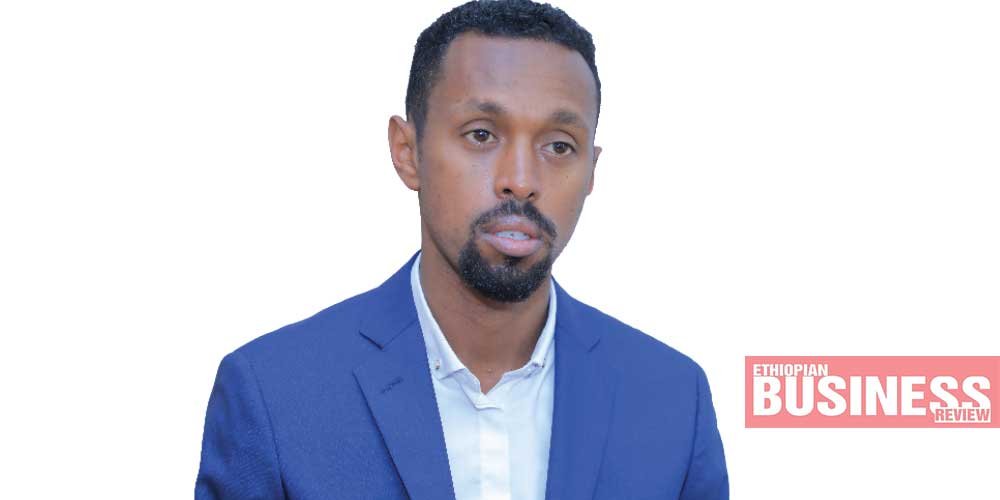
Michael-Teshome.jpg

Michael Teshome, is Director of the Ethiopian Mediation & Arbitration Center, Attorney and Consultant at Law, as well as Co-author of the book Arbitration in Ethiopia.
Michael specializes in handling business arbitration cases, which is a leading alternative model to settle business disputes. However, Ethiopia was not on the international business arbitration map until this year when it ratified both the international 1958 New York Convention and the local Arbitration and Conciliation Working Procedure Proclamation, in which Michael participated at the drafting level.

Now, arbitration awards rendered in Ethiopia can directly be implemented in the 167 signatory countries, with reciprocity. Michael stresses this has an immense and multidimensional benefit in making Ethiopia business-friendly and Addis Ababa an international arbitration seat.
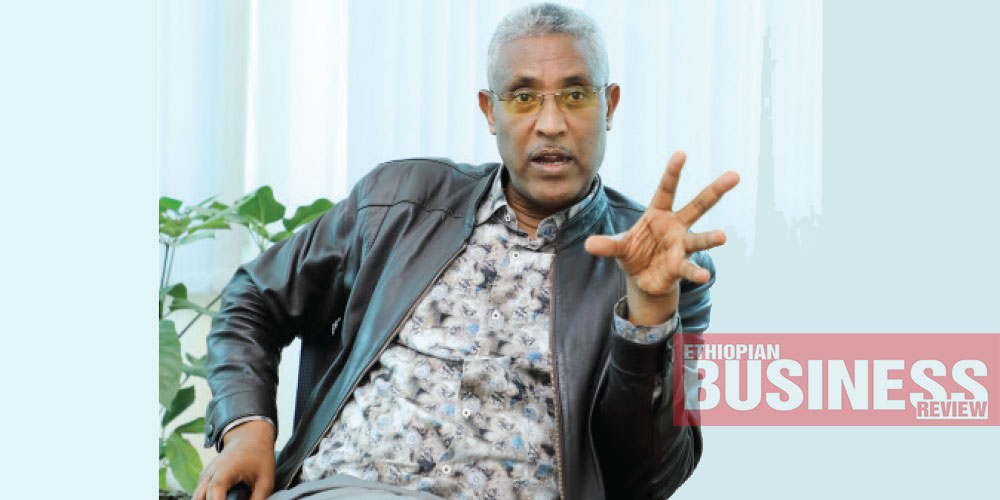

ewbetu-taye.jpg

Ewnetu Taye is Deputy Director of the Logistics Transformation Office (LTO), established to transform and solve lingering sectorial problems which have long hampered Ethiopia’s development. He sees Djibouti still holding the key position going forward even with its numerous military bases which are incomparable to benefits bestowed by economic relations with Ethiopia. Alongside developing sea outlets, liberalizing the sector within Ethiopia is registering heavy developments. EBR sat down with Ewnetu to learn about the current status of the logistics sector in Ethiopia.


Muluneh-Lema.jpg

Muluneh Lema, is a founding member and General Manager of Mintu Investment Group (MIG) as well as President of the Ethiopian Millers Association. Educated in the US, he took the initiative to turn his family’s legacy of a candy factory and flour wholesaling into a gigantic group of factories. Under the group, companies engaged in the manufacturing, food processing, real estate, import, export, and pharmaceutical sectors, operate. Wakene Food Complex, Mintu Plast, Menoria Real Estate, Mintu Export, and Mintu Pharma are his leading companies. With ETB800 million in annual turnover, the group has doubled its investment capital to ETB1 billion over the last six years. Formed by four brothers, MIG succeeded mainly because the siblings specialized in different sectors.

The plastic factory has especially managed to substitute imports of plastic bottles and caps for water bottlers in Ethiopia. It has also substituted the import of PVCs and other plastic products used as construction and agricultural inputs. Wakene Food Complex, on the other hand, has the lion’s share in Ethiopia’s wheat and flour market.


EBR100_1.jpg

The 100th edition of Ethiopian Business Review (EBR) magazine was colorfully celebrated at Radisson Blu hotel yesterday, on 14th of September 2021. 

The event was attended by Yonathan Tesfaye, Deputy Director-General of the Ethiopian Media Authority, Amare Aregawi, Executive Chairman of the Ethiopian Media Council, senior government officials, partner organizations, and invited guests.


terje-skjerdal.jpg

Terje Skjerdal, is Associate Professor of Journalism and Media Studies at the Norwegian NLA University College, with decades of engagement with Ethiopian media with a focus on the conduction of research in collaboration with Addis Ababa University. In February 2021, Skjerdal published “Ethnification of the Ethiopian Media,” a research peace alongside Mulatu Alemayehu (PhD).

He argues that although it seems that ethnicity has become the new mainspring, it has always been an undercurrent in the Ethiopian media and journalism landscape. EBR had an audience with him to learn more about recent developments observed in the media sector.


Throughout history, Ethiopians have fought with external enemies numerous times but also frequently with each other. Even after the birth of modern Ethiopia, war, insurrection, and rebellion has continued. This infighting has drained the nation’s resources and withheld it from development and progress. Not long ago, Ethiopia hosted one of the bloodiest civil wars in history. The military spending during in the 1970s and 1980s drained the national budget and left Ethiopians to crawl into the poverty trap.


Frontier technologies are being used to provide services via digital platforms that have spurred the creation of a ‘gig economy’. Some of this work is locally based, but there is also ‘cloud work’ that can be performed anywhere via the Internet. Using, adopting, and adapting frontier technologies requires sufficient ICT infrastructure, especially since AI, IoT, big data, and blockchain are internet-based technologies.


During the 5th national election held in 2015, the ruling Ethiopian People’s Revolutionary Democratic Front (EPRDF) and its allies scored a landslide victory by winning all the seats in Parliament as well as in regional and city councils. A year after EPRDF achieved this clean sweep, however, a series of nonviolent protests sparked off in the nation, later turning deadly. Witnessing this in a country run by a government supposedly almost unanimously elected by voters just a year prior was surprising for Ethiopians and the international community alike.


Ethiopian Business Review | EBR is a first-class and high-quality monthly business magazine offering enlightenment to readers and a platform for partners.


2Q69+2MM, Jomo Kenyatta St, Addis Ababa

Tsehay Messay Building

Contact Us

+251 961 41 41 41