Fikadu-Digafe.jpg

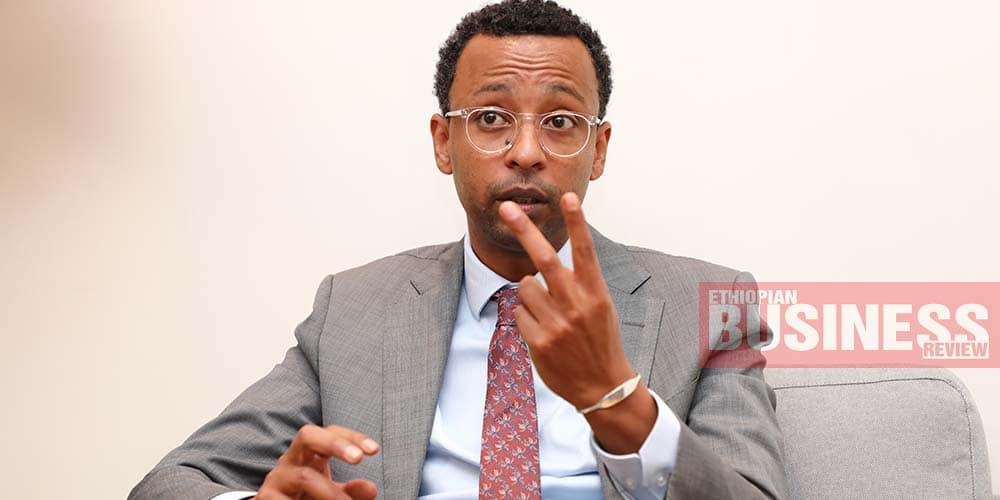
Fikadu Digafe is Chief Economist and Vice Governor of the National Bank of Ethiopia (NBE). He strides in the most laboring job in the central bank ever since the bank started baptizing itself with reforms ensuing the landslide reshuffle of October 2019. He was previously in charge of external economic analysis and international relations at the bank. For many years, Fikadu has been engaged in the research works of the central bank, including scripting for the quarterly bulletin of the bank, Birritu.


Can-Ethiopias-Coal-Bonanza-Substitute-Imports.jpg

Coal is the second-most used source of energy globally. Primarily used for power generation, it is the raw material of choice for 40Pct of electricity production worldwide. With an estimated 430 million metric tons of coal deposits in the country, the Ethiopian government is trying to utilize this resource by encouraging small- and large-scale coal producers and investors. As a result, the country has managed to satisfy 40Pct of its annual demand from the local market. However, the quality of the coal produced is of poorer quality compared with imports from countries like South Africa. Resultantly, manufacturers going local are incurring additional costs. EBR’s Ashenafi Endale explores.


Mekuanint-Alemu.jpg

Mekuanint Alemu is Founder and Board Chair of C&E Brothers Steel Factory, which has been engaged in the production of reinforcement bars for the last ten years and mining exploration over the last three years. He recently established YO Trade and Manufacturing PLC, a sister company and the only large-scale coal producer in Ethiopia. It is currently installing a coal washing plant in Ethiopia allowing it to eliminate coal impurities using water, some chemicals, and mechanical techniques. The plant is expected to start operations after five months. EBR sat down with Mekuanint to learn about his recent ventures.


A-Birds-Eye-View-of-the-Revised-Commercial-Code.jpg

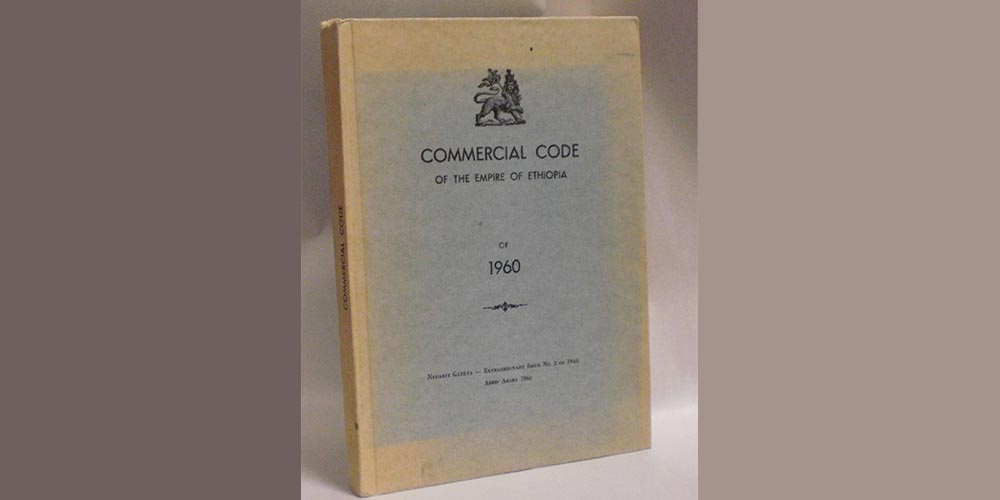
The House of People’s Representatives recently unanimously approved the revised Commercial Code of Ethiopia, replacing the 61-year-old document which was in place since 1960. The revision sought to amend 825 sections of trade-related issues and is expected to serve intact for 30 years as up-to-date technological advancements have been considered, according to the government.
The amendment introduced two new organizational arrangements for a company’s establishment while excluding ordinary partnership. It is now permitted to establish a one-person private limited company as well as a limited liability partnership. EBR’s Ashenafi Endale assesses the new commercial code.


Can-Halal-Bailout-Ethiopias-Exports.jpg

The Middle East is one of the leading consumer markets that relies heavily on imports due to its low agricultural capacity. Ethiopia, in close proximity, has one of the most robust agrarian economies with leading livestock numbers. Nonetheless, only countries that have adopted the halal certification framework are tapping into the Middle East’s consumer market. Ethiopia is mostly absent in this regard. The linking of unapproved animal meat as the cause of COVID-19 has deepened the acceptance of halal certified foods, pharmaceuticals, cosmetics, and other products even in non-Muslim nations. Religion is leveling up to science.
In a bid to cutout the halal barrier to Ethiopia’s exports to the Middle East and beyond, a new strategy of interlinking gulf countries’ halal accreditation systems with Ethiopia’s is taking root. To this end, Ethiopian slaughterhouses are working towards certification by the new system to export halal-certified food. Halal is expected to boost Ethiopia’s exports and free it from the USD3 billion chokehold of the past decade. EBR’s Ashenafi Endale explores

Corporate-Banking-Still-Infant.jpg

Corporate or institutional banking is a segment of the industry where specific deals and attention are provided in a specially designed way. These services include handling the loans as well as accounts of big economic players. Although corporate banking is one of the biggest business segments even in many developing countries, it is still in its infancy in Ethiopia. Almost all existing banks pursue mass marketing approaches and basically collect retail savings and lend to businesses. EBR’s Ashenafi Endale investigates new developments in the banks’ clientship landscape.


m-birr.jpg

As covid19 restrict access to cash and financial institutions, number of mobile transaction users has grown by 13pct globally to over 1.2 billion in 2020, with over 300 million monthly active accounts, according to new report dubbed ‘State of the Industry Report of Mobile Money’, by Global System for Mobile Communication (GSMA). For the first time, the amount of remittance sent and received via mobile money has also surpassed USD1 billion, exponentially growing by 65pct.


fueling-wild.jpg

In the past, prices of commodities revert to reasonable levels after the end of the harvesting season. However, agricultural products are priced at new heights this year. In fact, the current inflation spike is the second highest after the record year of 2008. A major factor is the widespread instability affecting the mobility of commodities. Foreign currency scarcity and an increased money supply have also contributed. But the lifting of fuel subsidies by the government has brought the acceleration of prices to new levels. EBR’s Ashenafi Endale explores.


Ethiopian Business Review | EBR is a first-class and high-quality monthly business magazine offering enlightenment to readers and a platform for partners.


2Q69+2MM, Jomo Kenyatta St, Addis Ababa

Tsehay Messay Building

Contact Us

+251 961 41 41 41