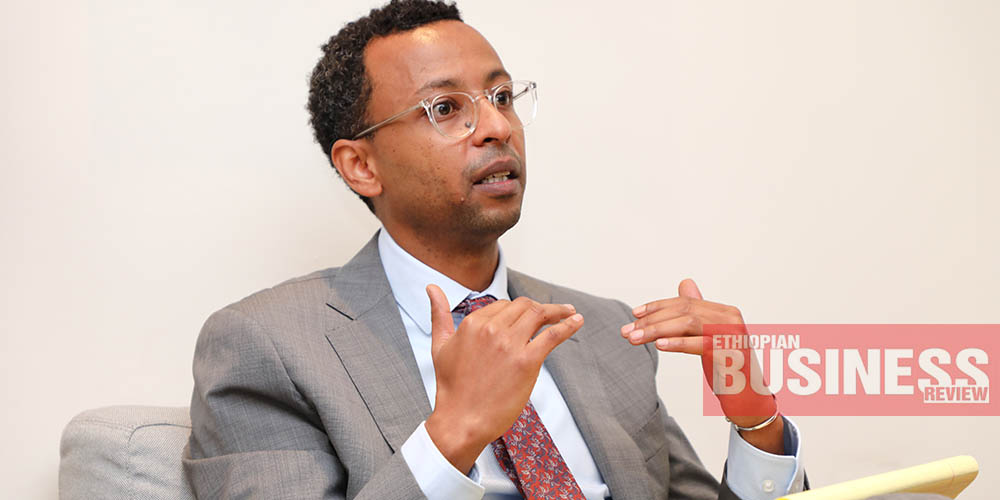
Brook-Taye-PhD.jpg

Brook Taye (PhD), Senior Economic Advisor to the Minister of Finance

Brook Taye (PhD) is part of the pragmatist team serving Ethiopia’s swift economic reform and privatization process with great zeal. After concluding his education in comparative law and economics and high growth firms in three European universities, he worked as a regulatory analyst for an equity firm in Miami and other companies.
He argues that the telecom privatization which garnered a lot of interest only ended up with two bidders mainly because they failed to fulfil the requirements. He in fact claims that only four of the 12 interested bidders fulfilled requirements. He also argues the shift from state-led growth to a private-led one is not the result of Western pressure to liberalize the economy but a dire necessity to revamp and create a sound economy. The following are excerpts from EBR’s time with him.


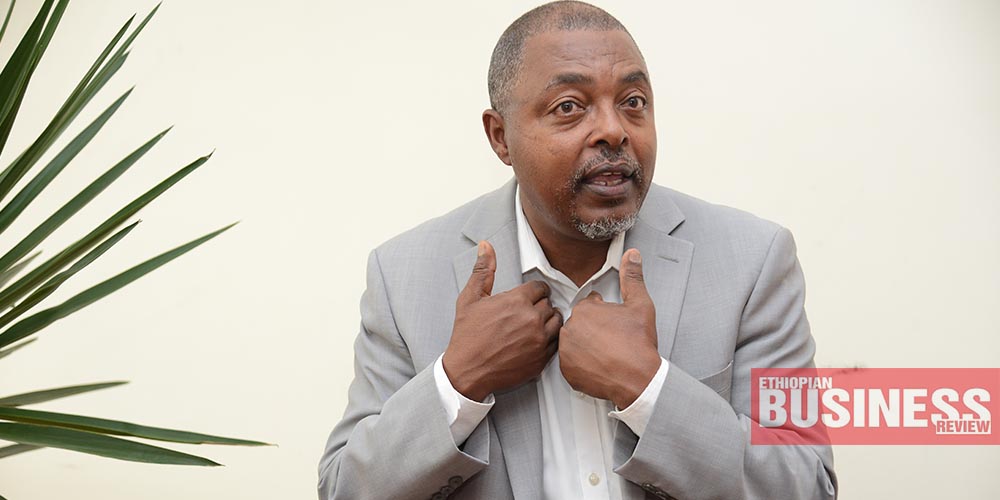
Ambassador-Birgitte-N.-Markussen.jpg

Ambassador Birgitte N. Markussen, is Head of the European Union Delegation to the African Union as of September 2020. She has previously worked as Director at the European External Action Service (EEAS), beginning 2016 and also as Director of the Africa Department at the Danish Ministry of Foreign Affairs.
Her office in Addis Ababa is currently working on a range of packages introduced to strengthen the relationship between the two neighborly continents. With pressing issues such as the COVID-19 pandemic and migration, Markussen delves passionately into peace and security, investment and development, and even the future integration of the two continents. She argues a strong Africa is essential for a strong Europe. Addisu Derese, special to EBR, sat down with Ambassador Markussen. Excerpts follow.


Election-Short-of-Solutions.jpg

At a sensitive time when the economy is suffering from inflation, unemployment, debt distress, poverty, conflict, and COVID-19, the nation prepares for the sixth national election to decide who rules for the next five years to end the transitional government that has been in power since April 2018.
Nonetheless, the political space is largely occupied by parties fanning and prioritizing ethnic quests instead of addressing underlying economic constraints. Ideology-based analysis and principled models for Ethiopia’s vicious economic circle are brands scarcely seen in the political parties’ campaigns. Out of the 47 political parties cleared to participate, 18 are competing for federal Parliament seats. While very few of the national parties have manifestos, even fewer have well-defined politico-economic policies to relieve voters of the ongoing economic strife.


Mekonen-F.-Kassa.jpg

Mekonen F. Kassa is Senior Director for cloud cyber security engineering at Microsoft company where he has worked for about 22 years now. Living in Seattle, he earned his first degree in mechanical engineering and second degree in information systems management from Washington University. Prior, he worked as a consultant and taxi driver.
After witnessing the politically-led massacre of nine of his teenage friends in his birthplace of Gondar 37 years ago, he fled to Sudan traveling on foot for fifteen days. Escaping from the Amracuba refugee camp in Sudan, he worked as a daily laborer on commercial farms, as a servant, and on other jobs in Algadari and Khartoum. After four years in Sudan, he found Ethiopians who sponsored his move to Seattle 33 years ago. He recently flew back to his hometown to inaugurate the library he built for his old elementary school.


22-gebiwoch.jpg

Electronic tax payment system dubbed e-tax is launched, in a bid to enable businesses to pay tax online. The Ministry of Revenue has signed agreement with five banks that includes Birhan International Bank, Dashen, Commercial Bank of Ethiopia, United Bank, and Awash International Banks, today at Hyatt Regency Hotel. Other banks are expected to follow suit.
e-tax is developed by Derash, a platform formed under the Information Network Security Agency (INSA). The system is highly expected to reduce taxpayers’ strains and queues while paying tax physically, at the ministry’s branches.


Zamzam-Bank.jpg

Zamzam Bank SC has started operation naming its first branch Alif, located around Wollo Sefer, Bole district in Addis Ababa. Zamzam has become the first full fledged non-interest bank to operate in Ethiopia. The grand inauguration ceremony today was attended by Yinager Dessie, governor of central bank of Ethiopia, and Grand Mufti Haji Idris, among others.


usa-and-ethiopia.jpg

The Ethiopian Ministry of foreign Affairs called the decision ‘ill-advised measure to unnecessarily overshadow the elections’, in a statement released on May 24, 2021. US president Joe Biden’s administration restricted economic and security assistance to Ethiopia, followed by visa restrictions on Ethiopian and Eritrean officials in relation with the six months military
operation in Tigray region of Ethiopia.


national-bank-of-ethiopia_1.jpg

Over the last two years the number of entrant banks has proliferated, almost equaling the amount of working banks. Nonetheless, a new directive issued by the caretaker National Bank of Ethiopia has shut the door on the further entrance of new banks, whilst also raising the bar on smaller banks and the close to 20 already in the pipeline.
Banks are now expected to raise their minimum paid-up capital to ETB5 billion within five years from the existing ETB500 million mandated in 2011. Although central bank authorities stress the intention is to discourage unbalanced proliferation and nurture few competitive banks, industry leaders and experts claim that this move is the interest of the leading banks. Up to six existing private banks are forecasted to consider merging, while a substantial number of under-formation banks will either abort their efforts or join hands. EBR’s Ashenafi Endale investigates the implications of the new move. 


Ethiopian Business Review | EBR is a first-class and high-quality monthly business magazine offering enlightenment to readers and a platform for partners.


2Q69+2MM, Jomo Kenyatta St, Addis Ababa

Tsehay Messay Building

Contact Us

+251 961 41 41 41