
bid.jpg

Public procurement has long been a subject of discord in Ethiopia. While other developing countries have managed to use public procurement as an avenue for growth, the procurement system in Ethiopia seems to have become a hotbed of corruption. The arrests of almost 100 government officials to do with mega projects threw the issue further into the public eye. But now, there has been a push to reform the procurement regulations and address the gaps that created an opportunity for improper conduct. EBR’s Ashenafi Endale reports.



Hotel-Business.jpg

The Fate of the Hotel Industry After Turmoil

The hotel industry in Ethiopia has been reeling over the last couple of years, following political unrest in various parts of the country, and a drop in tourist numbers. Room occupancy rates dropped, and hotels found themselves losing money hand over fist. But now the industry is starting to revive, as political stability returns to the country. EBR’s Ashenafi Endale spoke with some in the industry to find out what’s next for hospitality in Ethiopia.


Adil-Khan.jpg

Adil Khan is the managing director of AMS Hospitality Group, a privately held provider of hotel brands, solutions and services. Established in 2008, AMS’s brand portfolio spans a range of hospitality segments, from premier economy, to select service properties, mid-scale hotels and resorts. AMS has been managing the Hub Hotel, which was opened in December 2018 in Addis Ababa. EBR’s Ashenafi Endale sat down with Khan to learn about AMS’s activities in Ethiopia and elsewhere.


Capital-Out-Flows.jpg

Illicit financial flows (IFFs) have become a major concern globally, especially in recent years. Ethiopia is not an exception in this regard. The country loses between USD1.3 billion and USD3.2 billion annually in the form of IFFs. This figure accounts for up to 29Pct of the country’s total international trade or 97Pct of the total aid inflows. There are a variety of reasons for capital flight from Ethiopia, including political reasons, decline in economic stability or stricter capital regulation. However, the most prominent causes in Ethiopia are related to the informal sector, crime, trade mis-invoicing and tax evasion, as EBR’s Ashenafi Endale reports.


Pay-Shy.jpg

Manufacturers feel the heat due to high staff Turnover

Staff conditions in factories and industrial parks in Ethiopia have long been a subject of debate. From pay scales to working conditions and safety, many of the issues connected to working in factories have led workers to leave their employment in droves. In addition, a lack of skilled manpower has become another hurdle that factory managers have had to contend with. EBR’s Ashenafi Endale explores.


chinise_interv.jpg

John Snow, 43, is the General Manager of J&S Metals, the only company in Ethiopia that produces steel roofing nails. J&S Metals exported steel nails to Ethiopia from China for ten years before it established a factory on the outskirts of Addis Ababa five years ago. The company, which currently employees 130 people, produces roof nails. Snow sat down with EBR’s Ashenafi Endale to reflect on the challenges manufacturers are facing particularly in relation with the labour force.


Pirates-of-Addis.jpg

Street vending has become a part of everyday life in Addis. On almost every major pedestrian road, there are many young people displaying their wares, from electronics, to shoes, and calling out to city residents to visit them. While these products are cheap and convenient for many, street vending is becoming the gathering place for unemployed youth who move to the cities looking for new opportunities. At the same time, the sourcing of the products is feeding into the problem the country is experiencing with contraband, as many of the items sold on the streets are illegally smuggled into the country. Addressing these issues is a big part of the city administration’s agenda, as EBR’s Ashenafi Endale reports.


water_risk.jpg

How Safe is Bottled water?

In the past decade, the bottled and mineral water industry has registered enormous growth. From less than 10 a decade ago, the number of companies in the industry has grown now to 70. However, even more operators who bottle water without licenses are filling the market, exposing consumers to health related risks. EBR’s Ashenafi Endale reports.


housing_.jpg

In the past, house rents in Addis Ababa have increased chiefly because of the critical housing shortage and the surge in demand for apartments and houses.
Over the past three months, however, rental prices have risen at an alarming rate, because of the rise in the number of Eritrean migrants, among other factors. EBR’s Ashenafi Endale investigates the matter.


adama.jpg

Can it be a vibrant Hub?

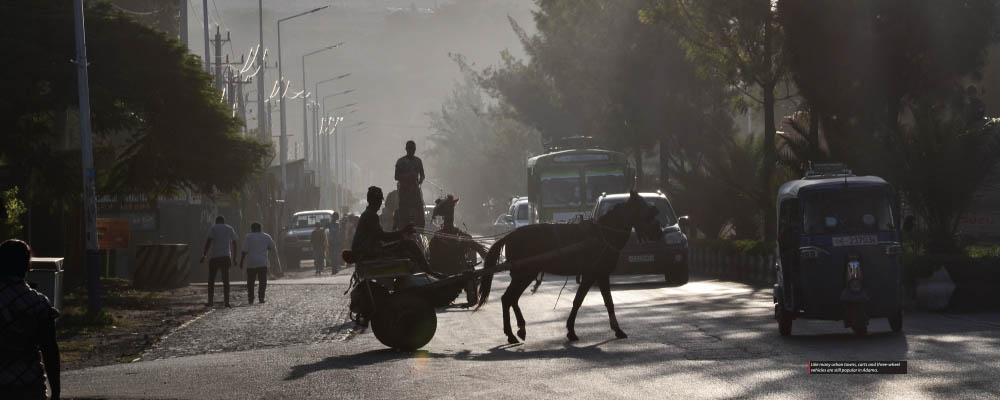
Located 99 kilometers from Addis Ababa, Adama is one of the largest and most vibrant cities in the state of Oromia and is home to almost half a million people. Its key role as a route for a large portion of the nation’s imports and exports has made it one of the most energetic cities in Ethiopia. Even more, the completion of its first industrial park last month makes it one of the country’s most promising investment spots. Despite the growth in businesses’ desire to invest in Adama, the city administration has been unable meet demands for investment licenses, which have accumulated for the past four years. Recurrent water shortages and rising living costs have remained challenges for the city’s residents. EBR’s Ashenafi Endale, who visited the city last month, reports.


Ethiopian Business Review | EBR is a first-class and high-quality monthly business magazine offering enlightenment to readers and a platform for partners.


2Q69+2MM, Jomo Kenyatta St, Addis Ababa

Tsehay Messay Building

Contact Us

+251 961 41 41 41