

Lack of money is no excuse for failing children, ACPF chief tells EBR as Ethiopia ranks 41st in child-friendliness index
Betegbar Yaregal
#EBR_News Nov 27, 2026
African governments can no longer blame a lack of resources for failing to support children and families, because large sums are being wasted through inefficient budget management, according to the head of the African Child Policy Forum (ACPF).
Daniel Bekele (PhD), the organization’s Executive Director, who took up the post in August, told Ethiopian Business Review in an interview at the launch of The African Report on Child Wellbeing 2026 in Addis Ababa on Thursday that limited budgets are not a valid reason for inaction.
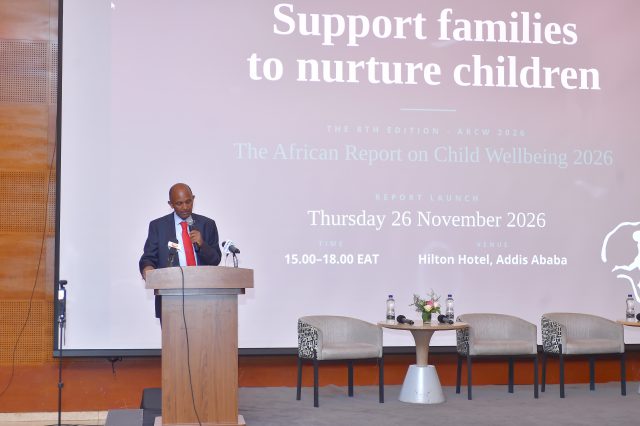
Daniel said the report’s findings on wasted public money are meant to remind policymakers that the usual excuse of insufficient resources does not hold up. He acknowledged that many African countries have limited wealth.
But he said money can be found through better budget control and management, a point he said is confirmed by many studies by budget experts and economists.
The report puts numbers on the problem. It estimates Africa’s average public investment efficiency at about 59 percent, with some USD 299 billion lost to inefficiency each year. Citing the African Development Bank, it says the continent could save up to USD 1.43 trillion by fixing inefficiencies in how public money is raised and used.
That is more than the annual development financing gap of USD 1.3 trillion, according to the report. It adds that domestic revenue averages only 16 percent of GDP in Africa, against about 34 percent in OECD countries, and that debt has risen substantially in more than 21 African countries.
The report’s Child-Friendliness Index, which ranks 52 African governments on how well they legislate, enforce and invest for children and families, places Ethiopia 41st with a score of 0.4203. That is up from 45th in 2023 and 43rd in 2018, according to the report.
The gain is modest, as the score has risen by only 0.0148 since 2023, and Ethiopia remains in the group the report calls “less child-friendly”, alongside Uganda, Tanzania and Liberia.
Asked what lies behind Ethiopia’s movement in the ranking, Daniel explained how the index works. It looks at two things, he said: the laws, policies and institutions in place to protect children’s rights, and the resources, especially budgets, allocated to deliver those commitments.
On the second measure, he said, the money actually allocated is very low compared with what is promised in policy, a pattern seen across almost all African countries.
The report’s own figures for Ethiopia show that gap. Ethiopia scores about 0.64 on protection laws, but only nearly 0.20 on public budgets for child services, according to the report. Annex data put Ethiopia’s public education spending at 2.3 percent of GDP and its social protection spending, excluding health, at 1.0 percent.
The sub-Saharan African medians are 3.2 percent and 1.1 percent. The report also lists Ethiopia among countries with public investment efficiency below 40 percent.
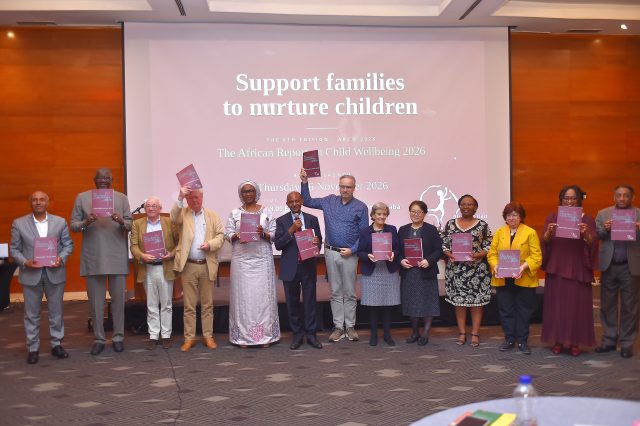
The report, titled “Support families to nurture children”, is the eighth edition of ACPF’s flagship series. It finds that only about 19.1 percent of Africans receive at least one social protection benefit, and that nearly 60 percent of children aged 2–5 in poor families are not developmentally on track, against 28 percent in better-off families.
It draws on continental data and on case studies in Cameroon, Ghana, Morocco, Tanzania and Zimbabwe, involving 200 families, 200 children aged 10–17 and 50 key informants.
At the top of the index are Seychelles, with a score of 0.8229, followed by Cabo Verde, Mauritius, South Africa, Tunisia and Namibia. South Sudan ranks last at 0.2618, preceded by Eritrea, Nigeria, Sudan, the Democratic Republic of Congo, Cameroon and the Central African Republic.
In his opening remarks, Daniel noted that the top performers share no single political system or economic model. What unites them, he said, is sustained investment in children, stronger institutions, effective implementation of laws and more efficient use of public resources. At the other end, he said, children face the consequences of chronic underinvestment and weak protection systems.
Daniel told the audience that families across Africa are under growing pressure from poverty, unemployment, conflict, displacement, climate shocks and rapid social change. Too often, he said, they are expected to carry responsibilities without the public services and social protection they are entitled to.
He described supporting families as one of the most effective investments a government can make, and said “creating a child-friendly Africa begins with creating a family-friendly Africa.”
On education, the report says conflict has had a devastating impact on Ethiopian children. Citing UNESCO, it says the gross enrolment ratio for primary school fell by 29 percentage points between 2020 and 2023, mainly because of conflict in the Amhara region.
The number of primary-age children out of school rose from 1.8 million in 2017 to 4.2 million in 2024, according to the report. It also cites the Federal Ministry of Education’s 2025 report, which acknowledged that teaching and learning was not fully carried out in most parts of Amhara in the 2023/24 and 2024/25 academic years.
Asked what ACPF recommends, Daniel said out-of-school numbers tend to rise where conflict has shut schools or where military forces or armed groups have taken them over. He said education can still continue in conflict-affected areas, and called on governments and armed groups to stop using school buildings for military purposes, in line with the Safe Schools Declaration.
Asked about the World Bank’s commitment to the next phase of Ethiopia’s Productive Safety Net Programme, Daniel called it encouraging and said he believes it will deliver results, but added that it is not enough on its own. The World Bank approved USD 200 million for the programme in March.
The report singles out the programme as one of Africa’s largest social protection schemes and a model of shock-responsive design, reaching an estimated 8 million people a year in its fifth phase. Yet Ethiopia’s overall social protection coverage stands at 11.5 percent, compared with 14.8 percent in Nigeria and about 20 percent in Kenya, according to the report.
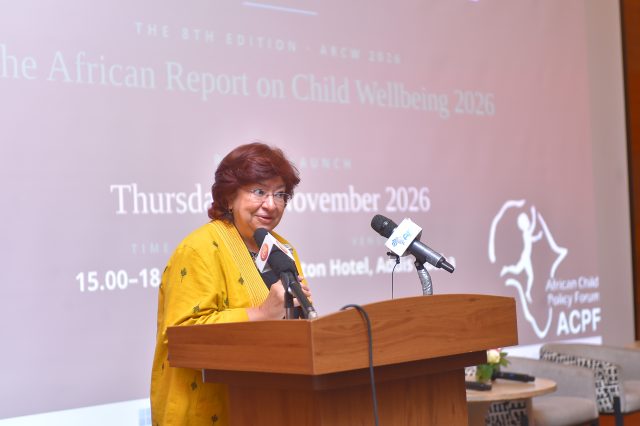
Other speakers at the launch backed the report’s call for more investment in families. Laila Omar Gad, the UNICEF Representative to the African Union and the UN Economic Commission for Africa, said the evidence is sobering and that Africa must move from protecting families to investing in them.
She said UNICEF will work with the African Union and ACPF to advance the continental social protection framework, following the African Union ministerial meeting on social development, labour and employment held in Namibia in July.
She also called for more parenting support, mental health and early intervention services, and greater investment in the social service workforce. Children, she said, “are not subjects of welfare; they are rights holders.”
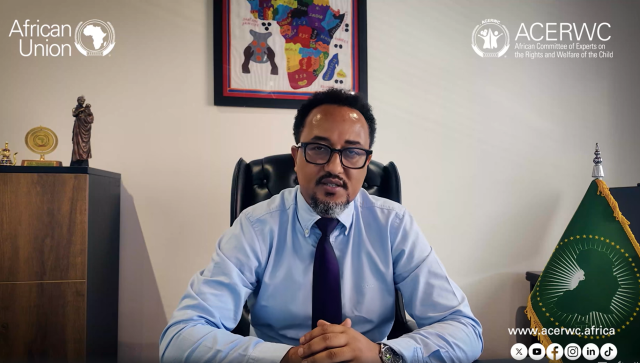
Ayalew Getachew (PhD), Acting Executive Secretary of the African Committee of Experts on the Rights and Welfare of the Child secretariat, said in a recorded message that the report can feed into the Committee’s dialogue with governments when they report on how they are meeting the African Children’s Charter.
Supporting families, he said, is a state obligation under the Charter rather than a matter of social policy alone, and public policy must reflect the diversity of African families instead of applying one approach to all. Ayalew said the Committee will draw on the findings in its monitoring and advocacy work.
The chairperson of ACPF’s International Board of Trustees, Elhadj As Sy, said leaders have made too many promises and asked where the accountability is. With up to 75 percent of the population under 35 in some African countries, he asked when accountability will meet active citizenship. He said failure to deliver would erode trust across the continent.
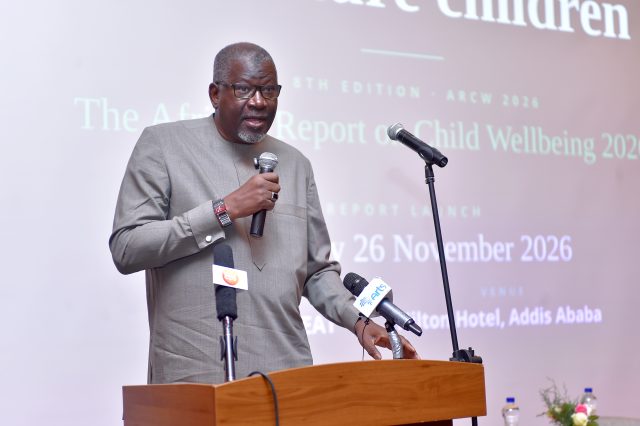
ACPF is calling on governments to put families at the center of social and economic policy. Its recommendations include adequate and predictable domestic financing, ring-fenced social protection budgets that are protected from in-year cuts, wider coverage for informal workers, support for families facing high food and energy prices, and laws that prohibit separating children from their families because of poverty.
 Betegbar Yaregal