

Mohamed bin Zayed Foundation Commits $135 Million to Medicines and Equipment Across Nine African Countries
#EBR_News Nov 26, 2026
The Mohamed bin Zayed Foundation for Humanity has announced a $135 million commitment to supply lifesaving medicines, equipment and technologies to more than 500 health facilities in nine African countries, in a move designed to draw in far larger public and donor financing.
The announcement was made on Thursday in Addis Ababa during the International Conference on Public Health in Africa (CPHIA), according to a statement issued by the Foundation.
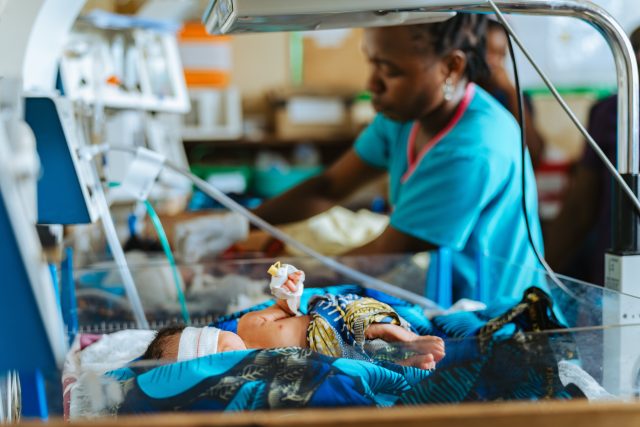
The funding will cover Ethiopia, Kenya, Liberia, Malawi, Nigeria, Rwanda, Ghana, Sierra Leone and Mozambique, with a focus on improving maternal and newborn survival and strengthening primary care.
The Foundation said its contribution is expected to catalyse more than $550 million in additional financing through matched contributions from partner governments and donors, with each participating government required to contribute at least an equivalent amount.
The announcement comes as many African health systems struggle with supply gaps. According to the Foundation, only 35% of essential medicines are available in public health facilities across Africa, and fewer than a third of facilities are equipped to carry out basic diagnostic tests.
The statement said African governments are increasingly turning to co-financing models, which pool donor and domestic resources behind national plans, to scale up and sustain the supply of health commodities.
Ethiopia offers the clearest example of how the model works. The Foundation said it was the first to commit to the country’s Reproductive, Maternal, Newborn and Child Health (RMNCH) Compact, pledging $20 million. That pledge helped unlock a further $151.2 million from development partners, which the Ethiopian government matched one-to-one, bringing the total mobilised to $342.4 million, according to the statement.
Over three years, the funds will equip around 120 health facilities with supplies ranging from AI-enabled ultrasound machines, which help health workers detect complications during pregnancy and childbirth, to antibiotics that reduce the risk of sepsis.
Mekdes Daba (PhD), Minister of Health of Ethiopia, said the Compact reflects “a new model of partnership built on shared investment and mutual accountability,” adding that the aim is fewer preventable deaths among mothers, newborns and children.
Elsewhere, the Foundation said it will commit $15 million in Rwanda to supply equipment to 170 health facilities and help mobilise a further $40 million, while a $10 million commitment to Liberia, also matched by donor funding, will support the national referral teaching hospital and connected facilities.
The Foundation said the Liberian funding will go beyond equipment to cover clinical mentorship for doctors, nurses and midwives, as well as training in biomedical engineering so that machines can be maintained and repaired over the long term. Such provisions address a common problem in low-income settings, where donated equipment often falls out of use because of a lack of technical skills or spare parts.
 Betegbar Yaregal