
EIH to invest $10 million in startups that solve problems at state enterprises
#EBR_News Nov 26, 2026
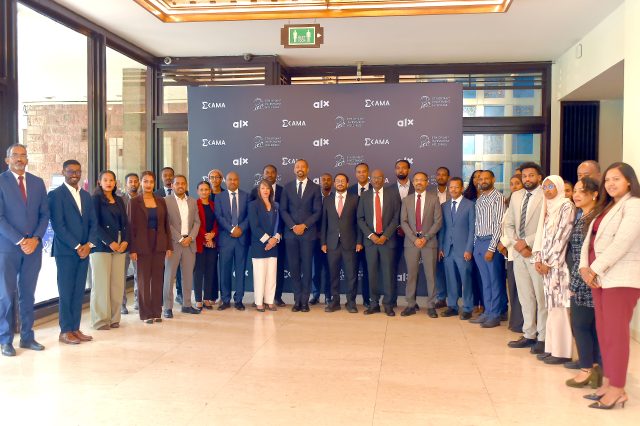
Ethiopian Investment Holdings (EIH), the country’s sovereign wealth fund, has launched KAMA, a programme that invites Ethiopian startups to solve operational problems at eight state-owned enterprises, with $10 million of EIH equity investment available for those that succeed. EIH CEO Brook Taye (PhD) announced the commitment at a press briefing in Addis Ababa on Thursday.
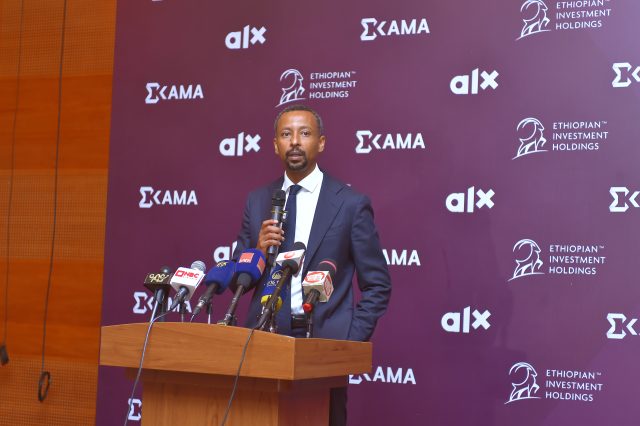
KAMA is a corporate open innovation and venture-building programme delivered with ALX Africa. Brook said eight of the 41 state-owned enterprises under EIH’s management take part in this first round. Over the past nine to ten months, each prepared a challenge brief setting out a problem that has made it inefficient or held back its work.
Examples he gave include Ethiopian Electric Power and the Ethiopian Agricultural Business Corporation, whose challenges cover fertiliser distribution, seed preparation and tractor deployment. He said the Ethiopian Airlines brief was written so that a solution could also serve other airlines abroad.
Applications for the first cohort are open from 26 November 2026 to 7 January 2027 on KAMA. Brook said applications will be reviewed with the enterprises concerned, and a startup’s size will not count for or against it. Selected teams will design and pilot solutions in real operating conditions, with the enterprise acting as the first customer, over four phased cohorts.
Brook said EIH expects an investment-ready product within a year, with ALX supporting teams that lack financial or strategic skills as they build a minimum viable product, meaning a basic working version used to test an idea. If a solution fails at the enterprise that requested it, he said, it could still be taken to the wider market.
The CEO said EIH will take equity in startups it backs, and that the money is neither aid nor a loan. “We expect a return,” he said. Asked by EBR how much each enterprise would receive, KAMA said no amount is set aside per enterprise, and the $10 million will go to whichever startups pass the programme, valued as in any startup investment.
Responding to the same question, Brook said the eight enterprises were chosen because their problems could be put into practice quickly, scaled and turned into investable ventures, not because of revenue performance.
Brook said the $10 million is only EIH’s contribution and will grow year by year, and that other institutions have shown interest in investing. He said EIH and the African Development Bank have each designed a $10 million programme for youth entrepreneurship, which will be run through a separate fund management company, giving a combined $20 million.
He said the fund structure has been decided and fund managers brought in, while investment policies and legal frameworks are being completed. In the first round, he said, further state enterprises and co-investors will be brought in later.
Mirafe Gebriel Marcos, CEO of ALX Ethiopia, told the briefing that startups often build a product and only then look for buyers, whereas KAMA starts with eight enterprises that have already identified their problems, which he said means eight markets exist from the start. If a solution proves useful, he said, an enterprise can either invest in it or buy the product.
Mirafe added that ALX will draw on its ALX Ventures programme and its experience supporting founders across Africa. Responding to an EBR question, he said the programme is homegrown and open only to startups based in Ethiopia.
 Betegbar Yaregal