
Ethiopia to take World Bank Africa Group 1 Alternate Executive Director post as Sandokan Debebe assumes office
#EBR_News Oct 19, 2026
Ethiopia is set to assume the Alternate Executive Director position of the World Bank Group’s Africa Group 1 Constituency on November 1, with Sandokan Debebe Jemaneh taking up one of the most influential posts representing African countries on the Bank’s Boards.
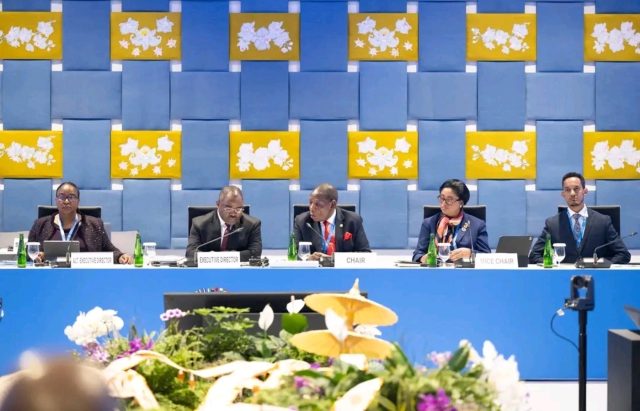
The Constituency, which speaks for 22 countries, held its meeting on Thursday, October 15, in Bangkok, Thailand, on the margins of the IMF/World Bank Group Annual Meetings.
According to the Constituency’s October 2026 Annual Report, a Constituency Panel interviewed three candidates nominated by the Federal Democratic Republic of Ethiopia during the 2026 Spring Meetings.
The Panel is chaired by Malawi, with Mozambique as vice chair and The Gambia, Kenya and Uganda as members.
Its chair, Joseph Mathyola Mwanamvekha, who is Malawi’s Minister of Finance, Economic Planning and Decentralisation, circulated the Panel’s report to all Governors in April 2026, seeking approval of Sandokan on an absence-of-objection basis.
The term runs from November 1, 2026 to October 31, 2028. The World Bank Group’s website lists him as Special Advisor to the Executive Director in the Constituency’s Washington office, known as EDS14.
The Constituency covers Botswana, Burundi, Eritrea, Eswatini, Ethiopia, The Gambia, Kenya, Lesotho, Liberia, Malawi, Mozambique, Namibia, Rwanda, Seychelles, Sierra Leone, Somalia, South Sudan, Sudan, Tanzania, Uganda, Zambia and Zimbabwe.
According to the World Bank, the Executive Director’s office has a dual role: representing member countries’ interests on the Board and acting in the best interests of the institution as a whole.
The World Bank’s history page for the office shows that Ethiopians have served as Executive Director on three occasions: Bulcha Demeksa from 1972 to 1974, Mitiku Jembera from 1986 to 1988, and Mulu Ketsela from 2006 to 2008. The page, which lists office-holders up to 2022, shows no Ethiopian in the Executive Director seat since Mulu’s term.
The Constituency says it uses a rotation system so that member countries have equal opportunity to nominate candidates for the Executive Director and Alternate Executive Director posts.
Ethiopia has a large stake in how the Constituency operates. The annual report shows that the Constituency’s total net commitment stands at $51.78 billion, of which $50.69 billion comes from the International Development Association (IDA), the Bank’s concessional lending arm.
Ethiopia holds the largest portfolio, with $8.22 billion disbursed and $4.25 billion yet to be disbursed.
In fiscal 2026, the report says, Ethiopia was the largest IDA recipient among fragile and conflict-affected African countries at about $3.9 billion, ahead of Nigeria at $2.4 billion and the Democratic Republic of Congo at about $1.0 billion. Its pipeline is centred on water ($200 million) and social sustainability and inclusion ($124 million).
The report also points to heavy exposure to the International Finance Corporation (IFC), the Bank’s private-sector lender. The Constituency’s long-term IFC portfolio stands at $11.98 billion, with Ethiopia accounting for $3.12 billion, behind Mozambique at $3.40 billion and ahead of Kenya at $2.80 billion. Together, the three countries make up nearly 78 per cent of the total.
The handover comes as the financing environment tightens. The report warns that concessional resources are shrinking while private capital has many destinations to choose from.
IDA commitments fell about 22.8 per cent to $30.8 billion in fiscal 2026 from $39.9 billion a year earlier, although the report attributes much of the drop to a $6.1 billion special programme for Ukraine and Moldova in the earlier year and to the start of a new IDA cycle.
It names the coming IDA22 replenishment negotiations as the centre of the Constituency’s next phase of advocacy.
 Betegbar Yaregal