

Bank of Abyssinia’s non-performing loans triple to Birr 15.6 billion as lending expands
Betegbar Yaregal
#EBR_News Oct 12, 2026
Bank of Abyssinia’s (BoA) non-performing loans tripled to Birr 15.64 billion in the year ended 30 June 2026, from Birr 5.18 billion a year earlier, according to the bank’s audited annual report. The rise came as the private lender expanded its loan book by Birr 57 billion and reported a pre-tax profit of Birr 15.85 billion.
The figures appear in the report’s credit-risk disclosures, which classify these loans as Stage 3 under IFRS 9, the international accounting standard for expected credit losses.
EBR’s analysis of the report shows Stage 3 loans equal about 6.1 percent of gross loans of Birr 256.49 billion, up from 2.6 percent last year. Loans under special mention, a Stage 2 category for borrowers showing early signs of stress, more than doubled to Birr 34.63 billion from Birr 15.82 billion. Together, the two categories account for roughly 20 percent of the loan book, against about 10.5 percent a year earlier.
The picture is similar under the National Bank of Ethiopia’s (NBE) own classification, which the report also presents. Substandard, doubtful and loss loans totalled Birr 11.15 billion, up from Birr 5.17 billion, while special mention loans rose to Birr 30.56 billion from Birr 13.21 billion.
According to the report, domestic trade and services is now the largest borrowing sector at Birr 68.46 billion, or about 28 per cent of loans, followed by exports at Birr 51.80 billion and industry at Birr 46.16 billion.
On that measure, Our calculates that non-performing loans were about 4.8 percent of the classified portfolio of Birr 230.78 billion, up from 2.9 percent. The two sets of figures differ because the regulator and IFRS 9 use different methods and loan bases.
The loan loss allowance rose to Birr 7.49 billion from Birr 5.94 billion, but it grew more slowly than the bad loans. The allowance held against Stage 3 loans stood at Birr 3.44 billion, roughly 22 percent of those exposures, compared with about 67 percent last year.
The loan impairment charge in the income statement fell to Birr 1.62 billion from Birr 2.12 billion. The report also shows the bank transferred Birr 2.62 billion from retained earnings to a regulatory risk reserve, which rose to Birr 4.42 billion from Birr 1.80 billion. The report says this reserve is non-distributable to shareholders and covers cases where provisions under NBE rules exceed those under IFRS.
The report says part of the increase in expected credit losses reflects an upgrade to the bank’s risk model. Exposures above 5 percent of the bank’s capital now undergo a separate risk assessment, an approach the report calls prudent because it improves the identification of large-exposure risk.
It also attributes the rise in loan loss allowances mainly to larger loan volumes and changes in portfolio distribution.
The bank says it renegotiates loans for borrowers in financial difficulty and reviews such cases through its Credit Committee. Its written-off loans also rose to Birr 546.2 million from Birr 248.0 million.
EBR tried to reach BoA’s communications team by phone to ask about the rise in non-performing loans and the lower coverage, but its calls went unanswered. The bank had not provided comment at the time of publication.
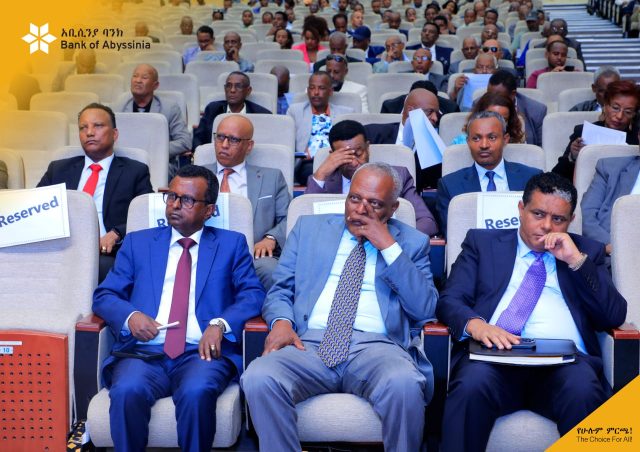
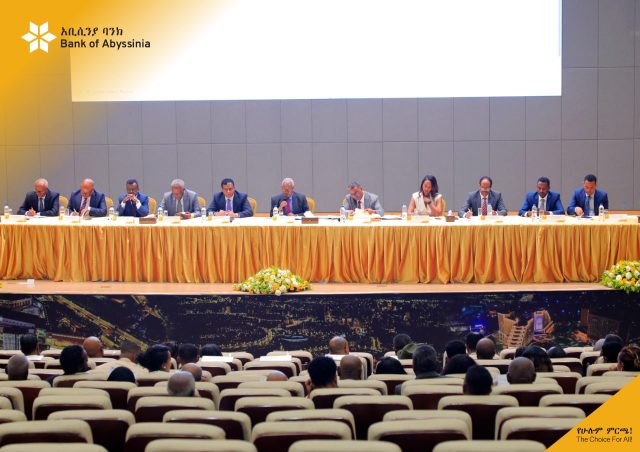
The results come as BoA, which held its annual general meeting on 10 October 2026 at the Adwa Victory Memorial Hall, faces closer scrutiny following its listing on the Ethiopian Securities Exchange under the ticker “BOAX”.
The bank’s strong earnings and capital base give it room to absorb losses, with equity of Birr 39.51 billion and a liquidity ratio of 25.84 percent against the NBE’s 15 percent minimum. The report puts its capital adequacy ratio at 10.12 percent under the previous directive.
By EBR’s calculation, Stage 3 loans are now almost equal to the bank’s annual pre-tax profit, compared with about half of it a year earlier, although the report shows part of the exposure is covered by provisions and collateral.
 Betegbar Yaregal