lease-financing-progressing-amidst-challenges.jpg

Lack of access to capital and credit is one of the biggest barriers facing small and medium enterprises (SMEs), microbusinesses, and new ventures in developing nations even though they are crucial to economic growth and job creation. The paucity of funding required to increase productivity typically undermines such a substantial role. The government of Ethiopia passed the country’s first leasing law in 1998 in response to the need of hastening the growth and development of SMEs by allowing access to financing and providing operational machinery and equipment to businesses. Five capital goods finance companies (CGFCs) were granted licenses by the National Bank of Ethiopia in the early months of 2014. With the further entrance of the first foreign-owned leasing company and the revitalization of an already existing leasing service, lease financing seems to be slowly progressing amidst inter and intra-institutional challenges, writes Eden Teshome.


cotton-shortage-haunting-textile.jpg

The plan of various administrations to make manufacturing the leading engine of the economy has most often ended up being a disappointment. Through the failures were also few sectors that have contributed their fair share to manufacturing and the economy at large. The textile and garment sector is a case in point—where centuries of traditions were industrialized during the mid-1900s under Emperor Haile Selassie. A sector that was launched bounds of hope and support from the government has indeed performed relatively well throughout the years. As of recently, however, a series of security, political, and environmental challenges have been slowing down the supply of cotton and thus, productivity of the entire sector. Positive moves like the commercialization of genetically modified cotton have been countered by the removal of Ethiopia from the American Growth and Opportunity Act (AGOA), writes EBR’s Bamlak Fekadu.


project-management-pride-not-whole-story.jpg

The timely completion and quality of delivered projects have been a source of pride for the ruling Prosperity Party members. One may not fall far from the truth for assuming that there are not many public appearances of the Prime Minister where he does not mention Entoto Park, Meskel Square, Friendship Park, the National Palace, and other such projects undertaken under his direct watch and without public participation. Of course, these projects have been completed in a timely manner with quality that has contented citizens who at the same time also raise questions of cost to value. However, that does not mean that this tradition has been reciprocated by other public officials and institutions that were given the task of executing projects. Addis Ababa is laden with developments stalled mid-construction and there is still a tradition of starting projects at the beginning of the rainy season knowing full-well the rains will halt work. Rampant corruption and inflation, as well as a struggling economy, pose further challenges to the completion of projects, writes EBR’s Eden Teshome.


mining-efforts-miss-the-jackpot.jpg

For the last several decades, industrialization and use of petroleum-powered vehicles has created enormous demand for oil. Countries that produce the ‘black gold’ have lived influencing the global economy and political landscape. Energy has always been the driving factor in economic growth, and hence, global clout. Recently, however, the world has witnessed the growing use of electric vehicles (EVs), with their use projected to rocket in the following decades. As such, cobalt is expected to be the new oil. The mineral used to make EV batteries last longer could have the potential to replace oil in becoming an important factor in deciding energy-induced influence. China is already trying to grab and lead the future by controlling large cobalt-producing regions such as the Democratic Republic of the Congo (DRC). In this article, EBR’s Eden Teshome investigates if Ethiopia is ready to take advantage of this growing global demand for cobalt.


Decebt-life-for-urbanites-mission-impossible.jpg

It cannot get much worse for Ethiopians as has been the case over the last few years with numerous corners of the nation hit with conflict and drought as well as pandemic and locust infestation. Further, the cost of living has been hitting citizens hard, especially those in urban areas. With the mercilessly skyrocketing price of goods and services in the capital and other places, dwellers are being forced to live below the line of poverty. Record-hitting inflation figures have not been assuaged with a growth in salary scales as the last governmental remuneration revision took place in 2017. EBR’s Bamlak Fekadu queries if urbanites will ever achieve a decent life living alongside galloping inflation.


will-state-holding-company-encourage-private-participation.jpg

Private participation in investment and business activities in the Ethiopian economy has been struggling for decades. Various administrations have done little to nothing when it comes to developing the private sector towards development and alleviating poverty. From communism to state developmentalism to the current administration’s ideology—the private sector seems to be always stuck on the back burner. One recent move by the incumbent is the establishment of the Ethiopian Investment Holdings (EIH). Creating this arm into the Ethiopian economy, the government hopes to counter the sluggish development of private-sector participation in the economy at large. EBR’s Selome Getachew looks into the missions of EIH and expected challenges which it will face to achieve intended results.


smoothing-remittance-flow-as-fx-dwindle-continues.jpg

The devaluation of the Birr, a ten-fold increase in the minimum capital requirement for banks, the freezing of accounts in the State of Tigray, alterations to forex retention rules, and transaction and cash-holding restrictions—the financial sector is undergoing an eventful few years. Developments in remittance applications and the adoption of a national digital payment strategy are also movements of significant influence in the sector. The management of the National Bank of Ethiopia is also tinkering around locally developed remittance applications—one of the significant sources of forex in the Ethiopian economy—is also experiencing rollercoaster moments. In this article, EBR’s Bamlak Fekadu looks into attempts to better utilize remittance potentials by overcoming challenges.


gomeju.jpg

Not more than 10 oil suppliers were operational in Ethiopia a decade ago. Now that is just history with the number almost quadrupling to 42 in November 2021. Not only this, the ownership structure of these companies has also changed greatly. While oil suppliers established decades ago were largely foreign-owned or big corporates, they are now being replaced by those owned by Ethiopians. But making a profit and staying afloat has not been easy for the majority of them, largely due to the low profit margin set by the government and shortage of forex needed to import lubricants and bitumen, which are more profitable. EBR reprints an updated version of an article published in February 2020, EBR 82.


local-global-challenges-choking-imort-export.jpg

The impact of insecurity on the Ethiopian economy has been ongoing since 2013. Following the coming to the helm of a new prime minister, a pandemic and all-out war have continued to challenge the already weak economy. Recently, a new directive by the National Bank of Ethiopia has sent shock waves within exporters’ circles—the nation’s global traders who help ease the forex famine and elevate the hopes of importers. All these challenges are being faced at a time of global supply disruption caused by the Russia-Ukraine war. At such an important moment of unprecedented internal and external challenges, the government’s approach to the matter has a potential to define the economy, and hence, the country’s sustainability, writes Bamlak Fekadu.


labor-market-witnessing-new.jpg

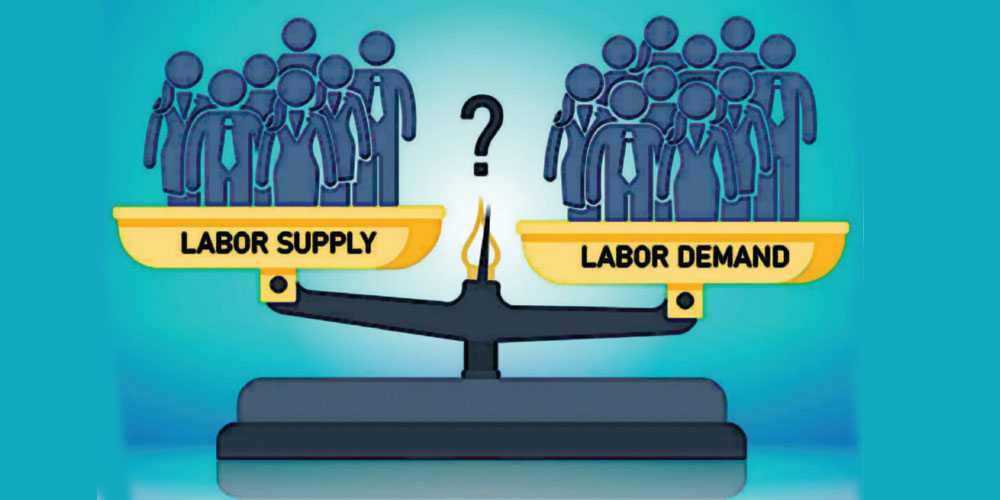
With the opening of dozens of universities and the ever-increasing graduates flooding out of these new institutions, unemployment and underemployment have been typical in Ethiopia’s labor market for more than the past decade. With new graduates continuing to rise, the labor market seems to be experiencing other developments, as well. While some sectors like education are dealing with a dwindling interest of employees, the financial sector seems to be entertaining a contrasting and dynamic interest. As the labor market continues to shape itself away from a mainly agrarian economy, new graduates are also preferring to work for themselves or as freelancers over full employment, writes Eden Teshome, EBR Staff Writer.


Ethiopian Business Review | EBR is a first-class and high-quality monthly business magazine offering enlightenment to readers and a platform for partners.


2Q69+2MM, Jomo Kenyatta St, Addis Ababa

Tsehay Messay Building

Contact Us

+251 961 41 41 41