
green-manufacturing.jpg

Are theyAchievable?

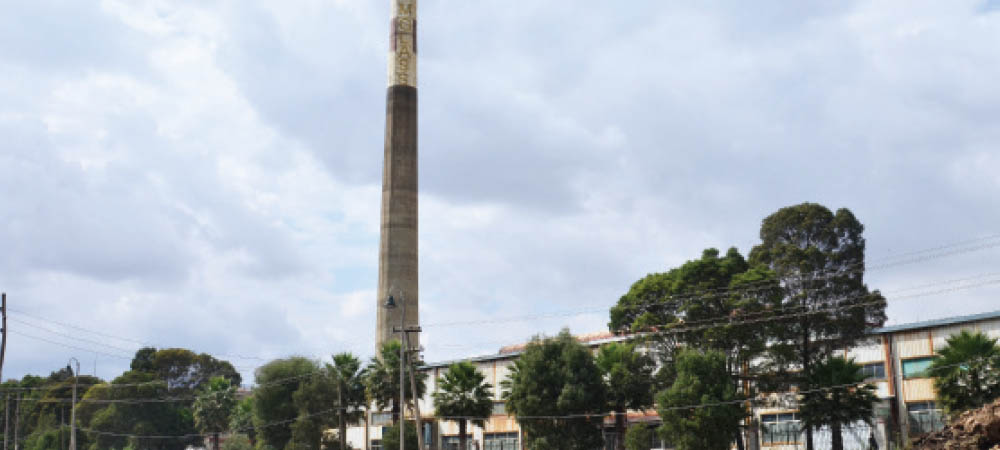
With power interruption becoming the norm, implementing green manufacturing has been almost impossible in Ethiopia. Although there are many companies that have embraced the idea of using green energy as a source of power, poor electricity supply has forced them to be dependent on fossil fuels. Especially cement factories, and industries that require high voltage, have no choice but to spend increasing amounts of foreign currency to import coal and fuel. Such a reality, coupled with inefficient energy usage, is profoundly costing the country. EBR’s Ashenafi Endale explores.


the-gold-exile.jpg

Why & How Ethiopia is Losing its Precious Commodity

A decade ago, gold constituted close to one-fifth of the total export earnings of Ethiopia. But the country has not been able to sustain this momentum. Last year, export income from gold plummeted to a dismaying USD32 million from 654 million in 2011/12 fiscal year. This is largely due to the growth of contraband trade and the closure of mining companies for allegedly polluting the environment. EBR’s Ashenafi Endale investigates.


Public-Private-Partnership.jpg

Is it the right model to sustain Ethiopia’s growth momentum?

A year after parliament legislated a proclamation governing Public Private Partnerships (PPPs), a Saudi firm has become the first to be awarded the construction of two solar power projects under such scheme. Another 15 projects, on the basis of PPPs, will soon be awarded to winning companies. While such a move is expected to fill the huge financing gap in the electricity sector, there is hope that this will have a positive impact on the efficiency, equity and quality provision of services.
While the idea of PPPs in general is theoretically appealing, its practical implementation in developing countries is not as easy as theory suggests. Perhaps partly for that reason, a large number of implemented PPPs have left the contractual parties dissatisfied, indicating that either developing countries, investors, or both may have had unattainable expectations. Experts fear this may happen in Ethiopia as well. EBR’s Ashenafi Endale explores.


Poor-Export-Quality-Costs-Ethiopia-Hugely.jpg

Ethiopian exporters are almost blind to international accreditation and certification systems. Even though there are significant outsourcing market opportunities in Europe, USA and Japan, Ethiopian exporters could not benefit from this, largely because they fail to meet standards. Such problems are not uncommon across sectors prioritized by the Ethiopian government, including coffee, leather, textile, garment, fruits and honey. The presence of few quality accrediting companies, both private and local, does not help Ethiopia buck this trend, chiefly because they lack international accreditation. EBR’s Ashenafi Endale probes into the matter.


construction-the-fanfare.jpg

Ethiopia is one of the few African countries to achieve a strong and broad economic growth in the past decade. But keeping up with this momentum has not been easy. The construction industry, one of the main engines to the economy, has come to a standstill. As many have become unemployed as a result of the slowdown, construction firms are experiencing loss and some are shifting to other sectors seeking better returns. EBR’s Kiya Ali reports.


wildlife-murder.jpg

Wildlife loss accelerating in Ethiopia

Globally, the decline of biodiversity is now recognized as one of today’s most serious environmental problems. The extinction of species is increasing, meaning they have disappeared forever. It is no different in Ethiopia. Wildlife biodiversity has shown a dramatic decline in recent years both in terms of type and size. The problem has been accelerating due to the expansion of agriculture, grazing land encroachment, illegal hunting, fishing, and natural catastrophes. The rapidly growing infrastructural expansion such as roads, government projects, and trans-boundary trade are also contributing to the loss of wildlife. EBR’s Kiya Ali explores the issue in depth.


regional-growth-varies.jpg

In Ethiopia, some regional states are more developed than others while the rest remain behind in terms of economy, investment and trade as well as social and infrastructural development. The wealth distribution among the regions is not also fair. Despite the substantial regional inequality, tackling the wide gap still remains a big challenge. In the past, there were different policy prescriptions put forward to manage the inequality, but none of them were able to bring a solution to the growing inequality among regional states, largely because of the politicization of the matter. EBR’s Ashenafi Endle explores.


Time of happiness with big stress

Wedding planning and related expenses bring a serious financial strains to a new relationship. Although it is supposed to be the happiest time in a couple’s life, it is not an easy task to pursue. When couples imagine their dream wedding, the price tag is usually not part of that fantasy. In fact, with the rising cost of living, many have stopped organizing big weddings. But this does not mean for even a small one they won’t incur much. Anecdotal evidences suggest that an average wedding costs between ETB100, 000 to as much as millions of Birr in urban areas like Addis Ababa. EBR’s Kiya Ali explores the issue.


aksum-ethiopias-1700.jpg

Situated 1043km away from the capital in the state of Tigray, Aksum is home to some of the most valuable heritages of Ethiopia. The Obelisks, tombs and churches found in the town as well as the welcoming people are its major characteristics. Even though the remnants of the Kingdom of Aksum portrays the long history the town has, its historical significance is not well-promoted to the world. Now, with the deteriorating condition of the obelisks and other heritages of the town, Aksum is at a risk of losing its status given by UNESCO. EBR’s Samson Berhane, who visited the town last month, writes.


mobile-phone-assemblers.jpg

A few years ago, there were more than two dozen local mobile phone assemblers in Ethiopia. With the steady growth in demand, many of them reaped huge amounts of profit while increasing their productivity. But over the past 12 months, majority of them stopped operations because of the increased rise of the smuggled mobile phone market. This, coupled with the shortage of raw materials, pushed the local assemblers to compete with the contraband phones suppliers. EBR’s Ashenafi Endale explores.


Ethiopian Business Review | EBR is a first-class and high-quality monthly business magazine offering enlightenment to readers and a platform for partners.


2Q69+2MM, Jomo Kenyatta St, Addis Ababa

Tsehay Messay Building

Contact Us

+251 961 41 41 41