photo_2025-05-22_11-00-23.jpg

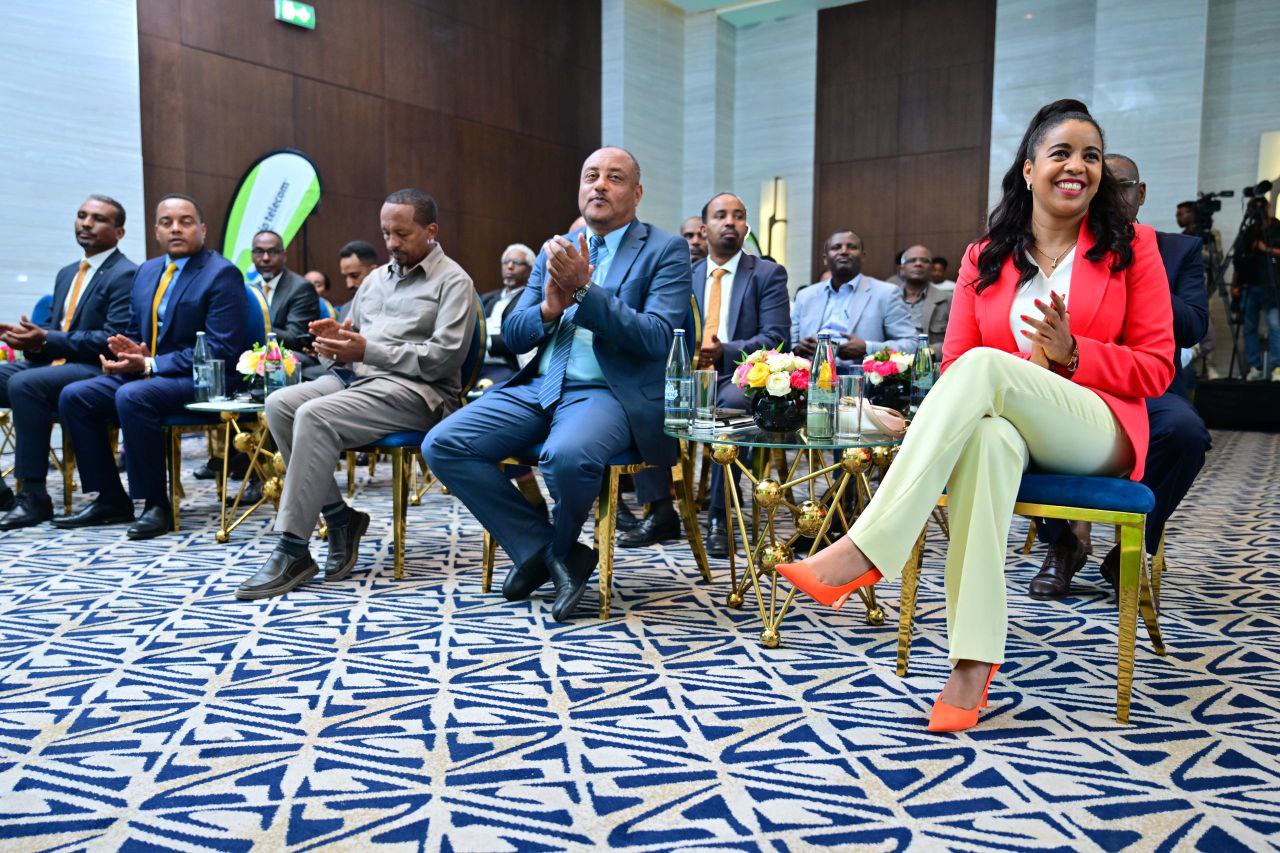
SantimPay has officially launched FrankRemit—a zero-fee remittance platform developed in partnership with Bank of Abyssinia. The platform stands out as the first in Ethiopia to integrate all commercial banks and major mobile money services, including Telebirr, M-Pesa, and CBE Birr.

FrankRemit is a homegrown fintech innovation, built in-house and tested rigorously over the past two weeks with successful transfers from multiple countries. This rollout ensures users experience fast, reliable, and secure money transfers right from the start.

The official launch event attracted high-level stakeholders from the public and private sectors, signaling the platform’s significance to Ethiopia’s economic ambitions. Among the attendees were Tinsae Desalegn, CEO of SantimPay; Fitsum Abegaz, Ambassador at the Ethiopian Embassy in Washington, D.C. and Director General of Diaspora Services at Foreign Ministry; Teferi Mekonnen, CEO of Oromia Bank; and Desalegn Yizengaw, Chief Customer Acquisition and Support at BoA.

“FrankRemit is the first platform to offer full integration across Ethiopia’s banking and mobile money landscape,” said Tinsae Desalegn. “We built this platform to address the frustrations of the diaspora and make sending money home effortless.”

The launch comes as Ethiopia nears one year since adopting a market-based exchange rate regime—a reform introduced in July 2024 to align the country’s forex operations with market realities. While sectors such as gold and coffee exports have flourished under this policy shift, remittance inflows still lag behind, according to Ambassador Fitsum Abegaz.

“FrankRemit is built to international standards and will help Ethiopia unlock greater remittance flows,” he said, emphasizing the platform’s strategic role in strengthening the country’s foreign currency position.

As part of its broader offerings, FrankRemit also introduces the FrankCard—a diaspora-focused gift card service developed in collaboration with Oromia Bank and Shoa Supermarket. This new feature allows members of the Ethiopian diaspora to send prepaid cards that can be redeemed locally, enabling direct support to families beyond traditional cash transfers.


Copy-of-White-Minimalist-Economics-Headline-News-Instagram-Post-23.png

Ethiopia’s Council of Ministers has approved a draft proclamation that will allow private companies, non-governmental organizations, cooperatives, and professional associations to participate in agricultural extension services. Historically, these services were solely provided by the government, but growing demand and evolving sector challenges have underscored the need for a more inclusive and multi-stakeholder approach.

The Council of Ministers convened virtually for its 45th regular meeting today, where it unanimously approved the draft proclamation. The document is now set to be forwarded to the House of People’s Representatives for further legislative review. This marks a significant step in reshaping key sectors of Ethiopia’s economy.

Alongside this, the Council also endorsed a draft proclamation aimed at establishing a consistent legal framework for ecosystem service fees. Previously, the lack of clear legislation led to fragmented and inconsistent implementation by various institutions. The new legal framework seeks to clarify the roles of federal and regional authorities, the private sector, and NGOs, promoting sustainable environmental management vital for Ethiopia’s development goals.


Copy-of-White-Minimalist-Economics-Headline-News-Instagram-Post-22.png


In its ongoing commitment to price and external stability, the National Bank of Ethiopia (NBE) has announced that it will conduct its sixth foreign exchange auction on Thursday, May 22, 2025, offering USD 50 million to participating banks.

This move is part of NBE’s bi-weekly foreign exchange auction framework aimed at supporting a more transparent and market-responsive forex system. Banks are invited to submit bids in line with NBE’s established guidelines, with the settlement set for the end of the auction day.

The announcement follows the previous auction held on May 7, 2025, where the weighted average rate of all successful bids stood at ETB 132.9643 per USD. In that round, 16 banks successfully secured foreign exchange allocations, underscoring robust participation and demand.

By maintaining a consistent auction schedule, the central bank aims to reduce volatility, improve forex access for priority sectors, and enhance monetary policy effectiveness.

The results of the May 22 auction will be disclosed shortly after the bid submission period concludes.


Copy-of-White-Minimalist-Economics-Headline-News-Instagram-Post-21.png

A new report by ActionAid has revealed the devastating impact of austerity-driven budget cuts on health and education systems across six African countries, including Ethiopia. The study, titled “The Human Cost of Public Sector Cuts in Africa,” highlights a significant decline in public investment and the consequences it brings for both workers and communities.

Surveying more than 600 healthcare workers, teachers, and community members in Ethiopia, Ghana, Kenya, Liberia, Malawi, and Nigeria, the report found stark indicators of crisis. Teachers’ salaries have dropped by up to 50% over the past five years, and 97% of healthcare workers reported that their income no longer covers basic needs such as food and rent.

In Ethiopia, the situation has grown particularly severe. There is a dire shortage of affordable medical supplies, with residents forced to seek care at high-cost private clinics. “Five years ago, we could buy antimalarial drugs for 50 birr. Now it costs over 500 birr in private centers,” said Marym, a resident of Muyakela Kebele.

The education sector is also under immense pressure. Across the surveyed countries, 87% of teachers reported a lack of basic teaching materials, often having to cover these costs out of their own pockets. “With over 200 students and no resources, delivering quality education is nearly impossible,” said Maluwa, a primary school teacher from Malawi.

ActionAid attributes these widespread challenges to austerity policies promoted by the International Monetary Fund (IMF). The organization argues that IMF-driven fiscal frameworks encourage governments to prioritize debt repayments over essential public spending. For instance, in 2024, Nigeria allocated just 4% of national revenue to health, while over 20% was directed to servicing foreign debt.

“The IMF’s push for austerity is forcing countries to sacrifice essential services,” said Andrew Mamedu, ActionAid Nigeria’s Country Director. “Governments must prioritize people, not debt.”

In response, ActionAid is calling for increased investment in public services through fair and progressive taxation, and a shift away from harmful economic policies that deepen inequality and weaken public institutions.


Copy-of-White-Minimalist-Economics-Headline-News-Instagram-Post-20.png

Ethiopia and Hungary have resumed negotiations to finalize an agreement on the avoidance of double taxation—an important fiscal policy tool that could unlock new opportunities for cross-border investment and trade.

Held in Addis Ababa, the second round of talks builds on earlier discussions that took place in Budapest, Hungary, where both sides reached preliminary understandings on most of the core issues.

Representing Ethiopia, Tewedaj Mehammed, Head of the Legal Affairs Department at the Ministry of Finance, emphasized that the agreement would not only eliminate the burden of double taxation but also foster a more predictable and investor-friendly environment. “This agreement will pave the way for enhanced business development and deepen economic cooperation between our two nations,” he noted during the opening session.

From the Hungarian side, Ms. Gyongyi Antal, Head of the Division of International Taxation at Hungary’s Ministry for National Economy, expressed optimism about the ongoing dialogue. “The removal of double taxation barriers creates a conducive environment for companies to thrive and connect. Most technical issues were addressed in the first round, and we are hopeful this session will bring consensus on the remaining points,” she said.


Copy-of-White-Minimalist-Economics-Headline-News-Instagram-Post-19.png

In today’s Ethiopia, numbers seem to offer a rare moment of optimism. Inflation, once soaring above 30%, has reportedly dropped to around 13%. And despite civil unrest, currency shortages, and a sovereign debt default, the government confidently projects economic growth at 6.4% for 2025.
On the surface, it feels like good news. But beneath the headlines lies a more complex reality—one that tells of an economy not transforming, but treading water.

That’s the view of Kebour Ghenna, a seasoned economist who has long observed Ethiopia’s economic dynamics with a critical but constructive lens. His recent reflections cast a thoughtful shadow on what many see as progress. For Kebour, the story isn’t just about numbers—it’s about how those numbers are achieved, who they serve, and whether they reflect real, inclusive development.

Inflation Falls, but Not for the Right Reasons

One of the more widely celebrated developments is the decline in inflation. Kebour acknowledges that inflation has indeed fallen, and credits this in part to a series of monetary and fiscal tightening measures. These included raising interest rates to 15%, imposing restrictions on commercial lending, and cutting government spending. The government also secured USD7 billion in support from international lenders like the IMF and World Bank.

However, he cautions that this drop in inflation has not been driven by an increase in production or supply-side improvements. Instead, he argues, it stems from a weakening in demand. Businesses are investing less, households are spending cautiously, and the credit market has tightened. In this sense, inflation has cooled not because of economic strength, but due to stagnation.

That said, he does note one positive development: tax revenue has improved, exceeding government targets. This, he argues, is a positive signal for fiscal sustainability, as it reduces the risk of the state resorting to inflationary money printing. Yet, this confidence remains fragile and highly dependent on continued reform and stability.

A Costly Fight Against Inflation

Kebour further argues that the tools used to curb inflation could have unintended consequences. High interest rates, while useful in slowing price increases, also raise the cost of government borrowing and discourage private investment. With Ethiopia already struggling to service external debt—including a default on its Eurobond—such measures may do more harm than good in the long run.

He warns that unless the current economic strategy is paired with broader reform and targeted investment, the relief from inflation may only be temporary. If tax revenues falter or donor funds dry up, Ethiopia could face another economic crisis, with little to show for its policy discipline.

Economic Growth Without a Foundation

Although the government continues to report GDP growth, Kebour questions the foundation of that growth. He points out that there is little evidence of significant gains in manufacturing, exports, or infrastructure investment. Lending to the private sector remains constrained, and the highly visible construction boom in Addis Ababa has often come at the expense of equity and social stability.

According to him, much of the reported growth may be driven by temporary factors: rising global prices for gold and coffee, a rebound effect from earlier downturns, and construction projects that displace more than they develop. In other words, the economy may be growing—but not in a way that creates jobs, boosts productivity, or reduces reliance on imports.

A Lack of Strategic Alignment

Kebour also questions the coherence of Ethiopia’s current economic management. While macroeconomic indicators suggest some degree of policy coordination—between tighter monetary policy and reduced government spending—he argues that true coordination requires a shared long-term development vision.
That vision, he suggests, remains absent. The government is still entangled in costly conflicts, while key sectors such as banking and telecommunications remain partially reformed or stuck in limbo. Many of the reforms underway appear to be driven more by external pressure from donors than by a homegrown strategic consensus.

What Needs to Change?

To shift course, Kebour believes Ethiopia needs to focus less on short-term macroeconomic targets and more on building a sustainable, inclusive development model. This includes investing in productive sectors like agro-processing and renewable energy, improving the business climate for domestic firms, and maintaining careful control over capital flows.

He also calls for a more equitable tax system that doesn’t rely so heavily on indirect taxes, which disproportionately affect low-income households. Above all, he emphasizes that political stability, rule of law, and public trust are essential prerequisites for economic progress.

A Warning Against Complacency

Kebour’s final warning is a simple but powerful one: don’t let impressive numbers fool you. Inflation may be falling, and GDP may be growing, but if these changes come from stagnation, foreign lifelines, or unproductive sectors, they offer little cause for long-term optimism.
Without a structural shift—rooted in national priorities rather than donor agendas—Ethiopia may be trading in one illusion of stability for another.


Copy-of-White-Minimalist-Economics-Headline-News-Instagram-Post-17.png


Ethiopia’s annual cement production capacity has reached 20 million metric tons, according to Minister of Mines Eng. Habtamu Tegegn. The announcement was made during the official launch of Pioneer Cement Factory in Dire Dawa, an event attended by President Taye Atske-Selassie, senior government officials, and industry leaders.

Speaking at the inauguration, Minister Habtamu emphasized the government’s ongoing efforts to boost local industrial productivity and reduce reliance on imported building materials. “We are expanding the capacity of cement producers by initiating four new coal processing plants to ensure sustainable and cost-effective input supply,” he stated.

The minister also underscored the broader strategic focus on strengthening domestic supply chains for the construction sector. “We are witnessing notable progress not only in cement but also in steel and related industries. These developments are key to supporting Ethiopia’s infrastructure drive,” he said.

The Pioneer Cement Factory, a joint investment between Ethiopian and Chinese partners, represents a new wave of industrial collaboration and technological advancement. Built within a notably short timeframe, the factory is now producing high-quality cement products, according to officials.

Beyond increasing output, the factory is also designed with environmental sustainability in mind. Dire Dawa Mayor Kedir Juhar lauded the project for its contribution to the local economy. “Pioneer Cement is creating jobs, boosting productivity, and utilizing pollution-free technology—making it a model for future industrial developments,” he said.

Leon Zone, General Manager of Pioneer Cement, reported that the factory has already created jobs for 550 workers and has rapidly scaled up its operations. “We are proud to contribute not only to the domestic market but also to Ethiopia’s growing capacity to export cement to neighboring countries,” he noted.


Copy-of-White-Minimalist-Economics-Headline-News-Instagram-Post-16.png


The National Bank of Ethiopia (NBE) has introduced a new round of regulatory reforms aimed at easing access to hard currency and aligning market practices with international standards.

The central bank has capped all bank-related foreign currency transaction fees at 4%, effective May 26, 2025, and will require banks to publicly disclose FX-related charges starting next month. This measure is designed to promote transparency, rein in non-standard pricing practices, and protect businesses and individuals navigating the increasingly active FX market.

At the same time, NBE has lifted the long-standing import advance payment ceiling from USD 5,000 to USD 50,000 per transaction—a step aimed at relieving one of the most persistent bottlenecks faced by importers. The updated threshold reflects what the NBE describes as a necessary adjustment, considering how long the previous limit had been in place and the evolving nature of global trade norms.

The foreign exchange regulator has also revised the rules governing how much travelers can take abroad. Under the new guidelines, personal travelers will be permitted to purchase up to USD 10,000, while business travelers may access up to USD 15,000. Additionally, individuals holding foreign exchange accounts will now be allowed to spend up to 20% of their balance via debit card—doubling the previous 10% ceiling.

These changes follow nearly a year of progressive liberalization, launched in July 2024 when the NBE unveiled a more market-based exchange rate regime. Since then, the central bank reports that goods exports have more than doubled, while service exports, remittances, and both official and private capital inflows have shown marked improvement.

As a result, the country’s foreign currency reserves have reached record highs, with increased FX availability enabling firms to secure vital inputs and expand operations. Bi-weekly FX auctions, another cornerstone of the reform effort, have added liquidity to the banking system and contributed to narrowing the gap between official and parallel market rates.

The latest measures, according to NBE, are a direct response to the positive feedback loop generated by these reforms and are intended to further normalize the foreign exchange environment. By enforcing fairer pricing, relaxing outdated limitations, and encouraging transparent financial intermediation, the central bank aims to strengthen trust in Ethiopia’s FX system—one that remains critical to sustaining business confidence, investor participation, and broader macroeconomic recovery.

While challenges remain, NBE’s phased approach suggests a careful calibration between regulatory oversight and market flexibility, with a clear shift away from rigid controls that have long characterized the foreign currency regime.


IMG-20250516-WA0006.jpg


Huawei officially opened its participation in ETEX2025 today at the Addis International Convention Center (AICC), under the compelling theme: “Amplify Intelligence for New Africa.” As a leading global provider of ICT infrastructure and smart devices, Huawei’s showcase highlights its continued commitment to driving Africa’s digital transformation through cutting-edge cloud and energy solutions.

The event commenced with a series of high-level sessions, including a VIP keynote address titled “Amplify Intelligence for New Africa” delivered by Chenxin (Ethan Jiang), Chief AI Specialist at Huawei Cloud. The keynote emphasized the strategic importance of AI and cloud technologies in accelerating Africa’s development, fostering inclusive innovation, and exploring how AI can foster inclusive, sustainable development and help shape the continent’s future.

CEO of Huawei Ethiopia Office, Michael Liu also emphasized “the importance of tailoring digital transformation to the continent’s unique context, deepen the roots —in policy, in people, in partnerships— so Africa may rise strong in the AI winds of change”.  He also detailed “Huawei’s Value Proposal to amplify Intelligence for New Africa in three main areas: New Infrastructure, New Ecosystem and New Value, all powered by AI.”

Huawei and industry chain partners have jointly innovated to bring new inclusive connection solutions to people in these regions. Together with our Eco-Partners, we are bringing new inclusive education solution to children in these regions:

  • The solution can support teachers to create courses online, carry out teaching activities, and provide students with self-learning and online exams functions;
  • The solution provides a healthy online learning environment for students through Cloud Pad + Cloud OS + remote control.
  • In addition, we integrate AI-assisted teaching and learning functions to further improve teaching quality and learning experience.

Throughout the three-day expo, Huawei is presenting three major thematic exhibition zones:

  • Industry Digital Exhibition: Showcasing solutions for Smart City, Smart Classroom, Smart Finance, Smart Airport, etc.
  • Cloud Exhibition: A fully immersive AI DeepSeek Interactive Experience invites participants to explore the power of cloud computing and artificial intelligence through real-time, hands-on demonstrations. This experience embodies Huawei’s vision of making AI more accessible and impactful for African enterprises, governments, and innovators.
  • Digital Energy Exhibition: Demonstrating the future of sustainable infrastructure, this zone features Huawei’s advanced Digital Charging Facilities (DCF), next-generation Superchargers, and Battery Backup Solutions, all designed to support a low-carbon, intelligent energy ecosystem for Africa’s growing digital economy.

Key highlights from the opening agenda also include:

  • A panel on “Securing the Future – AI, Blockchain & Cybersecurity Convergence” led by Eddie Wang, Director of the Cloud Business Department, Huawei East Africa.
  • A workshop on accelerating low-carbon transition through digital power by Leo Wu, Senior Solution Manager, Huawei Digital Power Business

Tech for All in Ethiopia, for example,

  • Tech for Youth, we have the ICT Talent Development;
  • Tech for Education, we can make education anywhere;
  • Tech for Women Empower Women, we can empowers the country.

Together, For A Fully Digitalized Ethiopia: New Ecosystem and build AI Seeds in Ethiopia.


Copy-of-White-Minimalist-Economics-Headline-News-Instagram-Post-15.png

The ID4Africa 2025 Annual Conference opened today in Addis Ababa, bringing together over 2,000 delegates from 100 countries to discuss the future of digital identity systems across the continent. At the opening session, Yodahe Zemikael, Director General of Ethiopia’s National ID Program, announced that 15 million Ethiopians have already benefitted from the country’s Fayida digital ID system, marking a significant milestone in the nation’s digital transformation journey.

Speaking at the high-level forum, Yodahe stressed that the programme’s success is not just measured by numbers but by the real-life improvements in service delivery, noting that Fayida has reduced processing times by up to 60% in institutions where it is active. He credited the achievement to political will, homegrown digital infrastructure, skilled professionals, and strong institutional partnerships.

Prime Minister Dr Abiy Ahmed, delivering a keynote address, described digital ID as an essential enabler of inclusive governance and economic development:

“Digital ID has evolved from a promising innovation into a foundational pillar of digital transformation… It is no longer optional but essential infrastructure connecting people to services, communities to institutions, and governments to the aspirations of their citizens.”

He acknowledged past fragmentation in Ethiopia’s ID system, which excluded millions, and said the new unified approach aims to bridge that gap and foster inclusive access to essential services.

Running over three days, the conference features expert workshops and symposia focused on digital identity innovations from 35 African countries, placing Ethiopia at the forefront of the continent’s tech-driven transformation.


Ethiopian Business Review | EBR is a first-class and high-quality monthly business magazine offering enlightenment to readers and a platform for partners.


2Q69+2MM, Jomo Kenyatta St, Addis Ababa

Tsehay Messay Building

Contact Us

+251 961 41 41 41