

 Michael Spence (PhD)
The word “openness” has two related but distinct connotations. It can mean that something is unrestricted, accessible, and possibly vulnerable; or it can mean that something, such as a person or institution, is transparent, as opposed to secretive.
 Muna Al Gurg
The desire to make a difference is born of a fundamental belief in something greater than ourselves, and by the concern that we all have for the wellbeing of our fellow humans.
As an Arab woman, I find it impossible to sit back and watch – or worse, turn away – as parts of the Middle East suffer through such a difficult time in the region’s already troubled history. Millions of innocent people have been displaced from their homes, and millions more are being driven across national borders into an uncertain and unstable future. Their need for help is clear.
 Andrew Liver
“Science knows no country,” said the great nineteenth-century chemist Louis Pasteur, “because knowledge belongs to humanity, and is the torch which illuminates the world.” Today, the innovative technologies and ideas that are driving the Fourth Industrial Revolution belong to all of humankind, and they are proving Pasteur right in ways that he could not have imagined.
 Ethiopian Business Review
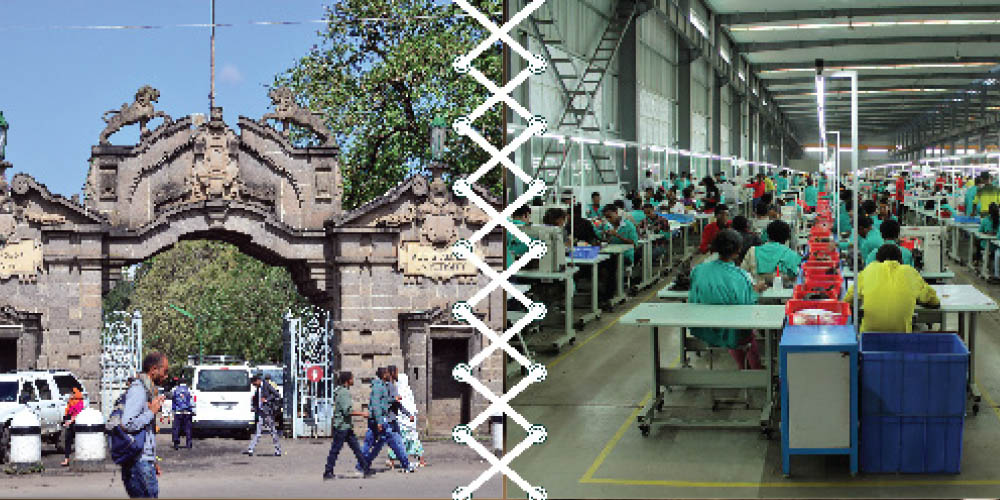
Higher education is fundamental to ensure development. Countries that have established research universities with strong linkages with industries have achieved fast and sustainable social and economic transformation. This is because such arrangements help to advance innovations, which can also be incubated into feasible businesses and interventions that help to improve quality of life.
For the last two decades, Ethiopia has hugely invested in education. However, university-industry linkages remain loose. This has hampered industries from improving their competitiveness because they are not getting qualified human resources, and technologies to improve productivity. The universities are also producing research less consumed by the very industries they aim to serve.

 Amanyehun R. Sisay
Born on May 05, 1951 and raised in Addis Ababa, Tekeda Alemu (PhD) has been a diplomat for thirty four years. He began his career at the rank of 1st Secretary in 1983. He was promoted within a few years as a counselor and later as acting head of the International Department and then as head of the African Department within the Ministry of Foreign Affairs.
Upon the change of government in 1991, he became deputy minister of foreign affairs, a position he held until October 2001. He then became a state minister until he was finally appointed as Ethiopia’s permanent representative to the United Nations in New York in January 2011.
The career diplomat earned a B.A. and M.A. from University of California, Los Angeles (UCLA) in political science and a Ph.D. also in political science from Claremont Graduate School in the United States. He was also assistant professor of political science and international relations at Addis Ababa University in the early 90’s.
Tekeda, the football enthusiast, smiles very much when he is asked to speak about his youth life and participation in football in which he had garnered an acclaim nationally and abroad. He had an illustrious history as a member of the UCLA’s Soccer Team, St. George Football Club and the national football team.
The EBR’s Amanyehun SiSAY visited the Permanent Mission of Ethiopia to the United Nations in New York recently and discussed with Ambassador Tekeda, known widely as one of the leading architects of the post 2002 Ethiopia’s foreign policy, about the works the mission has been doing since Ethiopia became a non-permanent member of the Security Council in January 2017 and other issues. The following is an excerpt.

A Draft Policy Aims to ‘Revolutionise’ Animal Breeding, Key to Improve Productivity’
Ethiopia ranks first in livestock population in Africa. However, the productivity of the sector remains poor due to the lack of appropriate policies which limit the use of improved technologies; and incentives to attract and retain investment.
While the productivity of improved breeds is upto ten times higher than the native breeds, there are less than one million improved livestock breeds, far less than 1Pct of the total livestock population in the country. This is very small especially when one notes that artificial insemination, a technology that helps to improve animal breeding, and productivity was introduced to the country 60 years ago. The result of the neglect to the sector is evident in that hotels, airlines and supermarkets in the country import a large amount of animal products, which sometimes include raw meat, milk and their processed forms.
With the establishment of a new federal institution – The Ministry of Livestock and Fishery Development; and a draft policy tabled for approval to govern the sector – many hope that the situation will change. EBR consulted research and stakeholders; and analyses the hope the policy could brings.

 Tamirat Astatkie
Moringa is a commercial crop; it is cultivated extensively in India and some parts of Africa. It would be challenging to find a region in the tropics or subtropics where Moringa is not grown as a backyard tree for leaf and pod consumption and medical purpose. Although the demand for the commodity has been minimum in the past, due to the growing awareness, its demand is picking up. As a result, the private sector is beginning to invest on Moringa. However, stockholders still stress the lack of proper attention to the crop continues as a major bottleneck to its development. EBR’s Tamirat Astatkie explores the issue to learn more about it.

 Hiwot Selalew
A Source of Extra Income for Many is Becoming a Growing Threat in Ethiopia
Prostitution is the practice of engaging in sexual activity in exchange for payment or some benefit. Although the ‘profession’ is as old as human history, it still attracts many, including teenage girls. One fact may surprise a lot – those who engage in the practice are not all economically deprived. Quite a good number of them, in fact, engage in the business to earn extra money necessary to live a ‘luxury’ life. EBR’s Hiwot Salelew explores the issue to offer this report.

 Abiy Wendifraw
The first competitive motor sport was held in 1894 from Paris to Rouen and back. Since then, the sport has made it to many countries and Ethiopia was no exception. The sporting event, which primarily involve the use of motorised vehicles, whether for racing or non-racing competition, is now counting to its 60th anniversary in the country. Despite its long age, expanding the sports has been very challenging. EBR adjunct writer Abiy Wendifraw spoke with stakeholders to learn about the challenges that are dragging motor sports in Ethiopia.
 Tsegaye Tegenu (PhD)
Although still a majority rural country, Ethiopia has been rapidly urbanizing in the past few decades. The urban centres have increased both in size and number. In the 1960s there were about 384 towns with a total population of 1.5 million, which increased to 925 in 1994 with the urban population of 8.5 million. Currently, the urban population has more than doubled reaching at 19 million. Over the past 30 years, Ethiopia’s annual urban population growth rate has been higher than the average in Sub-Saharan Africa, according to a report released by the World Bank Group in 2015.