Ethnicity-Trap.jpg

Can Ethiopia Break Free?

With the escalation of violence resulting in the death and displacement of millions of people, the humanitarian situation in Ethiopia has deteriorated over the past six months. The number of internally displaced people in the country, which started to increase last December, reached an historic peak in April 2018. Many attribute the problem to the ethnic based politics that the country has been pursuing since 1991. Since then, politicians have especially been using ethnicity as an instrument to advance wide ranging political and economic interests. EBR’s Samson Berhane explores.


Bonus.jpg

Incentive, Burden

Globally, various bonus schemes are used to keep employees satisfied and motivated. This strategy is increasingly seen adopted by banks, insurances and corporations in Ethiopia. It is becoming common to witness banks and insurance companies showering two to four months of salaries on employees as bonuses. Although these companies are benefiting from the strategy, there are still concerns, as EBR’s Ashenafi Endale writes.


Acidic-Soils.jpg

A Daunting Task waiting Ethiopia

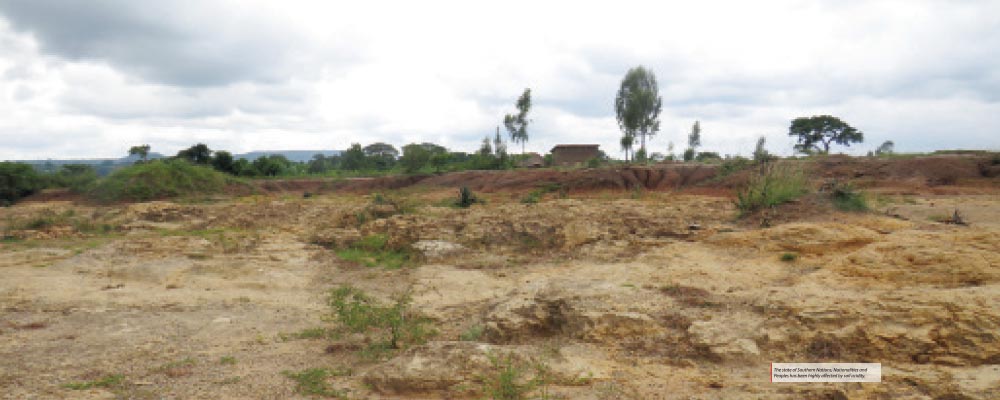
It has been over a decade since the government discovered that a little more than 40Pct of the total arable land of Ethiopia is affected by soil acidity. As a result, the fertility of most Ethiopian soil has already declined posing another challenge to crop production. Soil acidity affects crop growth because acidic soil contains toxic levels of aluminum and manganese and characterized by deficiency of essential plant nutrients such potassium, calcium and magnesium, among others. Had acidic soils been neutralized the country would have increased the production of crops such as cereals four folds. Yet this does not seem like it will be realized soon. EBR’s Ashenafi Endale reports.


Martin-Plaut.jpg

Martin Plaut is not new to the geopolitics of the Horn of Africa, having amassed more than three decades of experience in the region, starting as a journalist with the BBC World Service in 1984. He has reported from most of East Africa, as well as some parts of West Africa, and but his specialty lies in the Horn of Africa and Southern Africa. He later served as the Africa Editor for the BBC World Service News and published extensively on African affairs. Currently, he is working as an adviser to the United States Department of State and Senior Researcher at the Institute of Commonwealth Studies.


Fake news means news articles or information sources that are intentionally and verifiably false, and are meant to mislead readers. There are two key characteristics of fake news. First, fake news includes false information and fabricated news reports produced either for profit or political purposes. Second, fake news is created with dishonest intentions. It is deliberately fabricated and disseminated with the intention to deceive and mislead others into believing falsehoods or doubting verifiable facts. As a result, fake news shows circumstances in which objective facts are less influential in shaping public opinion than appeals to emotion and personal beliefs.


Tegbaru.jpg

Tegbaru Belete Program Leader of the Ethiopia Soil Information System

Soil acidity has been a big concern in Ethiopia for a long time. Although the problem has been known for over a decade, the level of action taken by the government was minimal. To avert this problem and develop policy to help farmers improve their yield, the Ethiopian Soil Information System (Ethio SIS) was launched by the Agricultural Transformation Agency in 2012, to bolster the growth and transformation of Ethiopia’s agriculture sector. Tegbaru Belete, program leader of the project, sat down with EBR’s Ashenafi Endale to talk about some of the ins and outs of the project and how the soil acidity problem can be solved.


Service-Exports.jpg

Why Exports of Ethiopian Services Remain Stagnant

The service sector in Ethiopia has suffered from a lack of government attention for a long time. It is still not part of the government’s strategy, even though it contributes close to 40Pct of the country’s gross domestic product. In Ethiopia, earnings from service export have long been dominated by traditional sectors- mainly travel and tourism services. This has undermined the competitiveness of firms that export services and the country’s ability to boost its service export earnings. Although service exports have potential, they have not grabbed the attention of policy makers so far, as EBR’s Samson Berhane reports.


Brewing-Bitcoin.jpg

Since its creation in 2009, Bitcoin has grown popular across the world. During its earlier years, it was almost monopolized by mega investors. But later on, with the establishment of Bitclub, ordinary people became able to invest in Bitcoin and to own small computing machines on their farm. This includes Hanna Teklie, an Ethiopian entrepreneur and many others who are investing in cryptocurrencies, as EBR’s Ashenafi Endale writes.


Life expectancy, one of the methods used to measure health in various countries, has drastically risen in Africa from 50.9 years in 2012 to as high as 54 years last year, according to UNDP. The gain in longevity is observed despite the fact that large section of the African population still suffers from poverty, malnutrition, illiteracy, and low access to health facilities, communicable diseases, and a lack of access to clean water. Despite the improvement, the lowest life expectancy in the world is located in the continent. Africa’s Sierra Leone has a life expectancy of only 50.1 years, the lowest in the world.


Ethiopian Business Review | EBR is a first-class and high-quality monthly business magazine offering enlightenment to readers and a platform for partners.


2Q69+2MM, Jomo Kenyatta St, Addis Ababa

Tsehay Messay Building

Contact Us

+251 961 41 41 41