housing_.jpg

In the past, house rents in Addis Ababa have increased chiefly because of the critical housing shortage and the surge in demand for apartments and houses.
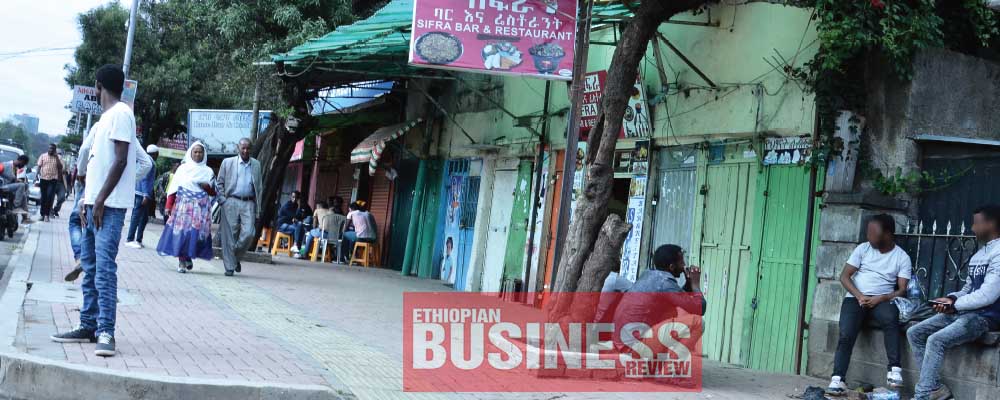
Over the past three months, however, rental prices have risen at an alarming rate, because of the rise in the number of Eritrean migrants, among other factors. EBR’s Ashenafi Endale investigates the matter.


adama.jpg

Can it be a vibrant Hub?

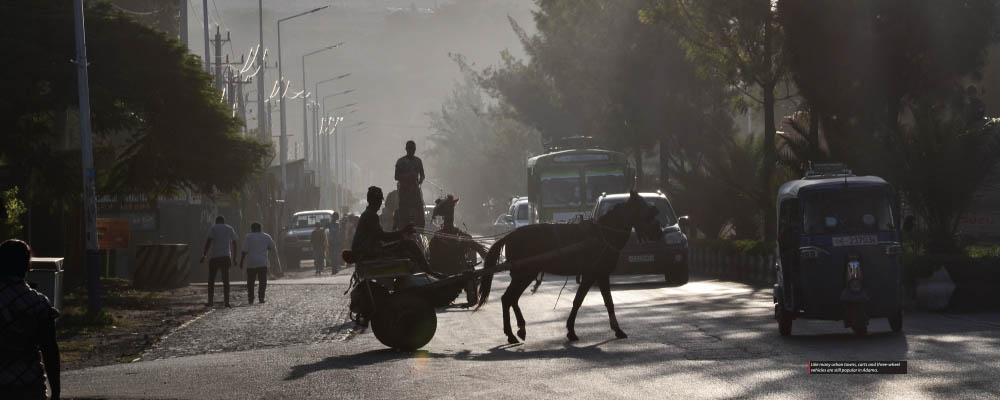
Located 99 kilometers from Addis Ababa, Adama is one of the largest and most vibrant cities in the state of Oromia and is home to almost half a million people. Its key role as a route for a large portion of the nation’s imports and exports has made it one of the most energetic cities in Ethiopia. Even more, the completion of its first industrial park last month makes it one of the country’s most promising investment spots. Despite the growth in businesses’ desire to invest in Adama, the city administration has been unable meet demands for investment licenses, which have accumulated for the past four years. Recurrent water shortages and rising living costs have remained challenges for the city’s residents. EBR’s Ashenafi Endale, who visited the city last month, reports.


Senait-Bogale.jpg

Success in the Face of Stereo Types

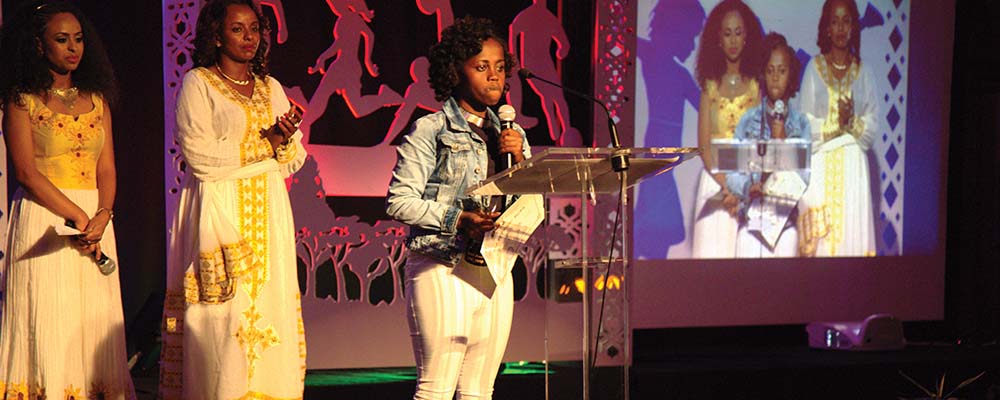
Just two months ago, Senait Bogale was crowned the Ethiopian Broadcasting Corporation Sports Personality of the Year in the female footballers’ category. Inspired by her siblings, four of whom are professional footballer players, Senait’s journey to success began at the age of 13 when she entered a local football training project where only boys were welcome. It did not take long for her to win the hearts of recruiters and win the Women’s Premier League title and other trophies with Dedebit Football Club. She was also part of the U20 national team in 2016. EBR Adjunct Writer Abiy Wendifraw sat down with the 20 year-old footballer to learn about her journey and future hope.


child-labour.jpg

A Problem Ignored in Ethiopia

Child labour has long been discussed as an issue in many parts of the world. In particular, families in developing countries have long relied on all members, even the youngest, to help shoulder the load of providing for the family. Although some experts have contended that there are ways for children to help with families’ livelihoods without being affected themselves, many children sent out to work are exposed to violations of their rights through physical and even sexual abuse, labour abuse and human trafficking. EBR’s Menna Asrat reports.


tsehaye_manbeb.jpg

The Entrepreneur Behind the Educational TV Show for kids

Bruktawit Tigabu is the mastermind behind one of the most popular television shows in Ethiopia- Tsehay Loves Learning- which is estimated to reach up to five million children every week. The gaps in the country’s early childhood education system prompted her to establish Whiz Kids Workshops, a social business that produces Tsehay Loves Learning and other educational materials. Bruktawit is also among the few social entrepreneurs in Ethiopia. EBR’s Menna Asrat sat down with her to learn what makes the 37 years old tick.


In Ethiopia, shortages in the availability of foreign exchange, also known as a foreign exchange crunch, has beenone of the pressing economic agendas for quite some time, and has lead to heated discussions. In response to the prevailing shortages, the government has recently taken some measures that aim to ameliorate the problem. Two actions standout in this regard: a fast crackdown on black market operators, and controlling the foreign currency that exits through Bole International Airport and boarder areas. As a result, confiscation of large amounts of foreign currencies (at least from the perspective of individual stances) continues to be reported.


Finland has taken the top spot as the happiest country in the world, according to the World Happiness Report 2018, which ranked 156 countries by their happiness levels, and 117 countries by the happiness of their immigrants. Norway and Denmark came second and third, respectively, in the report published last month whereas the most powerful country in the world, the United States, ranked 18th, dropping down four spots from last year.


Uphill-Climb.jpg

Fight Against Illegal Currency Trading

Over the recent months, the government has undertaken several measures to wipe out the parallel exchange market. But none of the measures were effective in arresting the spread of black market transactions. The first step was spreading a false rumor that the government would adjust the exchange rate. In doing so, it managed to temporarily weaken the black market and narrow the gap between it, and the official exchange market to as low as five cents. This was short-lived though. Black market players, who saw that the government did not keep its word, started raising the exchange rates again. Frustrated by their actions, the government, in an unprecedented move, shut down businesses engaged in the informal exchange market. But that also didn’t work, as the gap between the parallel and official market widened by almost eight birr. EBR’s Samson Berhane investigates.


industrial-park.jpg

Shortcut to Industrialisation?

The recent unveiling of the industrial park in Adama was just the latest in Ethiopia’s bid to open an industrial park in every region. The plan for industrial parks has always been to attract foreign investment into the country, and thereby start Ethiopia on the road towards industrialization, and eventually to middle-income status. However, many experts warn that the problem of industrializing the country reaches further than just providing a place with reliable electricity and infrastructure. In the face of nearly overwhelming optimism about industrial parks, some still have reservations.


Birhanu-Gizaw.jpg

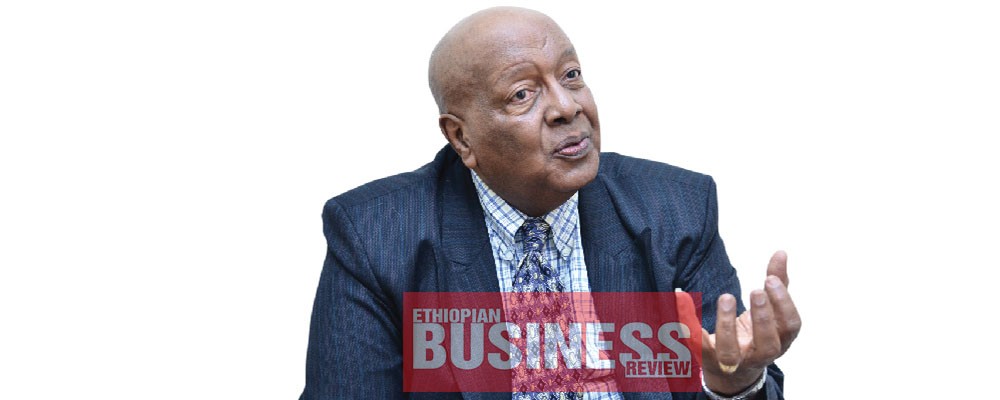
Currently, Ethiopia is striving to construct 30 industrial parks in the next two years, as shortcut to cope with late industrialization. However, Birhanu Gizaw (PhD), who has been an industrial engineer both in the academic and private sector for 30 years, the last 15 of which he has spent in Germany, boldly argues that Ethiopia needs to revise its industrialization policy. He argues industrialization is about a fundamental change in mentality, and manufacturing products and technology that simplify the life of each and every citizen, rural and urban alike. Currently, he is developing a technology park in collaboration with Jimma University, the first of its kind. In addition he is a lecturer at the Addis Ababa institute of Technology, and is chairperson for the Society of Electrical Engineers. He recently sat down with EBR’s Ashenafi Endale to discuss the country’s industrial efforts. The following is an excerpt:



Ethiopian Business Review | EBR is a first-class and high-quality monthly business magazine offering enlightenment to readers and a platform for partners.


2Q69+2MM, Jomo Kenyatta St, Addis Ababa

Tsehay Messay Building

Contact Us

+251 961 41 41 41