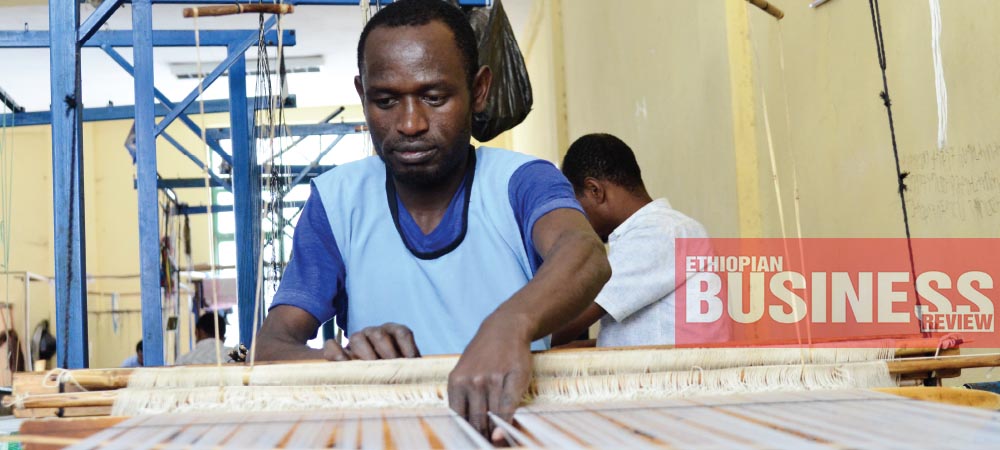
Poor-Export-Quality-Costs-Ethiopia-Hugely.jpg

Ethiopian exporters are almost blind to international accreditation and certification systems. Even though there are significant outsourcing market opportunities in Europe, USA and Japan, Ethiopian exporters could not benefit from this, largely because they fail to meet standards. Such problems are not uncommon across sectors prioritized by the Ethiopian government, including coffee, leather, textile, garment, fruits and honey. The presence of few quality accrediting companies, both private and local, does not help Ethiopia buck this trend, chiefly because they lack international accreditation. EBR’s Ashenafi Endale probes into the matter.


Market-Driven-Foreign-Currency-Market.jpg

Is it applicable in Ethiopia

Recently, officials of the National Bank of Ethiopia (NBE) pledged to implement a market-driven exchange rate regime over the next three years. Governor of the NBE, Yinager Dessie, said that his government will opt for a more flexible foreign exchange market to stabilize the level of its currency, deemed overvalued by the IMF. While this is a decision welcomed by the Bretton Woods institutions, it also stirred up controversies over its relevance in solving the forex crisis which has existed for over two decades. Experts fear that it would worsen inflationary pressures and result in an economic crisis shortly thereafter. EBR’s Kiya Ali explores.


Cottage-Industries-Locked-in-a-Cottage.jpg

Cottage industry is a segment of the economy whose importance is usually sidelined in Ethiopia. Though accounting for an insignificant share of the economy, it is still believed to be a source of income for many relying on the production of handicrafts and small industry items. Requiring a very small amount of capital, cottage industries employ below 10 individuals and are known for very quality products that are hand-made and preferred by environment-sensitive consumers. Now, this traditional manufacturing system is facing extinction as the government prioritizes medium and large enterprises as well as industrial parks. EBR’s Ashenafi Endale investigates


The-Dying-Table-Tennis-Sport.jpg

Table tennis used to be one of the most popular sports in urban parts of Ethiopia. Besides being a source of entertainment, it was a profession which many were interested to specialize in. But, the low-level attention given to the sport has led to its demise. Even though there are many throughout Ethiopia interested in being a table tennis player, it seems like there is no one interested in nurturing such skills. EBR adjunct writer Abiy Wondifraw reports.


Struggling-for-Survival.jpg

Neither homeless people nor street children are not new to Addis Ababa. They have existed for decades along with the growing urbanization in the country. Now it is believed that there are more than 150,000 street children and homeless people in Ethiopia and more than half of them live on the streets of the capital. The problem is far from over, even after the rehabilitation programs implemented by the city administration, federal government, and NGOs. EBR’s Kiya Ali writes.


Key to prosperity

Connectivity is the essence of life and integral to our survival and growth. It creates synergy and develops symbiotic relationships. In this competitive age, decision making remains the key for development. Connectivity through digitization has brought in speed, accuracy and adequacy of information to decision makers. It has also enabled people to make the right decisions for creating a sustainable future through innovation.


The Need For A Paradigm Shift

The policy and institutional framework for regional development plays an important role in the solving of massive unemployment, provision of greater and diversified volume of production, better infrastructure (soft and hard), improved community services, rising average wealth, and improved quality of life. A region is a constituted social order with people engaged in distinct political, cultural and economic practices. These practices are embedded and developed historically and sustained and reinforced within networks, processes and infrastructures.


Intellectual-property.jpg

The importance of patent rights is usually overlooked in Ethiopia. From the inventors to the government officials, the attention given to the issue has not been satisfactory. This is partly because of the weak implementation of the patent law of the country. The fact that the country is also not a signatory in the international intellectual property law is another challenge which is undermining the efforts of the country in its accession in the World Trade Organization. EBR’s Ashenafi Endale investigates.


construction-the-fanfare.jpg

Ethiopia is one of the few African countries to achieve a strong and broad economic growth in the past decade. But keeping up with this momentum has not been easy. The construction industry, one of the main engines to the economy, has come to a standstill. As many have become unemployed as a result of the slowdown, construction firms are experiencing loss and some are shifting to other sectors seeking better returns. EBR’s Kiya Ali reports.


wildlife-murder.jpg

Wildlife loss accelerating in Ethiopia

Globally, the decline of biodiversity is now recognized as one of today’s most serious environmental problems. The extinction of species is increasing, meaning they have disappeared forever. It is no different in Ethiopia. Wildlife biodiversity has shown a dramatic decline in recent years both in terms of type and size. The problem has been accelerating due to the expansion of agriculture, grazing land encroachment, illegal hunting, fishing, and natural catastrophes. The rapidly growing infrastructural expansion such as roads, government projects, and trans-boundary trade are also contributing to the loss of wildlife. EBR’s Kiya Ali explores the issue in depth.


Ethiopian Business Review | EBR is a first-class and high-quality monthly business magazine offering enlightenment to readers and a platform for partners.


2Q69+2MM, Jomo Kenyatta St, Addis Ababa

Tsehay Messay Building

Contact Us

+251 961 41 41 41