

 Ethiopian Business Review
The first of its kind Global Crypto Adaptation Index launched in September 2020 assessed and ranked 154 countries on their level of adaptation and use of different digital currencies, in 12 months.
 Ashenafi Endale
The revision of the existing proclamation regulating different level chambers has caught the attention of the business community. In its final drafting stages, it will largely concern the organization and running of Ethiopian businesses under different chambers and sector-based associations. However, the changes offered in the draft proclamation have garnered stiff reservations and displeasure from the private sector. EBR’s Ashenafi Endale explores the business community’s concerns on the draft proclamation.

Myriam Said, Digital Advisor to the prime minister, is the leading personality behind Ethiopia’s stride towards the digital economy. She coordinates initiatives implemented to advance digital technology throughout the economy, currently at an early stage of development. Myriam’s promotion to advisor to the prime minister in February 2020 came as a result of her dedicated work when serving for nine months as Director of the National Digital Transformation Program at the Ministry of Innovation and Technology. While working as a director, Myriam led a team of experts who developed Digital Ethiopia 2025, an inclusive strategy guiding Ethiopia’s journey from analogue practices where government, business, and social interactions took place in person, to a fully integrated inclusive digital economy and society where exchanges are made faster, cheaper, and more securely through digital technology.

Ever since Ethiopia became landlocked after losing its access to the Port of Assab three decades ago, international trade has remained the Achilles heel of Ethiopia’s economy. The country’s dependency on imports could not be matched by efficient logistics services. Numerous service providers fight it out on one major route, the Ethio-Djibouti route, though it’s primarily primed for the state-owned carrier.
Coupled with low support provisioned, the closure of the logistics sector to foreign investors has stunted its growth.
Following the partial opening-up of the sector since 2018, a number of global shipping groups and logistics service providers are inking deals with local firms. Though late, the move is highly expected to buffer financial and knowhow transfers, long and eagerly awaited for by local players. EBR’s Ashenafi Endale looks into the trophies that could be won and persisting gaps haunting local logistics operators.

Daniel Zemichael, a father of three, is Founder and CEO of Freighters International, one of the biggest private shipping companies in Ethiopia. Established 35 years ago with ETB100,000 in capital, and growing to its current ETB20 million; Freighters International is the exclusive agent for Maersk, a Danish shipping company active in ocean and inland freight transportation. EBR sat down with the logistics guru, to converse on the expected impacts of recent governmental moves to allow foreign companies to own a minority stake in local logistics companies amongst other topics.
 Shimelis Araya
The negative impact on African economies of the COVID-19 pandemic was easily evidenced by the shrinking real GDP of all countries, according to reports released from international organizations. Reports further demonstrated that the extent of the economic slowdown in most countries is linked to the level of integration to the global value-chain, particularly to trade and tourism. A drop in world demand leads to a decline in prices for many of the primary commodities. Specifically, the economic contraction is bigger for exporters of fuel and horticultures. This hugely affected production and export of all economies. African countries through the African Union (AU) are calling to the world’s creditors to reduce or cancel debt. The demand for debt reduction is mainly due to the pandemic that has a devastating effect on the continent’s economy.
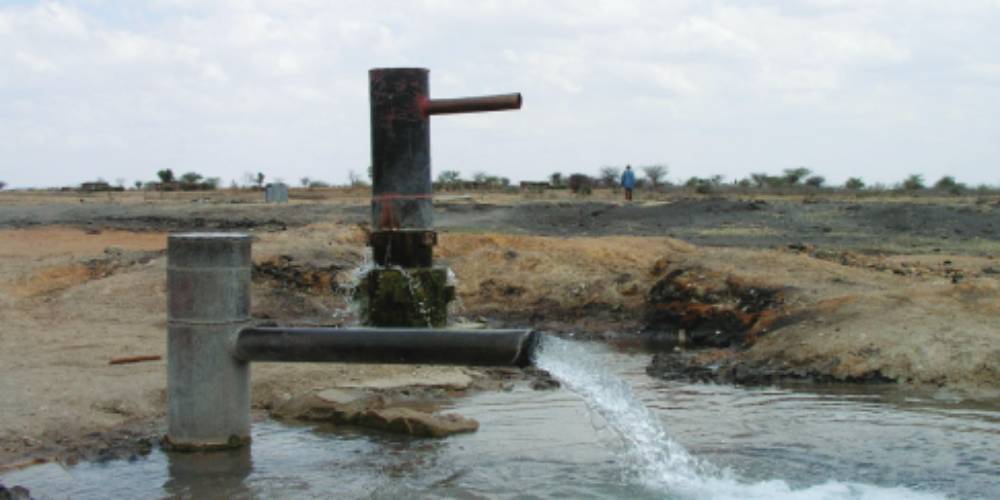
Ethiopia has vast water resources. However, only a fraction of the potential has been realized thus far. Access to fresh water is still a problem in both rural and urban parts of the country. Given the high population growth rate, Ethiopia should utilize groundwater for both agriculture and household use. However, little has been done to tap the huge groundwater resource in the country. EBR’s Mubarek Jemal reports.

Digital health is the provision of health care services using digitized health recordings and electronic mechanisms. In developed countries, it evolved into an ecosystem where even surgery operations are remotely operated, or blood is delivered by drones at emergency spots.
But recently, physical distancing measurements introduced under COVID-19 increased the demand for digital health services even in developing countries like Ethiopia, where even the concept of digital health is at an early stage.
A number of medical graduates and computer engineers are teaming up to design applications to solve the completely manual health services of Ethiopia. Newly established startup incubation centers are also targeting idea creation, nurturing, and linking digital health innovators with investors. Nevertheless, they can hardly find financers as a startup, nor favorable support and policy environment from government. EBR explores the opportune moments knocking at the door for digital health innovators, and the monumental task ahead in digitizing Ethiopia’s health system.

 Abiy Wendifraw
For the sport community, the Olympics are almost a ritual coming every four years but taking a lifetime of preparation. There were only few unfortunate years including during the world wars that forced the world’s greatest sporting festival to not be held. But this time, it is the invisible virus that forced the rescheduling of the Tokyo Olympic Games.
The cost was not only endured by Japan. Especially in track athletics, where Ethiopia beginning with Abebe Bikila had reigned supreme alongside its neighbor Kenya, Ethiopian athletes were dropping every sweat for the Tokyo tournament. EBR’s Abiy Wendifraw witnessed the emotional breakdown hard-trained athletes faced upon the postponed, and possibly cancelled, Olympics.
 Samuel Habtab
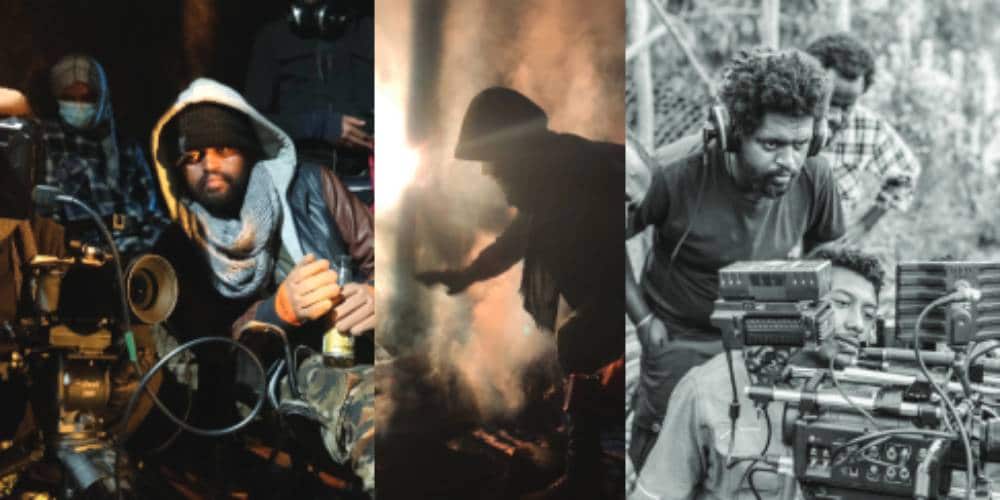
Producing a television drama series that airs daily is overambitious, especially considering the broadcast production capacity of Ethiopia. Yet, new approaches are emerging to capture the growing viewership of addictive TV series.
Sewmehon Yismah, 38, is Founder of Sewmehon Film Production. He recently reached an agreement with DStv to produce the first-of-its-kind daily show, titled Adey. The script of the series is contextually adapted from English and other foreign languages. Once produced with localized characters in Ethiopia, it will be aired on a new TV channel to be launched on DStv. DStv outsourced the production to Sewmehon, a new arrangement in Ethiopia’s television drama series production history.
Sewmehon, a movie maker and cinematographer, has produced sensational music clips including Mar Eske Twaf and a number of Amharic movies like Balageru and Sewnetwa, displaying quality that DStv could not ignore. He is also currently producing a documentary on the life and work of Tilahun Gessesse. EBR’s Samuel Habtab visited Sewmehon’s studio to converse on his upcoming work.