White-Minimalist-Economics-Headline-News-Instagram-Post-2025-06-23T084321.728.png

Ethiopia’s Special Economic Zones (SEZs) have secured nearly USD 900 million in new investments in the current fiscal year alone, a leap that signals the zones are active engines of industrial growth.

As reported by the Ethiopian Press Agency, 89% of all developed land and factory shades in the country’s 13 SEZs have been taken up. Bole Lemi and Adama Industrial Parks have reached full occupancy, while Jimma SEZ stands at 90%.

“This level of uptake shows that previously stagnant areas are now attracting serious investment,” said Zemen Junedi, Deputy CEO of Promotion and Marketing at the Industrial Parks Development Corporation (IPDC), in an interview with The Ethiopian Herald. “Most of the newly registered projects are already operational.”

Zemen attributes the turnaround to a set of government-led legal and regulatory reforms—nearly 80 policy frameworks have been revised. The goal: eliminate red tape and boost investor confidence. The results are visible. Just a few years ago, local investor participation in SEZs stood below 5%. That figure now stands at 60%, with Ethiopian firms operating alongside foreign players in zones across the country.

SEZs have also shifted from being purely export-driven to supporting import substitution, especially in textiles, pharmaceuticals, automotive assembly, logistics, and agro-processing. Parks once seen as underutilized are now actively contributing to employment, technology transfer, and foreign exchange generation.

“Zones that were struggling are now alive with factories, warehouses, and local value chains,” Zemen said.

However, recent reports highlight persistent challenges for workers within these zones. Laborers face wages as low as USD26 per month, among the lowest globally. Poor working conditions, including long hours, inadequate occupational safety, and substandard housing, contribute to high turnover rates—sometimes exceeding 10% monthly. Inflation continues to erode workers’ purchasing power, while weak enforcement of labor laws and limited union influence leave many with little protection or recourse.


photo_2025-06-21_19-23-40.jpg

The Ministry of Trade and Regional Integration has issued a statement clarifying recent misinformation suggesting that new taxes have been imposed on fuel sales. While the Ministry insists that no new taxes or subsidies are currently being applied, a recent report by Sheger 102.1FM reveals that the government’s 2025/2026 draft budget plans to introduce a 15 percent value-added tax (VAT) on fuel products starting July 2025.

This clarification comes amid growing public anxiety and widespread rumors circulating on social media, which have contributed to unnecessary panic and long queues at gas stations across the country. The Ministry urges the public to rely on verified information and assures that fuel supply remains stable and sufficient.

Ethiopia has been gradually reducing its domestic fuel subsidies since June 2022, a process designed to align local fuel prices with global market rates. This phase-out was initially targeted to conclude by June 2023 but was extended due to macroeconomic reforms, including a significant adjustment in the foreign exchange rate, which pushed domestic fuel prices upward.

To mitigate the impact on vulnerable populations, the government introduced a targeted subsidy package in July 2024, focusing support on low-income households. Despite these efforts, the wide price gap between Ethiopian fuel prices and those of neighboring countries has fueled smuggling and illegal trade, prompting the government to accelerate subsidy removal.

Subsidies on gasoline and jet fuel were removed starting May 9, 2025, with the de-subsidization of white diesel and other petroleum products following on June 4, 2025. Since then, all fuel prices have been fully determined by international oil market dynamics.

However, the government’s plan to impose a 15 percent VAT on fuel products from July 2025, as outlined in the draft budget, is expected to place additional financial pressure on consumers already facing rising living costs. The VAT is projected to generate over ETB 3 billion in revenue for the federal government, alongside additional VAT revenues from other basic commodities such as sugar and salt.

The Ministry acknowledges the challenges posed by these reforms but emphasizes their necessity in improving fiscal sustainability and reducing market distortions. It also reiterates its commitment to protecting vulnerable groups through targeted subsidies and social safety nets.


NIB-X-Arifpay-1280x930.jpg

NIB Bank and Arifpay Financial Technologies have launched a strategic partnership aimed at expanding access to digital payment systems across Ethiopia. The collaboration brings together NIB Bank’s extensive financial infrastructure and Arifpay’s growing fintech capabilities to deliver a range of integrated solutions that cater to the evolving needs of businesses and merchants.

Central to the partnership is a commitment to improving how transactions are made and managed, particularly for small and medium-sized enterprises (SMEs), retail merchants, and service providers seeking greater efficiency and flexibility in their day-to-day operations.

One of the key offerings is the deployment of mobile and smart point-of-sale (POS) devices, allowing merchants to accept card payments, including Visa, Mastercard, and UnionPay. This capability is expected to improve transaction security and boost foreign currency inflows by attracting more international customers and formalizing previously cash-based businesses.

The agreement also includes the rollout of a secure digital Payment Gateway to support Ethiopia’s growing e-commerce sector. The gateway is designed to facilitate online payments for businesses operating in the digital space, offering a locally managed, real-time transaction platform that enhances reliability and customer trust. As part of the rollout, merchants will also have access to a free e-commerce platform, integrated directly through Arifpay’s gateway.

“With this partnership, NIB Bank’s customers can access these all-inclusive payment solutions,” said Rediet Tsigeberhan, CEO of Arifpay. “Moreover, a free e-commerce platform for merchants through our payment gateway will further empower businesses. Teaming up with NIB Bank allows us to scale our fintech innovations nationwide and work with a larger, more inclusive, and digitally empowered economy.”

Complementing these tools is a merchant-focused mobile application that allows vendors to accept payments, manage transactions, and access real-time analytics from their smartphones. The app supports businesses in better monitoring cash flow, understanding customer behavior, and making data-driven decisions.

Additionally, the “Super Merchant” model introduced through this partnership will allow NIB Bank to integrate Arifpay’s interoperable technologies into its existing digital services. The model is intended to simplify onboarding processes for new merchants, expand access to digital financial tools, and further modernize the bank’s retail offerings.

Henok Kebede, CEO of NIB Bank, said the partnership reflects the bank’s strategic direction toward becoming a leader in digital financial services. “By combining our infrastructure with Arifpay’s technology, we are positioned to deliver practical, customer-focused solutions that support business growth and financial inclusion,” he said.


ECOTRADE.jpg

Ethiopia has officially launched the €6 million ECOTRADE Project, a four-year initiative funded by the European Union (EU) to support the country’s implementation of the African Continental Free Trade Area (AfCFTA).

The high-level launch ceremony took place today  in Addis Ababa, with the presence of Ethiopia’s Minister of Trade and Regional Integration, Dr. Kassahun Gofe; EU Ambassador to Ethiopia, Sofie From-Emmesberger; Julien Voituriez, First Advisor at the Embassy of France to Ethiopia; and other senior officials, development partners, and private sector representatives.

ECOTRADE, designed and managed by Expertise France, a subsidiary of Agence Française de Développement and France’s public agency, aims to enhance Ethiopia’s trade policy framework by aligning it with AfCFTA protocols, while also building the capacity of public institutions and empowering the private sector—particularly small and medium-sized enterprises (SMEs) and women-led businesses—to effectively participate in regional markets.

“This initiative speaks directly to our national development aspirations,” said Dr. Kassahun. “It supports Ethiopia’s Homegrown Economic Reform Agenda, complements our national trade policy direction, and is anchored in our broader integration goals under the African Union’s Agenda 2063.”

The project will operate in close coordination with the Ministry of Trade and Regional Integration (MoTRI), the Ethiopian Customs Commission, chambers of commerce, exporters’ associations, and other key public-private actors. Through targeted interventions in policy alignment, trade facilitation, and value chain development, ECOTRADE is expected to improve regional connectivity and foster inclusive economic growth.

Ambassador From-Emmesberger reaffirmed the EU’s commitment to Ethiopia’s development through collaborative and people-centered initiatives.

“At the heart of ECOTRADE lies a bold ambition—to enable Ethiopia to reap the full benefits of AfCFTA,” she said. “This means investing in people: entrepreneurs, women traders, customs officials, and students, all of whom are drivers of transformation.”

The ECOTRADE Project also aligns with broader continental and global development goals, including the EU’s Global Gateway strategy and the UN Sustainable Development Goals. It underscores the growing emphasis on trade-led development as a means to boost competitiveness, reduce poverty, and position Ethiopia as a key player in the emerging single African market.

Ethiopia ratified the AfCFTA agreement in 2019 but has yet to fully liberalize its tariffs or engage in the AfCFTA’s Guided Trade Initiative. The ECOTRADE launch comes at a pivotal moment, as Ethiopia is preparing to validate its comprehensive national AfCFTA implementation strategy later today.

To ensure effective execution, MoTRI has established a dedicated coordination office for trade integration and facilitation. This office will work alongside a national implementation committee and three technical working groups tasked with guiding, overseeing, and ensuring accountability across institutions.


DSC_0803-1280x848.jpg

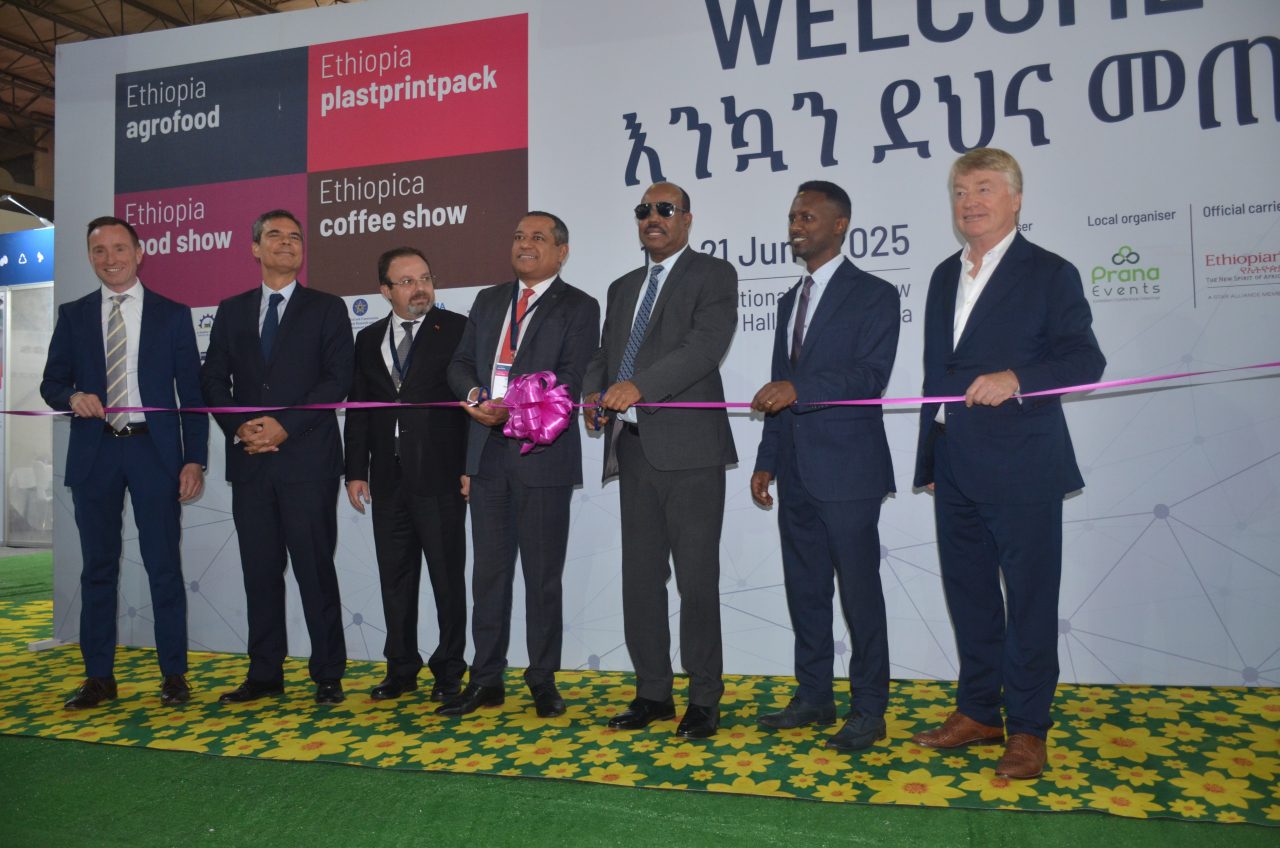
The 7th edition of Agrofood and Plastprintpack Ethiopia opened today at Millennium Hall, Addis Ababa, drawing 158 exhibitors from 16 countries, a clear signal of growing international interest in Ethiopia’s agro-industrial potential.

The launch ceremony welcomed prominent figures such as State Minister of Industry Hassen Mohammed, Brazilian Ambassador Jandyr Ferreira dos Santos, Turkish Ambassador Berk Baran, Prana Events Managing Director Nebeyu Lemma, and fairtrade Messe Managing Director Paul März.

Held alongside the Ethiopia Food Show and the Ethiopica Coffee Show, this year’s expo presents a rare convergence of food, agriculture, packaging, and coffee industry leaders. Participating countries include major exporters and industrial players such as Brazil, Germany, Türkiye, and the United Arab Emirates.

At the opening, State Minister of Industry Hassen emphasized that the expo “mirrors the transformation underway,” where agriculture is no longer confined to subsistence, but instead fuels industrial growth. “Innovation in farming and processing is now central to Ethiopia’s industrial agenda,” he said.

Ambassador Berk Baran of Türkiye echoed this shift, citing Ethiopia’s “transformative projects and consistent GDP growth” as catalysts attracting foreign direct investment, especially in food processing and packaging sectors.

Organized by fairtrade Messe with local partner Prana Events, the Expo enjoys active support from national and international ministries, authorities, and trade associations—and underscores Ethiopia’s drive toward economic diversification and industrial modernization. Nebeyu Lemma, Managing Director of Prana Events, noted that the event is “the outcome of shared ambition and belief in Ethiopia’s capacity to lead in agro-industry and coffee value addition.” He added that the plastics on display are not single-use, in compliance with the new proclamation that bans such products. “There’s a widespread misconception in Ethiopia that plastic itself is harmful, but that’s not the case. Plastic is part of everyday life, from household items to aircraft components. The real issue lies in how we manage plastic after it has been used,” he told EBR.


photo-01.jpg

Ethiopian Airlines Group CEO Mesfin Tasew has been awarded the Girma Wake Lifetime Achievement Award, a distinguished recognition celebrating his far-reaching contributions to African aviation and route development.

The honor was conferred during the AviaDev Africa 2025 summit held in Zanzibar, which brought together more than 500 delegates from across the continent and beyond. The award is named after Girma Wake, a towering figure in African aviation and former CEO of Ethiopian Airlines, whose legacy continues to shape the industry.

Mesfin, who took the helm of Africa’s largest airline group during a period of post-pandemic recovery and sector-wide transformation, was recognized not only for his leadership at Ethiopian Airlines but also for his broader influence in advancing connectivity and operational excellence across Africa.

“This award carries deep personal meaning,” said Mesfin. “It’s named after my mentor and the father of African aviation, Girma Wake. More than a personal accolade, this is a tribute to the collective achievements of the Ethiopian Airlines team and our shared commitment to a better-connected Africa.”

Under Mesfin’s leadership, Ethiopian Airlines has solidified its role as a continental aviation powerhouse—expanding its network, investing in modern infrastructure, and driving regional integration through strategic partnerships. The airline continues to set benchmarks in operational performance, sustainability, and digital innovation in aviation.

The award highlights Mesfin’s enduring role in shaping policy, fostering cooperation among aviation stakeholders, and promoting the idea of air travel as a vehicle for economic growth and unity in Africa.

Hosted annually, AviaDev Africa serves as a critical platform for dialogue and collaboration among the continent’s aviation leaders. It facilitates route development by connecting airlines, airports, tourism boards, and government representatives, reinforcing aviation’s role as a driver of Africa’s development agenda.


RT.jpg

ArifPay, an Ethiopian fintech company, has announced the appointment of Rediet Tsigeberhan as its new Chief Executive Officer, replacing Bernard Laurendeau.

With over 15 years of expertise in technology and product development, Rediet brings a wealth of experience from executive roles such as Chief Technology Officer at Kifiya and Elnet Business Group, as well as Technology Delivery Director at Excellerent, one of Africa’s prominent technology outsourcing firms.

Since joining ArifPay in October 2022, Rediet has been instrumental in developing the company’s core digital payment platforms, which now underpin a significant share of its operations. He also spearheaded the creation of a high-performing product team focused on rapid innovation, customer-centric design, and scalable solutions.

As CEO, Rediet is poised to accelerate ArifPay’s growth by expanding its service offerings, launching new financial products, and strengthening partnerships and infrastructure to support Ethiopia’s vision of a digitally inclusive economy.

Bernard Laurendeau, who led ArifPay through a pivotal phase marked by the introduction of interoperable POS and mobile POS technologies, successfully doubled the company’s capital and established it as a key player in the country’s fintech landscape. Laurendeau’s tenure was defined by strategic innovation and strong leadership grounded in his extensive background in technology and business.


White-Minimalist-Economics-Headline-News-Instagram-Post-2025-06-17T100156.982.png


The Addis Ababa City Administration Cabinet has proposed a substantial budget increase for the 2025/2026 fiscal year, submitting a draft budget of ETB 350 billion to the city council, as reported by Fana Media Corporation (FMC). This represents a major expansion compared to the approved ETB 230.39 billion budget for the current 2024/2025 fiscal year.

The current fiscal year’s budget already marked a significant 64% rise from the previous year, with capital expenditures accounting for nearly two-thirds of the total allocation. Priorities included infrastructure development, job creation, housing projects, and poverty alleviation initiatives designed to support the city’s rapidly growing population.

Building on this foundation, the newly proposed budget allocates approximately 249.9 percent of its resources to critical sectors such as sustainable development, infrastructure expansion, poverty reduction, job creation, and subsidies for essential public services. The remaining ETB 100.1 billion is reserved for the city’s regular operational costs, managed with a strong emphasis on fiscal discipline and savings.

In parallel, the cabinet approved revisions to land lease bid prices following recommendations from the Land Development and Administration Bureau. The city’s Communication Bureau explained to the FMC that this adjustment is in response to improved infrastructure within corridor development zones, stable land prices, and future urban expansion requirements.


White-Minimalist-Economics-Headline-News-Instagram-Post-2025-06-17T091250.709.png

Ethiopian Airlines, Africa’s largest and most profitable carrier, has officially commenced passenger flights to Hyderabad, India, marking its fifth destination in the country.

The inaugural flight ceremony, was attended by Ethiopian Airlines Group CEO Mesfin Tasew, Indian Ambassador to Ethiopia Shri Anil Kumar Rai, and other high-ranking officials from both nations.

Speaking at the event, the group CEO emphasized that the new route enhances connectivity not only between Ethiopia and India but also provides broader access to the African continent through Ethiopian’s extensive network of over 140 international destinations.

Ambassador Rai underscored the strategic importance of Hyderabad, calling it a “key commercial and innovation hub in India,” and welcomed the direct air link as a catalyst for deeper bilateral engagement across sectors.

The new route strengthens Ethiopian Airlines’ presence in the Indian subcontinent, joining its existing services to New Delhi, Mumbai, Bengaluru, and Chennai.

Hyderabad, the capital of India’s Telangana state, is a major economic and cultural hub known for its thriving information technology, biotechnology, and pharmaceutical industries. Often called “Cyberabad,” the city hosts global tech giants like Microsoft, Google, and Amazon, and is home to Genome Valley, a leading biotech cluster. Its Rajiv Gandhi International Airport is among the top-ranked in Asia, serving as a strategic gateway to southern India. With a rich historical legacy and a growing reputation in medical tourism and education, Hyderabad plays a pivotal role in connecting India to global markets—making it a valuable addition to Ethiopian Airlines’ expanding network.

This development comes just two weeks after the airline launched its new route to Sharjah in the United Arab Emirates, now its second destination in the UAE after Dubai. The move underscores Ethiopian’s strategic commitment to route diversification and global network growth, aligned with its Vision 2035 strategy.


fre.jpg

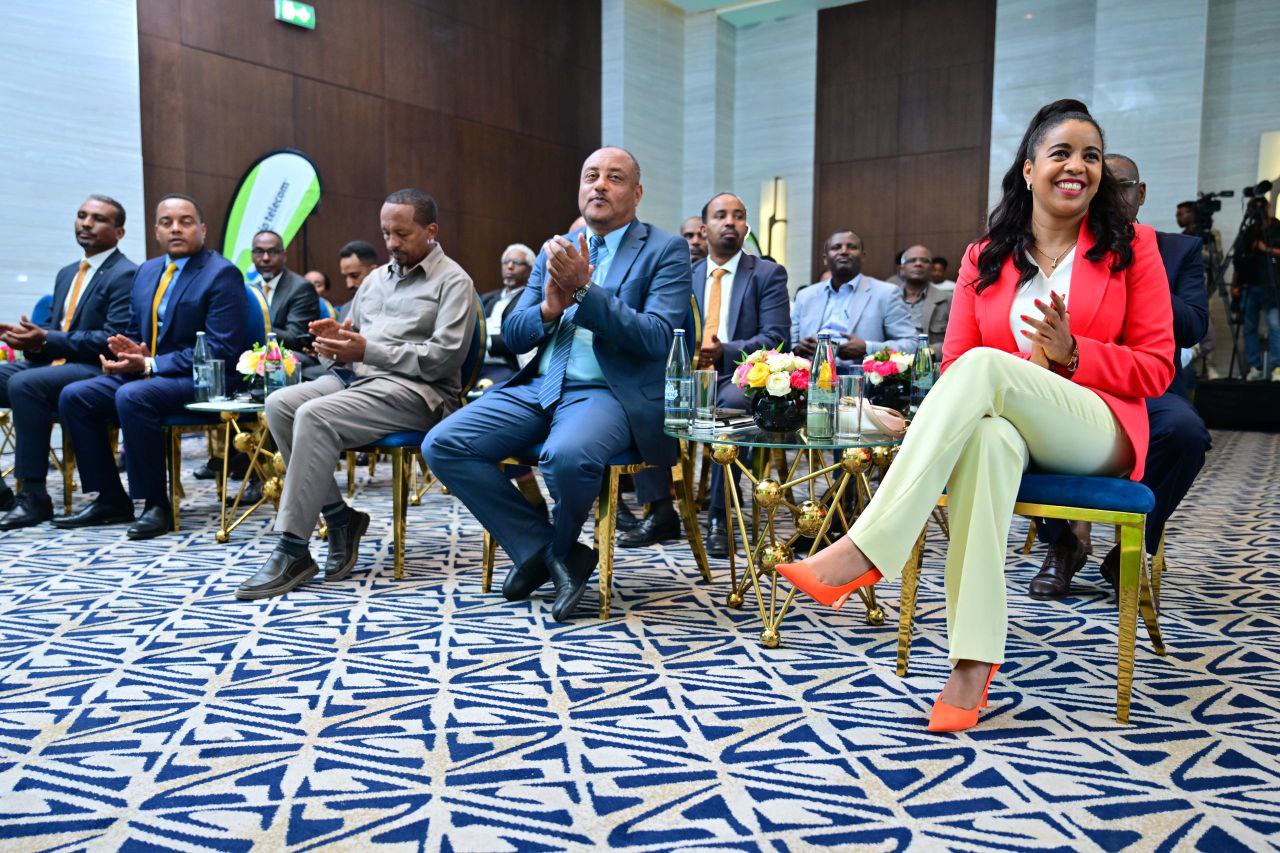
Ethio Telecom has signed an agreement with the Oromia Agriculture Bureau to launch an integrated big data platform tailored specifically for the region’s agricultural sector.

This innovative platform aims to revolutionize the agricultural value chain across Oromia by enhancing productivity, improving resource management, and strengthening market linkages through data-driven insights. By connecting farmers, agricultural experts, input suppliers, enterprises, distributors, and retailers, the platform fosters seamless collaboration between public and private stakeholders.

Powered by Ethio Telecom’s tele Cloud technology, the solution is initially being rolled out in selected woredas (districts) and covers all stages of the agricultural cycle. Leveraging data from Internet of Things (IoT) devices, satellite imagery, remote sensing, and field experts, the platform will facilitate digital transactions, support supply-demand analysis, and serve as a centralized hub for agricultural data storage and analysis.

“By integrating advanced predictive analytics and real-time data, this initiative will enable smarter decision-making, reduce risks related to pests and diseases, and optimize resource allocation,” said an Ethio Telecom spokesperson. “Ultimately, this will drive a more resilient, efficient, and sustainable agricultural economy in Oromia.”

The collaboration aligns with Ethio Telecom’s broader commitment to expanding access to cutting-edge technologies that transform Ethiopia’s economic and social landscape. Previous partnerships with Oromia’s regional government and city administrations have focused on digitizing public services to improve citizen livelihoods.

Looking ahead, Ethio Telecom is set to deepen cooperation with multiple bureaus and agencies within Oromia to introduce additional digital solutions that modernize regional operational systems and advance Ethiopia’s Digital Ethiopia initiative.


Ethiopian Business Review | EBR is a first-class and high-quality monthly business magazine offering enlightenment to readers and a platform for partners.


2Q69+2MM, Jomo Kenyatta St, Addis Ababa

Tsehay Messay Building

Contact Us

+251 961 41 41 41