navigating-the-debates-on-land.jpg

Ethiopia is one of the few countries in Africa that has not made significant changes in its basic land policy since the radical land reform of 1975. Exceptions to this have been occasional land redistributions to accommodate the growing population. This is not because the current policy serves the interest of agricultural development better than its alternatives. Various studies suggest that the insecurity of land tenure hampers rights on land, discourages farmers to productively invest in land, and restricts transferability of land, posing significant constraints to agricultural growth and natural resource management. The government, which remains in its firm position that there are no private property rights on land, seems to ignore such findings.


In Africa, the number of internet users grew by 116 times since 2000. Currently, more people in Africa use the internet than in Latin America, North America, or the Middle East. At this moment, there are 525 million internet users in Africa, while 447 million people use internet in Latin America and the Caribbean. On the other hand, there are 328 million and 174 million internet users in North America in the Middle East, respectively.


Editors at EBR will work to ensure that articles to be published in the magazine say something new or different with unique perspectives. Articles should not somehow offer prescriptions to CEOs on what to do and what not to do or sometimes how to manage their enterprise.

EBR articles will be written by experts whose authority comes from careful analysis, study, and experience. Articles should be written in clear, simple and jargon-free language in about 1100 words. Articles should represent thought-provoking, often unforeseen ideas in the business and public sector areas. In case the word limits exceed 1100, prior consultation may be needed with editors.


EBR_Logo_2.jpg

Ethiopian Business Review (EBR) is an English business magazine published by Champion Communications. It is registered with Federal Democratic Republic of Ethiopia, Broadcasting Authority under registration No. 227/04. Champion Communications is registered with the Ministry of Trade, Business License No: 14/670/76602/2004


ethiopia-does-not-qualify-as.jpg

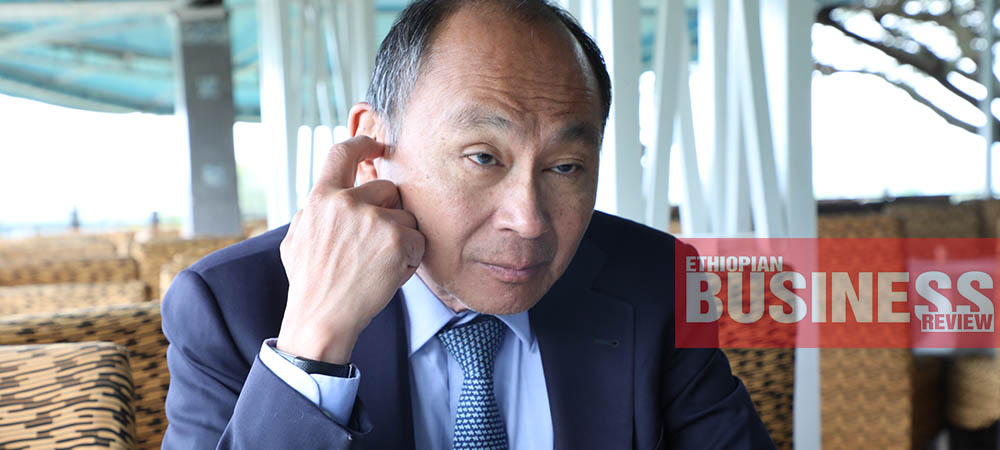
Francis Fukuyama, born in Chicago, USA in 1952, is an American Author and Political Scientist. He received his B.A. from Cornell University in Classics, and his Ph.D. from Harvard in Political Science. Even if, Fukuyama has extensively written on political development and international political economies, he is more known for authoring the book entitled ‘the End of History and the Last Man’, on which he argued that the worldwide spread of liberal democracies and the free-market capitalism and the lifestyle of the West, may signal the endpoint of humanity’s socio-cultural evolution and become the final form of human government.
His other famous publication, ‘Political Order and Political Decay: From the Industrial Revolution to the Globalization of Democracy’, is considered a masterful study of political development.
Fukuyama is currently a senior fellow at Stanford University in California. He is the Director of the Center on Democracy, Development and the Rule of Law.
In his latest book dubbed ‘Identity: the Demand for Dignity and the Politics of Resentment’, he asserts that the demand for recognition of one’s identity, which he deems a fundamental human instinct, is a master concept that defines much of the world politics today. In the book, the Japanese-American stated that the universal recognition on which liberal democracy is predicated has been increasingly challenged by narrower forms of recognition based on nation, religion, sect, race, ethnicity, or gender. If people no longer vote according to their values, such as an attachment to liberty, but by their identities, such as their faith or ethnicity, Fukuyama argues that democracy would cease to function. Indeed, identity is gaining centre stage in politics in many parts of the world today. Ethiopia is no exception.
Two months ago, the 67-year old distinguished professor, on his first trip to Ethiopia, met with Prime Minister Abiy Ahmed (PhD) and discussed on different matters. He gave his latest book on identity politics to the premiere.
Earlier this month, Fukuyama returned to Ethiopia again to train private sector developers. He also gave a public lecture at the American centre in Addis Ababa on “Populism and the State of Global Democracy”. In the sideline of the training, EBR’s Haimanot Ashenafi sat down with the global thinker to discuss about Ethiopia’s economic and political situations.


Between 1997 and 2008, average non-tax revenue has been increasing in Africa largely driven by the global commodity price boom. Nevertheless, especially after 2012, non-tax revenue declined sharply due to dropping commodity prices. Despite this, the non-tax revenue collected by African countries reached a staggering USD133 billion in 2017, which is much higher than the USD100 billion the continent reportedly loses annually in the form of illicit financial flows.


African countries exported USD476.6 billion dollars of goods in2018, 12.8Pct higher than the 2017 average. The figure is however 11.3Pct lower than the aggregate export earnings of 2014. In comparison, global exports from all countries worldwide equaled USD19.2 trillion in 2018, of which Africa’s export represent an estimated 2.5Pct.


In the past, Africa’s cities have been growing, invisible from the global community. However, in recent years, some African cities have started becoming more noticeable on the world stage. This is partially due to the growth of private wealth, making Africa’s cities more vibrant and filled with diverse economic activities. Estimates suggest that more people are expected to migrate to Africa’s cities in order to access economic opportunities and better living standards in the future.


Ethiopian Business Review | EBR is a first-class and high-quality monthly business magazine offering enlightenment to readers and a platform for partners.


2Q69+2MM, Jomo Kenyatta St, Addis Ababa

Tsehay Messay Building

Contact Us

+251 961 41 41 41