


 Ethiopian Business Review
Ethiopia’s new commercial code, which is currently at draft stage at the House of People’s Representative (HPR), allows establishment of One Person PLC, a provision not included in the existing code, which was ratified in 1960.
Ethiopia’s new commercial code, which is currently at draft stage at the House of People’s Representative (HPR), allows establishment of One Person PLC, a provision not included in the existing code, which was ratified in 1960.
Ending the conflict with Eritrea, as well as implementing reforms that strengthened public institutions and broadened the political space are among achievements of Prime Minister Abiy Ahmed (PhD) administration. In addition, the homegrown economic reform agenda that outlined macroeconomic, structural, and sectoral reforms is expected to pave the way for jobs creation, poverty reduction, and inclusive growth.
According to the Industrial Development Report 2020, much of the world, especially Africa, is not engaging with new technology and remains excluded from recent technological breakthroughs.

Last year, Parliament passed a law forcing financial institutions to accept movable properties like livestock, patents, land operating rights, agricultural products, land ownership rights, warehouse receipts, and intellectual property rights, as collateral. The central bank is betting this will fundamentally change the credit landscape, which is currently highly collateralized and is resulting in bank credit injustice. The new move is expected to expand credit markets and improve access to credit for farmers, micro and small enterprises as well as cooperatives.
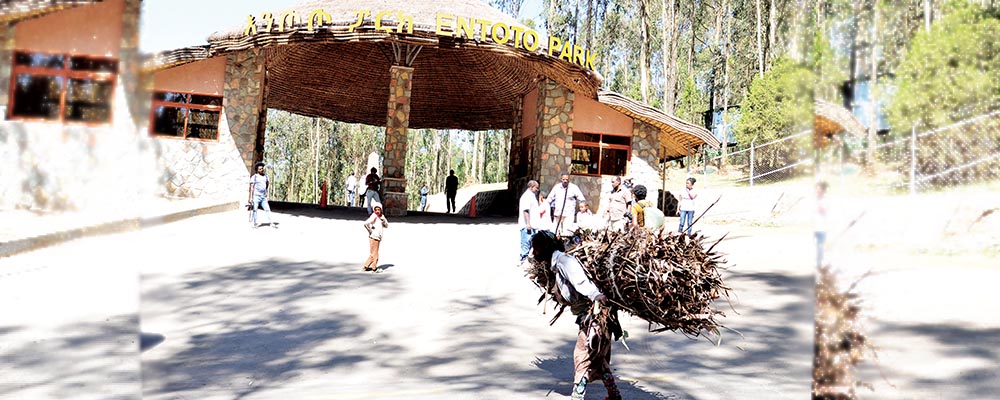
Close to 2,000 low-income women make their livelihoods out of the forest up on Entoto Hills, a chain of plateaus covering the northern side of Addis Ababa, at 2,000masl. Entoto is known as “the lung of Addis Ababa,” for its dense eucalyptus tree cover birthing rain and oxygen for the capital.
The past three years have been a time of considerable social unrest and political instability in Ethiopia. Once the Tigray People’s Liberation Front (TPLF) led coalition of the Ethiopian People’s Revolutionary Democratic Front (EPRDF) made way to Abiy Ahmed’s reformist government, social unrest has sprung up in all corners of the country. A large number of people have lost their lives while millions became internally displaced.
One fourth of the global currencies have values of more than 100 units per dollar, according to UN Operational Rates of Exchange on October 01, 2020. Most of the countries that have strong currencies against the dollar are liberal economies that have positive relationships with Western countries and the Breton woods institutions, while economies that have the weakest currencies are by large labeled as socialist countries.

Ireechaa is one of the centuries-old thanksgiving celebrations in Ethiopia. Nature adorns itself with its trade mark color of green and sprinkles colors from the rainbow over that background during spring. Spring also marks the end of the gloomy days of winter and heralds the beginning of the era of beauty. The Oromo people come together to praise Waaqaa, the Almighty God, for renewing life and refreshing nature. Embellished in cultural attire and flowers, they ceremonially march to the Hora, water body, near them.
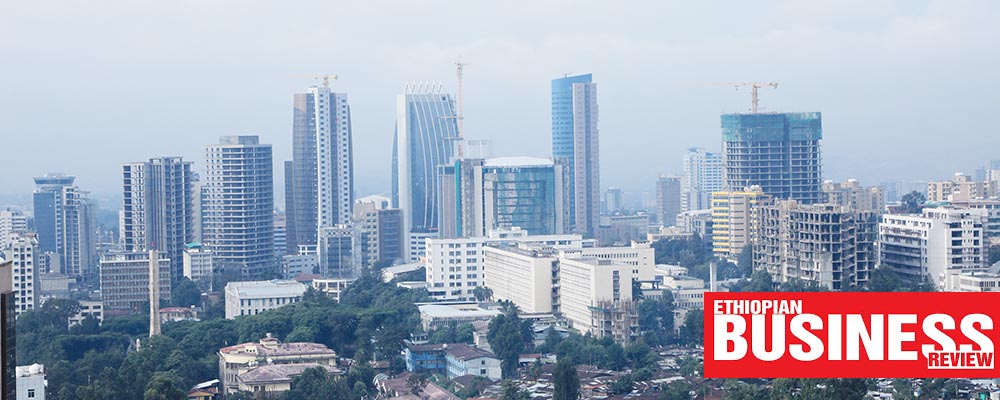
The liberal free mar-ket economy Ethiopia adopted under the reign of the Ethiopian People’s Revolutionary Demo-cratic Party (EPRDF) has been a start of the growth of the private sector. Under such an economy, major public and private compa-nies (especially those operating in finance) access the bulk of money pumped into the market. Then, this huge money trickles down under small pours to the society at large. As has been evident in cities that have made the transi-tion to metropolitan status, the skyline of Addis has welcomed high rising buildings serving as the headquarters of the elite com-panies in the country.
Ethiopia’s foreign currency problem is a constant in an otherwise inconsistent socio-economic and political conditions of the past three years. Although various administrations devised different mechanisms to alleviate the foreign currency problem, a lasting solution still eludes. Therefore, the measures taken have proved to be short term remedies that only put a stop to further escalations of the problem. Under such conditions of ever-present foreign currency problem, managing the meager foreign currency resources at hand should be of utmost priority. Sector and policy based prioritization of activities to allocate foreign currency to should be pursued actively. It is common knowledge that petroleum and pharmaceuticals imports are said to be prioritized in allocating foreign currency because of the social and economic impacts the products could muster.