#EBR_News Oct 20, 2026

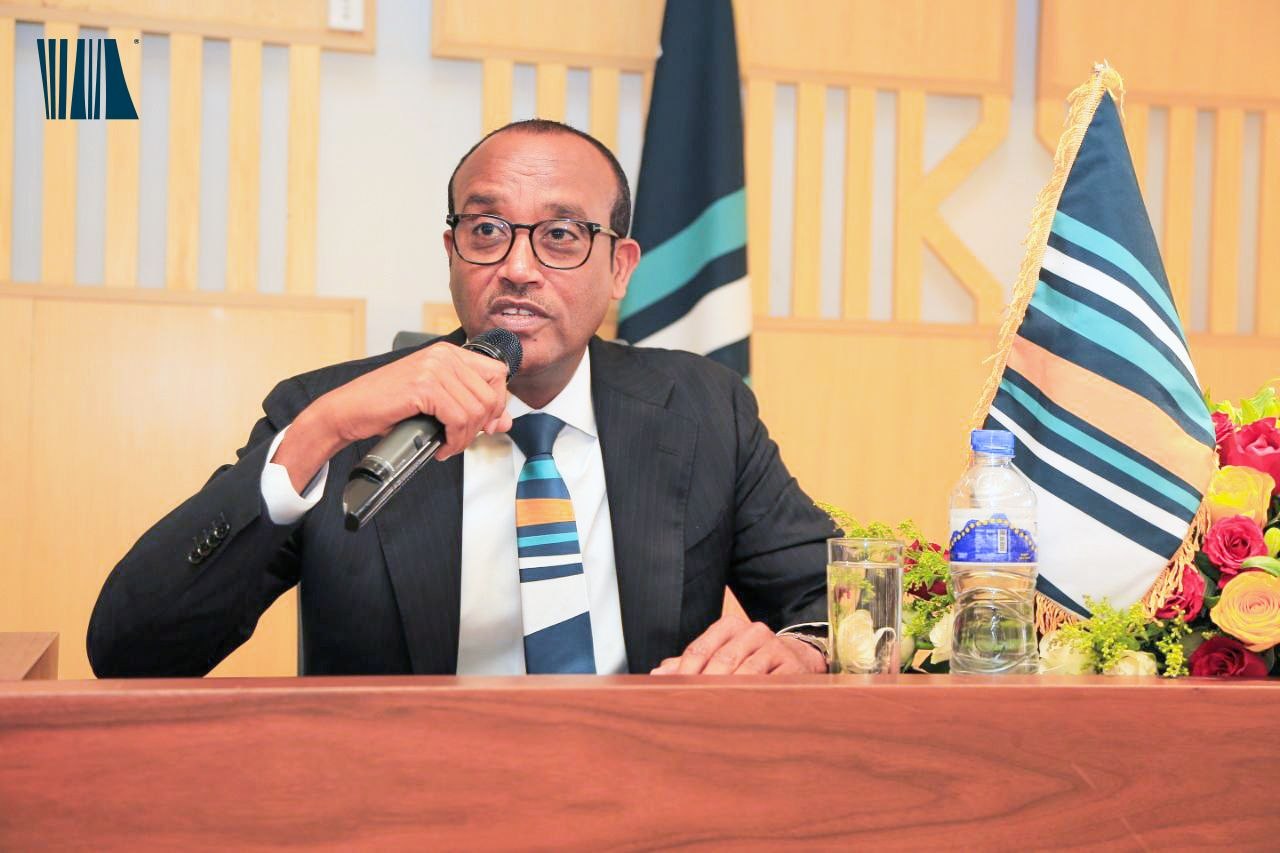
Ethiopia has been ordered to pay $213.7 million in net compensation to Turkish construction company Yapi Merkezi over the abandoned contract for the 392-kilometre Awash-Kombolcha-Harabegeya railway project, sharply reducing a claim that initially exceeded $1.2 billion, according to BBC Amharic.

The London Court of International Arbitration issued its final decision on September 23, 2026, following years of arbitration over the railway project, which was disrupted by construction delays and the war in northern Ethiopia. 

Yapi Merkezi had sought more than $1.2 billion, including interest, citing delays, unpaid amounts, right-of-way and power supply problems, as well as damage and looting during the conflict.

The arbitration court initially ordered Ethiopia to pay $242.8 million. After deducting $29.1 million in advance payments that the Ethiopian Railway Corporation (ERC) was entitled to recover, the net amount payable to Yapi Merkezi was reduced to $213.7 million. 

The award will also accrue interest at 9 percent annually from the start of the legal proceedings until payment, with the daily interest reportedly exceeding $52,000, according to documents obtained by the BBC from the corporation.

War-related damage represented the largest component of the net award, at $89.2 million, or 36.7 percent. Construction delays accounted for 31.6 percent, unpaid payments for 27.7 percent, and lost profits following termination of the contract for the remaining 3.8 percent.

The dispute dates back to the suspension of construction following the outbreak of war in northern Ethiopia in 2020. Yapi Merkezi terminated the contract in January 2021, arguing that ERC had failed to meet key contractual obligations. The contractor subsequently pursued arbitration after negotiations over compensation failed.

One significant outcome for Ethiopia was the removal of the Ministry of Transport and Ministry of Finance from the case. The ministries had initially been included alongside ERC, but the corporation’s lawyers successfully argued that the dispute should remain between the contracting parties. According to sources cited by the BBC, this prevented the case from potentially extending enforcement to broader government assets.

The ruling also transferred ownership of approximately 1,500 vehicles and pieces of equipment to ERC. The equipment had been associated with the compensation claims for war-related damage and could include machinery requiring repairs or maintenance.

Before the arbitration, ERC had reportedly been prepared to pay up to $400 million during a year-long negotiation. Sources close to the corporation told the BBC that the final decision was considered fair because claims that ERC disputed were rejected by the tribunal, while compensation was awarded for circumstances the corporation accepted as established.

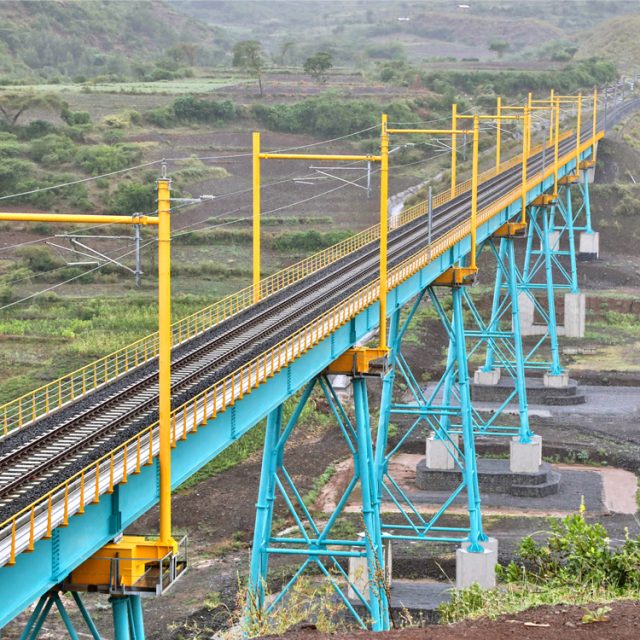
The Awash-Kombolcha-Harabegeya railway was originally contracted as a 42-month project and has a planned length of 392 kilometres and a reported project budget of $1.7 billion. Construction had reached about 92 percent before the project was halted, but sections of the railway subsequently suffered damage from conflict, looting, theft and landslides.

ERC resumed construction using its own capacity in May 2025 and says it expects to complete the remaining work within two years. The project includes 10 stations, tunnels, bridges, power control stations and a maintenance centre.

The railway has been financed partly through external borrowing, including a $1.2 billion loan from Credit Suisse and $300 million from the Export-Import Bank of Turkey. The arbitration settlement therefore adds a significant financial obligation to a project that remains unfinished and requires further investment to restore damaged sections and complete construction.
#EBR_News Oct 19, 2026

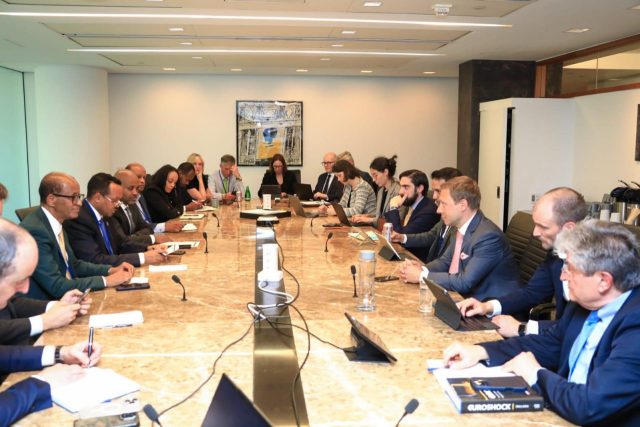
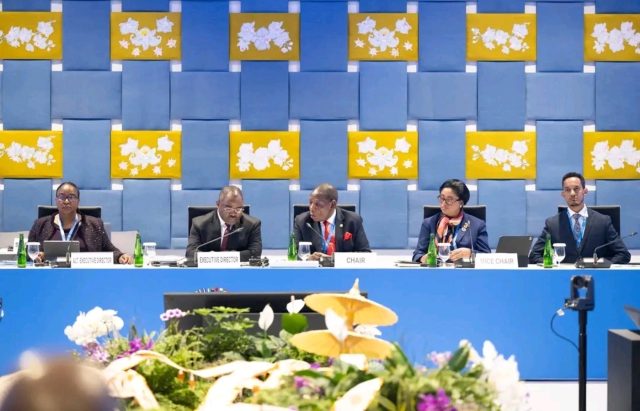
Ethiopia is set to assume the Alternate Executive Director position of the World Bank Group’s Africa Group 1 Constituency on November 1, with Sandokan Debebe Jemaneh taking up one of the most influential posts representing African countries on the Bank’s Boards. 

The Constituency, which speaks for 22 countries, held its meeting on Thursday, October 15, in Bangkok, Thailand, on the margins of the IMF/World Bank Group Annual Meetings.

According to the Constituency’s October 2026 Annual Report, a Constituency Panel interviewed three candidates nominated by the Federal Democratic Republic of Ethiopia during the 2026 Spring Meetings. 

The Panel is chaired by Malawi, with Mozambique as vice chair and The Gambia, Kenya and Uganda as members. 

Its chair, Joseph Mathyola Mwanamvekha, who is Malawi’s Minister of Finance, Economic Planning and Decentralisation, circulated the Panel’s report to all Governors in April 2026, seeking approval of Sandokan on an absence-of-objection basis. 

The term runs from November 1, 2026 to October 31, 2028. The World Bank Group’s website lists him as Special Advisor to the Executive Director in the Constituency’s Washington office, known as EDS14.

The Constituency covers Botswana, Burundi, Eritrea, Eswatini, Ethiopia, The Gambia, Kenya, Lesotho, Liberia, Malawi, Mozambique, Namibia, Rwanda, Seychelles, Sierra Leone, Somalia, South Sudan, Sudan, Tanzania, Uganda, Zambia and Zimbabwe. 

According to the World Bank, the Executive Director’s office has a dual role: representing member countries’ interests on the Board and acting in the best interests of the institution as a whole.

The World Bank’s history page for the office shows that Ethiopians have served as Executive Director on three occasions: Bulcha Demeksa from 1972 to 1974, Mitiku Jembera from 1986 to 1988, and Mulu Ketsela from 2006 to 2008. The page, which lists office-holders up to 2022, shows no Ethiopian in the Executive Director seat since Mulu’s term. 

The Constituency says it uses a rotation system so that member countries have equal opportunity to nominate candidates for the Executive Director and Alternate Executive Director posts.

Ethiopia has a large stake in how the Constituency operates. The annual report shows that the Constituency’s total net commitment stands at $51.78 billion, of which $50.69 billion comes from the International Development Association (IDA), the Bank’s concessional lending arm. 

Ethiopia holds the largest portfolio, with $8.22 billion disbursed and $4.25 billion yet to be disbursed. 

In fiscal 2026, the report says, Ethiopia was the largest IDA recipient among fragile and conflict-affected African countries at about $3.9 billion, ahead of Nigeria at $2.4 billion and the Democratic Republic of Congo at about $1.0 billion. Its pipeline is centred on water ($200 million) and social sustainability and inclusion ($124 million).

The report also points to heavy exposure to the International Finance Corporation (IFC), the Bank’s private-sector lender. The Constituency’s long-term IFC portfolio stands at $11.98 billion, with Ethiopia accounting for $3.12 billion, behind Mozambique at $3.40 billion and ahead of Kenya at $2.80 billion. Together, the three countries make up nearly 78 per cent of the total.

The handover comes as the financing environment tightens. The report warns that concessional resources are shrinking while private capital has many destinations to choose from. 

IDA commitments fell about 22.8 per cent to $30.8 billion in fiscal 2026 from $39.9 billion a year earlier, although the report attributes much of the drop to a $6.1 billion special programme for Ukraine and Moldova in the earlier year and to the start of a new IDA cycle. 

It names the coming IDA22 replenishment negotiations as the centre of the Constituency’s next phase of advocacy.


DSC_9128-1280x852.jpg

Betegbar Yaregal

#EBR_News Oct 15, 2026

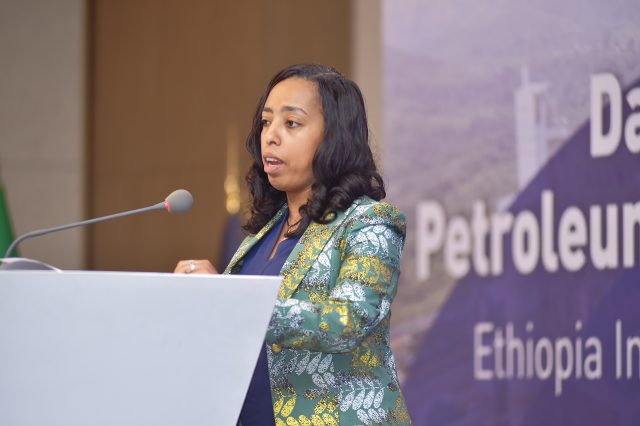
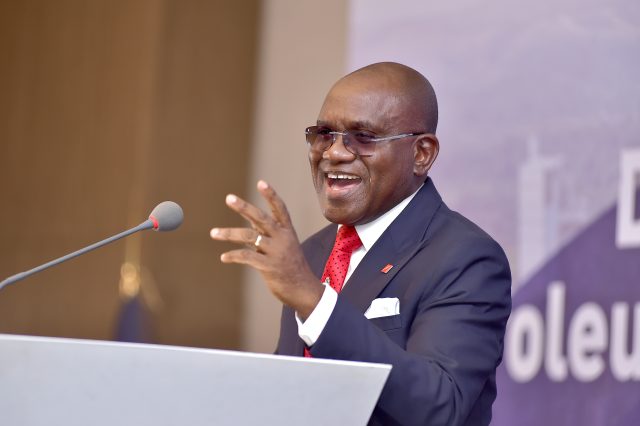
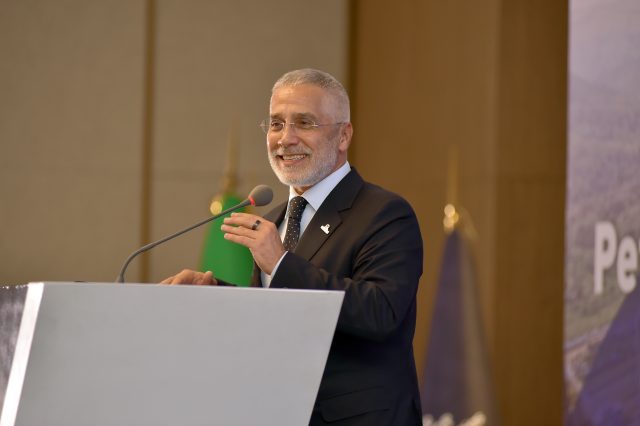
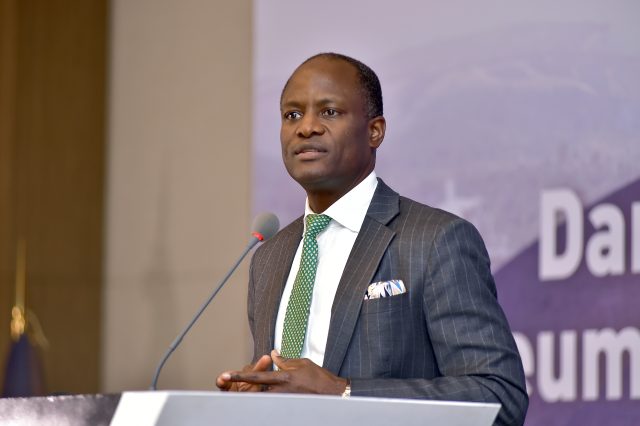
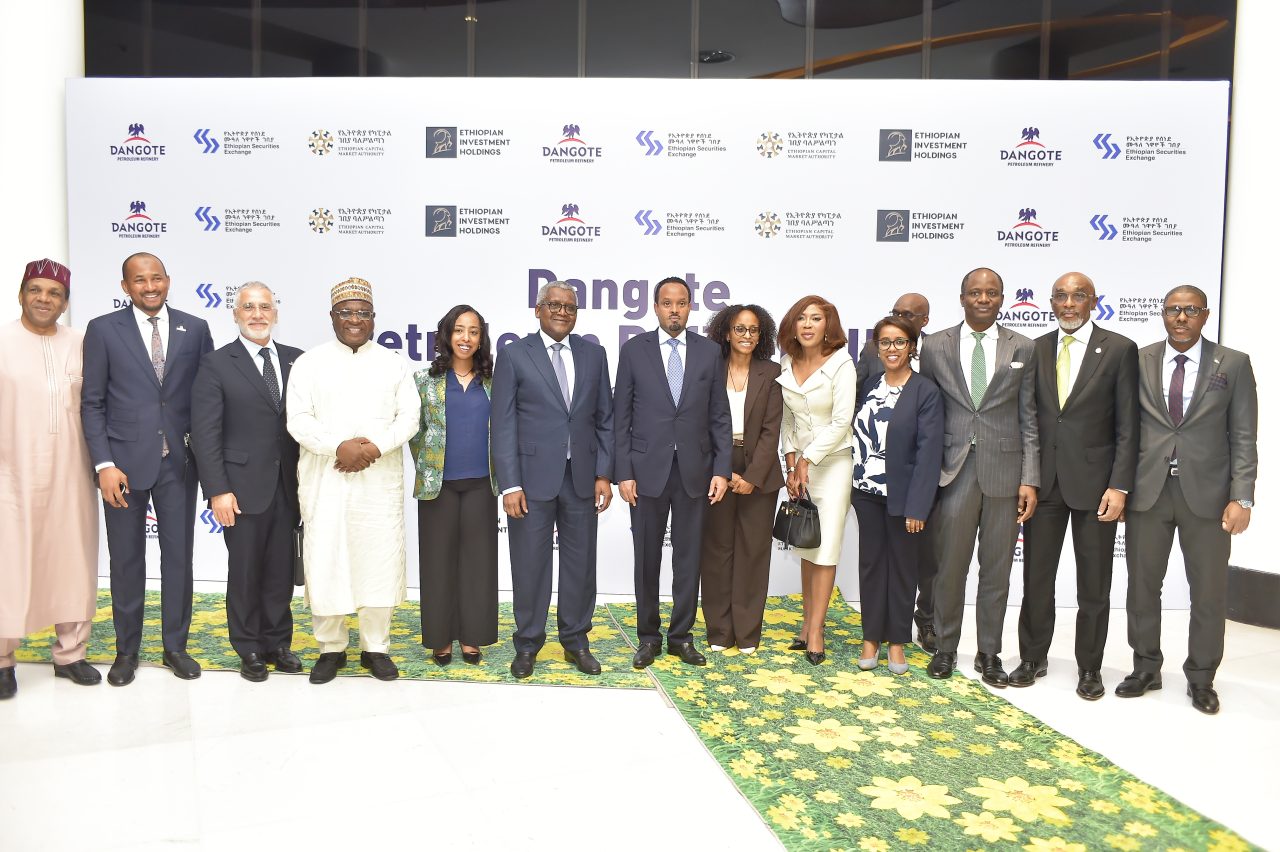
Ethiopian investors with at least Br10 million in capital will be able to buy into the Dangote Petroleum Refinery initial public offering (IPO) through Ethiopian depository receipts priced at Br74.90 per share.

The Ethiopian Securities Exchange (ESX) and Dangote Industries Limited presented the arrangement at an investor roadshow in Addis Ababa on Thursday. ESX Chief Executive Yodit Kassa described the offering as a first for the Ethiopian market.

Ethiopian Capital Market Authority (ECMA) Director General Dagmawit Shiferaw told EBR that qualification requires at least Br10 million, excluding a car and a home, held in a bank account for the past six months. She said banks and insurance companies can also participate.

Under current arrangements the offer is limited to qualified investors. ECMA’s notice on Tuesday capped the number of investors at 100 unless the Authority grants approval. Dagmawit said the cap may soon be updated, which could allow more investors to join.

Peter Ashade, chief executive of United Capital, explained how the process works. Investors first register interest and complete an application form that meets ECMA rules and know-your-customer checks.

Applications are pooled and submitted as a single block through a nominee arrangement in Nigeria. Investors pay only after allotment is announced, within two working days, rather than upfront. Peter said this is unusual in African markets. Dividend arrangements are being worked out with the parties involved.

A depository receipt is a certificate issued locally that represents a share held abroad. Each receipt represents one Dangote share, which a nominee holds in Nigeria. A custodian in Ethiopia will receive the shares, and the receipts will be issued to successful investors.

According to the presentation, the joint distributors, United Capital, CBE Capital and Wegagen Capital, will then seek ECMA and ESX approval to list the receipts, which would trade in line with the Nigerian share price.

Listing therefore remains subject to regulatory approval. Peter also said Kenya and Botswana are following similar routes.

According to the offer terms presented, Dangote Petroleum Refinery and Petrochemicals FZE is selling 4.1 billion new shares at ₦525 each, a base offer of ₦2.15 trillion (about $1.6 billion). Group Chief Financial Officer Murat Arden said ten shares cost about $3.7.

The offer is fixed-price and can rise to ₦2.80 trillion with a 30 percent over-allotment option, which Reuters has put at up to $2.1 billion. The shares will list on the Nigerian Exchange’s (NGX) main board. The offer terms say the proceeds will fund a second refining train, taking capacity from about 700,000 to 1.4 million barrels a day.

Presenting management accounts, Murat said the refinery earned $22.5 billion in revenue in the first nine months of 2026, about 2.5 times last year’s. EBITDA, a measure of operating profit, reached $5.5 billion, including $2.9 billion in the third quarter alone, against $2.6 billion for the whole first half.

Murat reported profit after tax of $4.7 billion, cash of $6.7 billion, operating cash flow of $3.7 billion and a net margin of 21 percent. The numbers are unaudited.

Asked by EBR whether the profits can last, given reports that the refinery has benefited from the Middle East disruption, Peter said demand within Africa would sustain the business “either there is war in the Middle East or not.”

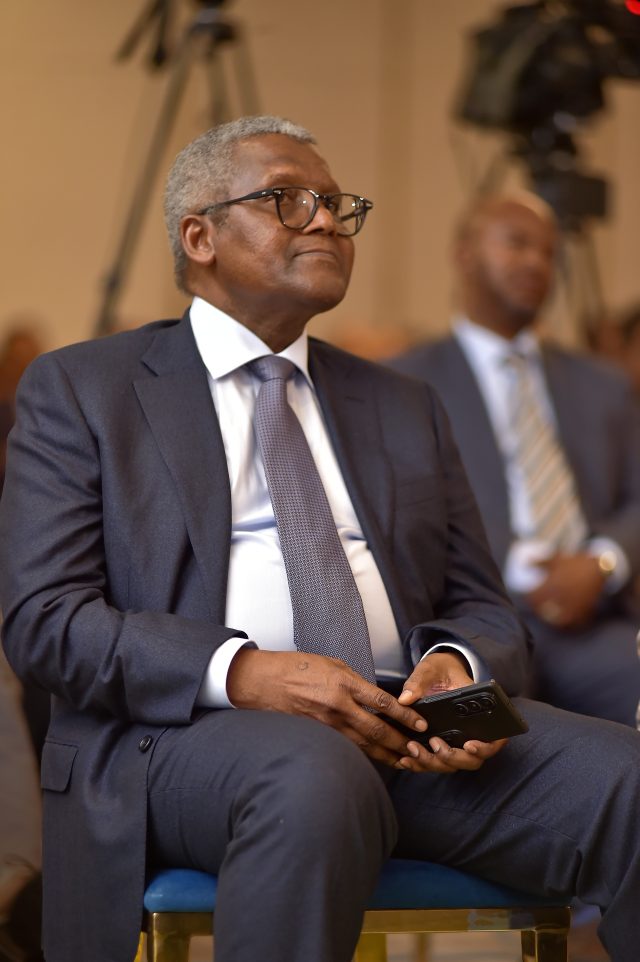
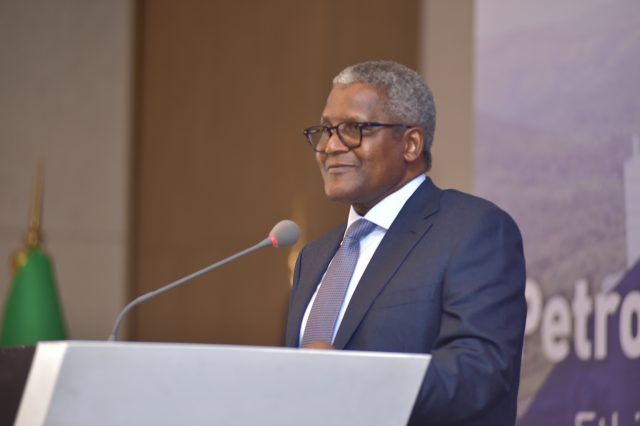
Aliko Dangote said orders have already exceeded the target more than fourfold, but too few come from African investors. That is why the closing date moved from 13 to 27 October. Peter said, citing information from the Dangote team, that almost 51 of Africa’s 54 countries are taking part in some form.

Dagmawit said the aim is to widen access over time. ECMA and Nigeria’s regulator have begun alignment talks, and retail investors, more issuances and a broader range of products could follow as regulatory cooperation advances.

Temi Popoola, Group Managing Director of NGX, said the deal should be seen as a test of cross-border investing rather than simply a capital raise. He said foreign exchange and market infrastructure have long hindered such links, and noted that NGX is a strategic investor in ESX.

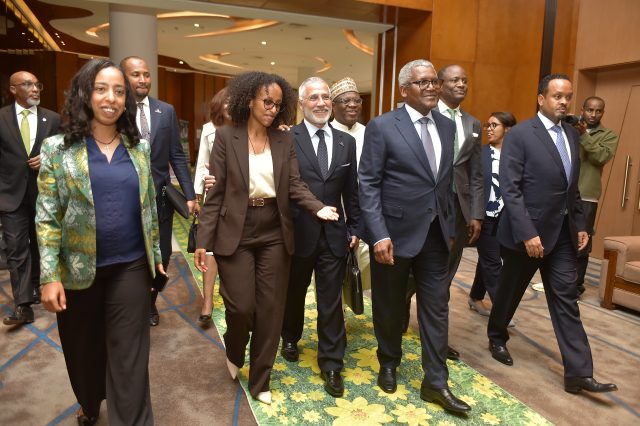
Dangote also tied the offer to the group’s Ethiopian plans. He said investment here has reached about $5 billion, covering a 3-million-tonne fertiliser plant at Gode, 140 megawatts of power generation, a new cement plant and a cement plant acquired from the government.

He said a Djibouti–Ethiopia fuel pipeline with a tank farm was launched about ten days ago. He said the group intends to sell at least 10 percent of the Ethiopian fertiliser business on ESX.

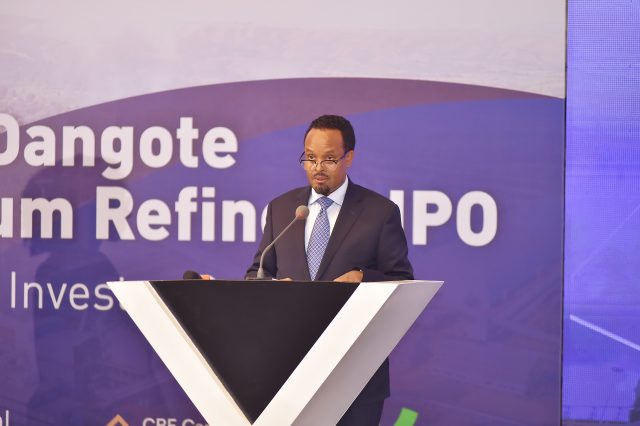
Speaker of the House of Peoples’ Representatives Ahmed Shide said the partnership between Ethiopian Investment Holdings and Dangote covers both the Gode complex and the Djibouti pipeline. He stressed that investor protection must go hand in hand with market development.

The offer closes on 27 October. Whether Ethiopia becomes a genuine venue for African securities depends on ECMA and ESX approving the receipt listing, and on whether the qualified-investor limits are relaxed. If Dangote follows through on the fertilizer listing, ESX would also gain its first large locally generated issuance.


PM-Ahmad-with-IMF-boss.jpg

Betegbar Yaregal

#EBR_News Oct 15, 2026

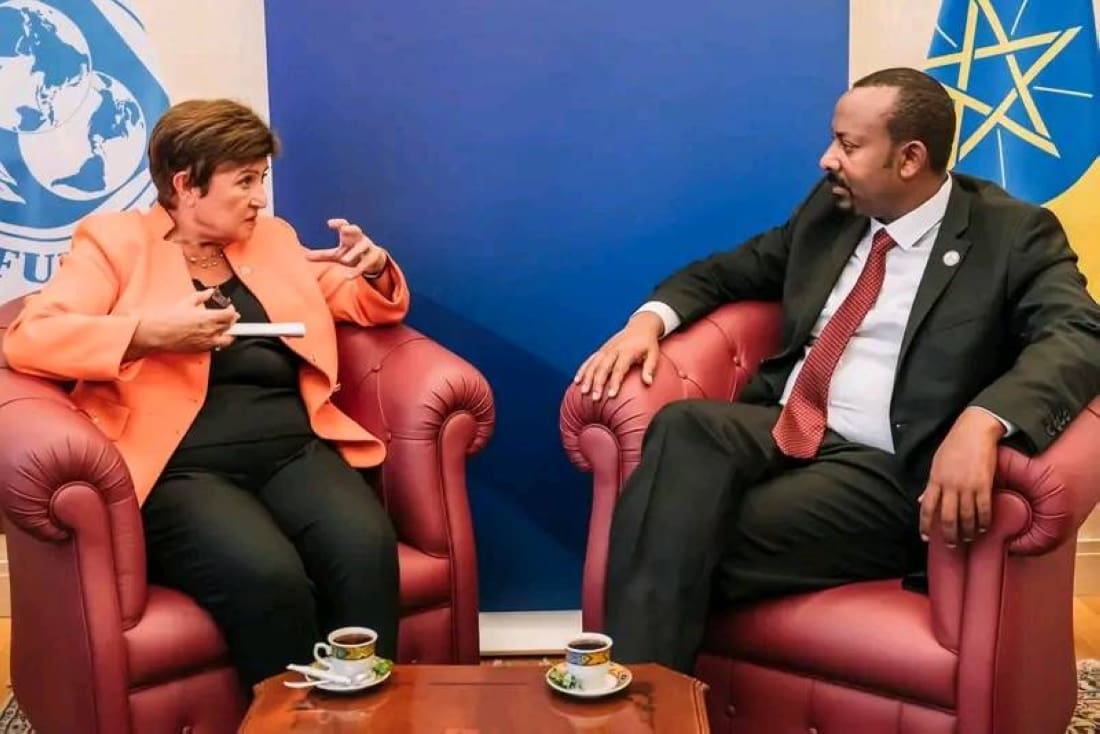
Ethiopia is now the only country among six post-pandemic debt restructuring cases tracked globally that has yet to complete its bond exchange, according to the Global Sovereign Debt Roundtable (GSDR) 7th co-chairs progress report released on 14 October in Bangkok. 

The report says that apart from Ethiopia, every other case now involves only residual commercial creditors, leaving the country as the last one still waiting to close its Eurobond deal.

The contrast with its peers is stark. According to the report’s table, Zambia, Ghana, Sri Lanka and Suriname all closed their bond exchanges between November 2023 and December 2024.

Ethiopia, which asked for debt treatment under the G20 Common Framework in early 2021, still shows no closing date. 

The report also lists its credit ratings as Caa3 at Moody’s, SD at S&P and RD at Fitch. These are default-status grades, whereas Ghana is rated Caa1, B- and B+ by the same agencies and Zambia Caa2, CCC+ and B-.

Yet the report also shows Ethiopia moving fast in other areas. It took 2.1 months from staff-level agreement to IMF programme approval, the quickest of all six cases, against 5.2 months for Ghana and 10.5 for Chad. 

Eleven of 14 bilateral agreements with official creditors on the Official Creditor Committee (OCC) have been finalized, a higher completion rate than Ghana (16 of 25), Zambia (10 of 16) or Sri Lanka (9 of 17). The delay, in other words, is concentrated in the private bondholder track.

That track has been bumpy. Bloomberg reported in January that an initial deal proposed a 15 percent haircut on Ethiopia’s $1 billion Eurobond, on which it defaulted in December 2023. According to the Finance in Common lab, official creditors rejected that deal, and bondholders turned down a revised offer in May. 

Ethiopia reached a new agreement in principle on 29 June, and the Ministry of Finance announced on 21 August that the OCC found it consistent with comparability of treatment, the rule that private lenders must bear a burden similar to that of official lenders. 

The report says this deal and other agreements cover about 75 percent of Ethiopia’s external commercial debt. The Finance in Common lab notes the package includes a “New Money Warrant”, which official creditors have flagged as a risk to watch.

Ethiopia is also pushing to shape what comes next. National Bank of Ethiopia Governor Eyob Tekalign (PhD) told the GSDR that new applicants should get a streamlined process with a clear timeline, according to the central bank’s social media post. He called for better creditor coordination and early caps on advisory fees. 

He also urged a rethink of rigid eligibility criteria for post-restructuring countries whose ratings remain temporarily impaired, a point that bears directly on Ethiopia’s own position.

The stakes extend beyond bondholders. According to the report, the World Bank has committed close to $16 billion to Ethiopia since fiscal year 2021, over half on grant terms, with net flows above $17.3 billion, and the IMF completed the fifth review of Ethiopia’s programme in July. 

The Paris Club said on 28 July that it now publishes tables tracking bilateral agreement signings, including for Ethiopia, and will update them regularly. 

With Senegal now seeking Common Framework treatment, which the report calls a major test of recent improvements, Ethiopia’s experience is likely to shape how future cases are run.

The report said that domestic debt was among the first topics discussed at the GSDR. The first Cochairs Progress Report noted the complexities and trade-offs, which are different from external debt restructurings. 

There should be no presumption ex ante about the inclusion or exclusion of domestic debt from the restructuring perimeter. 

The analysis should be data-driven and country-specific, taking into account the impact on financial stability, growth, social cohesion and ultimately debt sustainability. 


20261012163955_Q09A8455-1280x853.jpg


Betegbar Yaregal

#EBR_News Oct 13, 2026

Ethiopia’s origin-and-destination air passenger traffic is forecast to grow almost sixfold between 2025 and 2045, one of the strongest rates in Africa, according to Airbus’s latest Global Market Forecast (GMF 2026). 

The European manufacturer presented the outlook at a press conference at the Skylight Hotel in Addis Ababa on 13 October.

Across the continent, Africa will need 1,640 new passenger aircraft over the next 20 years, made up of 1,310 single-aisle and 330 widebody jets, Airbus said in a press release. Passenger traffic to, from and within Africa is expected to almost triple, growing at 4.9% a year.

That would make Africa the world’s second-fastest growing aviation market after Asia, the company said.

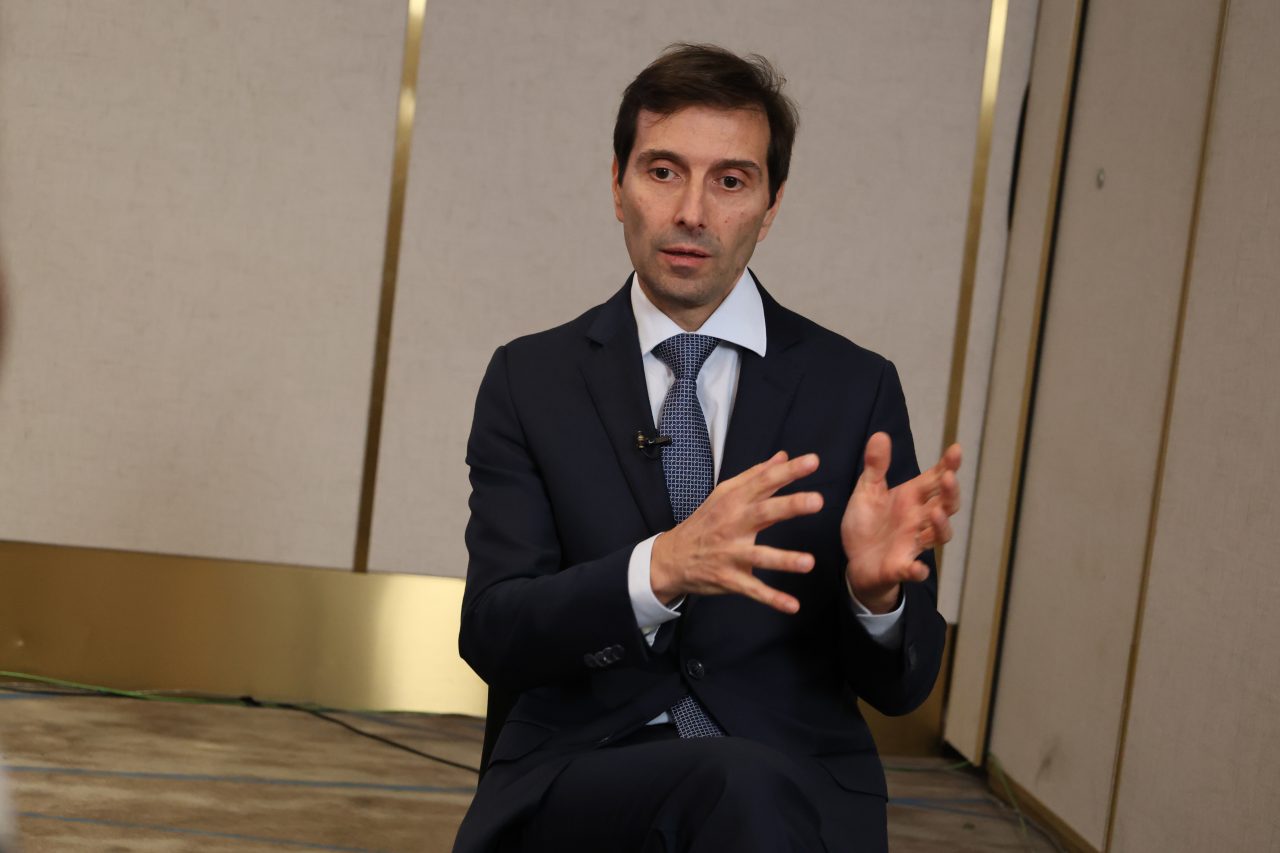
Ethiopia is expected to outpace the continent. Antonio Da Costa, Airbus’s Vice President for Market Analysis and Forecast, told the audience that Ethiopian traffic is projected to expand by 9.3% a year, almost twice the African average. 

The strongest growth is expected in domestic and intra-African travel, he said. According to the press release, yearly trips per person in Ethiopia are forecast to rise by 150% by 2045, compared with 100% in Nigeria and South Africa.

Airbus links the outlook to demographic and economic trends. The press release says Africa’s population will rise by 720 million to more than two billion by 2045, its middle class will grow by 180 million, and real GDP will expand by 4.0% a year. 

The forecast comes at a difficult time for airlines. Alberto Blanco, Head of Marketing for Commercial Aircraft for Africa and the Middle East, said jet fuel prices more than doubled after the conflict in the Middle East and remain high. Da Costa said African traffic is still growing at 7.1% this year, against 2% to 3% in other regions.

Airbus expects the African fleet to expand sharply. Da Costa said single-aisle aircraft operated by African carriers would rise from about 490 at the end of last year to more than 1,600, and widebodies from 160 to about 310. Around 90% of the single-aisle demand is for growth rather than replacement. 

Latest-generation aircraft are forecast to make up 65% of the region’s fleet by 2035, up from 30% in 2025, which Airbus says will improve efficiency and cut fuel burn and emissions.

In an interview with EBR, Da Costa said the new Bishoftu International Airport confirms Airbus’s outlook, because growth of this scale makes a bigger airport sensible.

He added that Airbus sees potential in Ethiopian Airlines’ maintenance, repair and overhaul (MRO) business, and that it would be “delighted” to expand its manufacturing footprint in Ethiopia, citing the country’s skilled workforce.

He gave no commitment or timeline. Airbus already has manufacturing centers in Tunisia and Morocco.

Ethiopian Airlines, Africa’s largest A350 customer, still has about 17 A350-900s to receive, according to the airline’s fleet summary, including six ordered at the Dubai Airshow in November 2025, as Airbus announced at the time. 

Asked by EBR about the delivery schedule, Da Costa declined to give dates, saying it is for the carrier to disclose them, though he said Airbus is investing to raise production to 12 aircraft a month within two years. Blanco cautioned that realizing the forecast will require continued investment in infrastructure and closer cooperation between African countries. 


photo_2026-10-10_15-39-20.jpg

Betegbar Yaregal

#EBR_News Oct 12, 2026

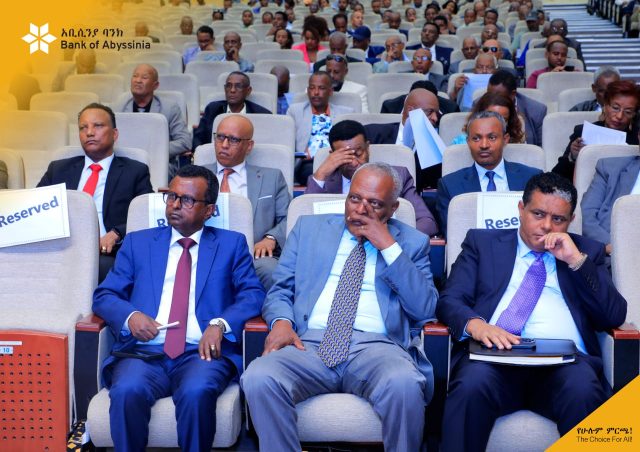
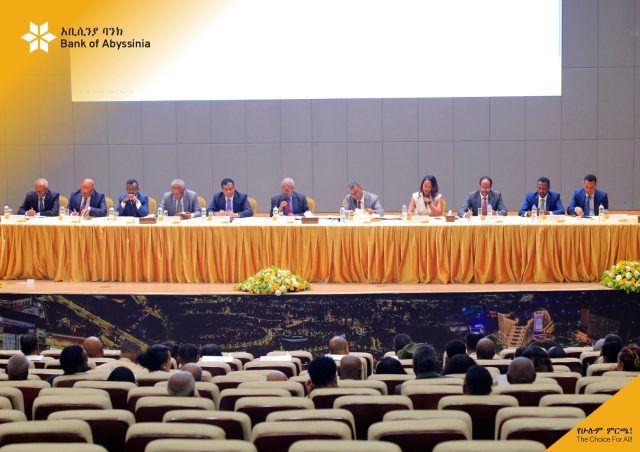
Bank of Abyssinia’s (BoA) non-performing loans tripled to Birr 15.64 billion in the year ended 30 June 2026, from Birr 5.18 billion a year earlier, according to the bank’s audited annual report. The rise came as the private lender expanded its loan book by Birr 57 billion and reported a pre-tax profit of Birr 15.85 billion. 

The figures appear in the report’s credit-risk disclosures, which classify these loans as Stage 3 under IFRS 9, the international accounting standard for expected credit losses.

EBR’s analysis of the report shows Stage 3 loans equal about 6.1 percent of gross loans of Birr 256.49 billion, up from 2.6 percent last year. Loans under special mention, a Stage 2 category for borrowers showing early signs of stress, more than doubled to Birr 34.63 billion from Birr 15.82 billion. Together, the two categories account for roughly 20 percent of the loan book, against about 10.5 percent a year earlier.

The picture is similar under the National Bank of Ethiopia’s (NBE) own classification, which the report also presents. Substandard, doubtful and loss loans totalled Birr 11.15 billion, up from Birr 5.17 billion, while special mention loans rose to Birr 30.56 billion from Birr 13.21 billion. 

According to the report, domestic trade and services is now the largest borrowing sector at Birr 68.46 billion, or about 28 per cent of loans, followed by exports at Birr 51.80 billion and industry at Birr 46.16 billion.

On that measure, Our calculates that non-performing loans were about 4.8 percent of the classified portfolio of Birr 230.78 billion, up from 2.9 percent. The two sets of figures differ because the regulator and IFRS 9 use different methods and loan bases.

The loan loss allowance rose to Birr 7.49 billion from Birr 5.94 billion, but it grew more slowly than the bad loans. The allowance held against Stage 3 loans stood at Birr 3.44 billion, roughly 22 percent of those exposures, compared with about 67 percent last year.

The loan impairment charge in the income statement fell to Birr 1.62 billion from Birr 2.12 billion. The report also shows the bank transferred Birr 2.62 billion from retained earnings to a regulatory risk reserve, which rose to Birr 4.42 billion from Birr 1.80 billion. The report says this reserve is non-distributable to shareholders and covers cases where provisions under NBE rules exceed those under IFRS.

The report says part of the increase in expected credit losses reflects an upgrade to the bank’s risk model. Exposures above 5 percent of the bank’s capital now undergo a separate risk assessment, an approach the report calls prudent because it improves the identification of large-exposure risk. 

It also attributes the rise in loan loss allowances mainly to larger loan volumes and changes in portfolio distribution. 

The bank says it renegotiates loans for borrowers in financial difficulty and reviews such cases through its Credit Committee. Its written-off loans also rose to Birr 546.2 million from Birr 248.0 million. 

EBR tried to reach BoA’s communications team by phone to ask about the rise in non-performing loans and the lower coverage, but its calls went unanswered. The bank had not provided comment at the time of publication.

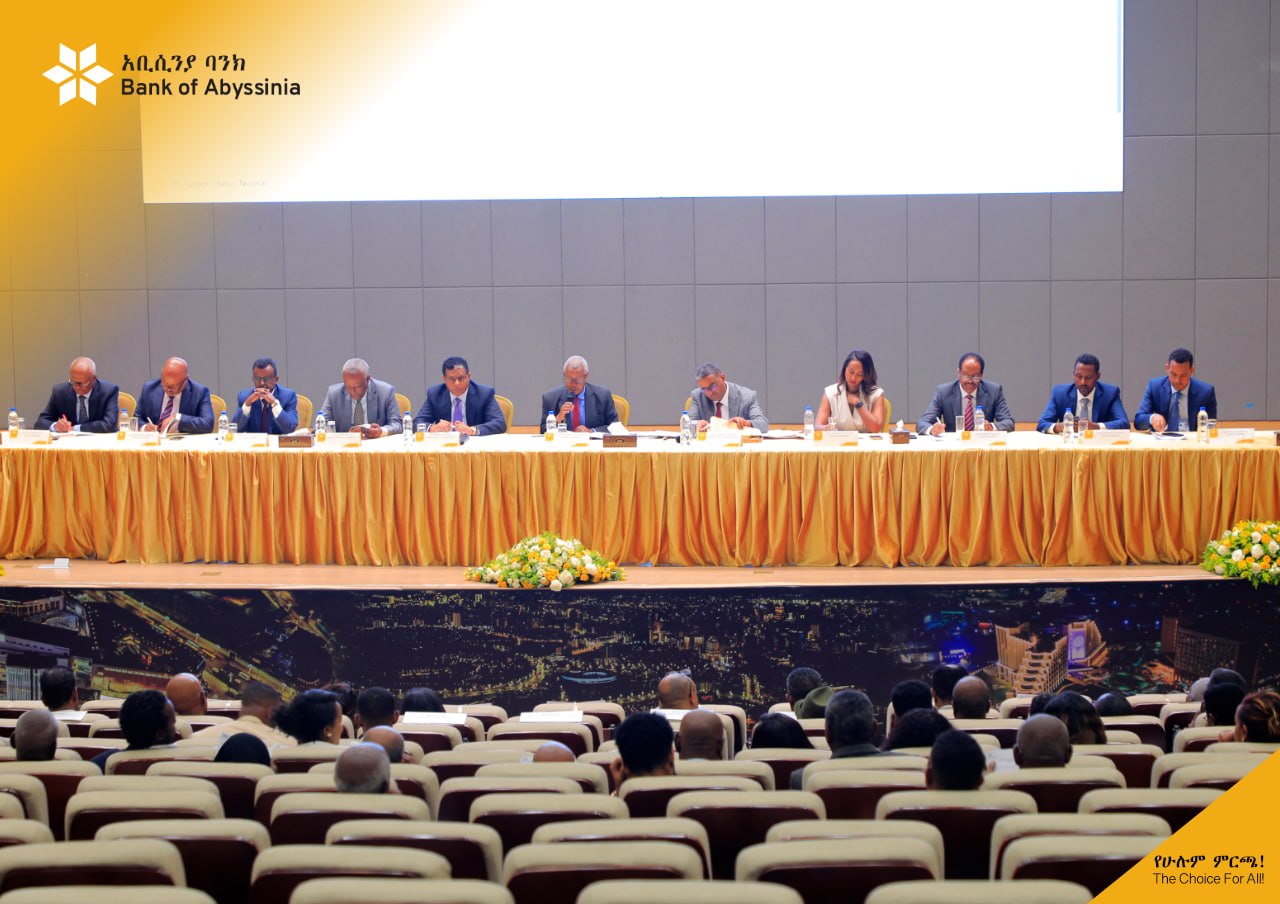
The results come as BoA, which held its annual general meeting on 10 October 2026 at the Adwa Victory Memorial Hall, faces closer scrutiny following its listing on the Ethiopian Securities Exchange under the ticker “BOAX”. 

The bank’s strong earnings and capital base give it room to absorb losses, with equity of Birr 39.51 billion and a liquidity ratio of 25.84 percent against the NBE’s 15 percent minimum. The report puts its capital adequacy ratio at 10.12 percent under the previous directive.

By EBR’s calculation, Stage 3 loans are now almost equal to the bank’s annual pre-tax profit, compared with about half of it a year earlier, although the report shows part of the exposure is covered by provisions and collateral.


Betegbar Yaregal

#EBR_News Oct 12, 2026

A total of 194 researchers affiliated with Ethiopian institutions appear in the single-year ranking of the Stanford/Elsevier “Top 2% Scientists” database, according to an Ethiopian Business Review analysis of the dataset.

The figure is about 0.08 percent of the 236,313 authors in the table. It shows a growing but still narrow base of internationally cited research in Ethiopia, and one heavily concentrated in health sciences.

The database is compiled by John Ioannidis of Stanford University and colleagues using Elsevier’s Scopus data. It is a citation dataset rather than an award, DATAMETA LAB, which runs a searchable version of the list, said in an explainer. Scientists are ranked by a composite score that weighs citations, co-authorship and author position.

A researcher is included if they are in the top 100,000 overall or in the top 2 percent of their subfield. The single-year table counts only citations received in one calendar year, so it favours early and mid-career researchers with recent, well-cited work.

By institution, Addis Ababa University has the most entries with 25, followed closely by the University of Gondar with 24 and Bahir Dar University with 23. Haramaya University has 15, while Jimma, Mekelle and Hawassa universities have eight each.

In total, the entries are spread across 51 institutions, including newer universities such as Injibara, Wolkite and Debre Tabor, as well as research bodies such as the Armauer Hansen Research Institute, the Ethiopian Public Health Institute and the International Livestock Research Institute in Addis Ababa.

The subject mix is lopsided. According to the dataset’s field classification, 134 of the 194 entries, or roughly 69 percent, fall under clinical medicine, with 90 listed primarily under general and internal medicine and 17 under tropical medicine.

Agriculture, fisheries and forestry follow with 19 entries and chemistry with 10, while engineering, information technology and mathematics together account for only eight. Much of the health-sciences strength reflects large collaborative studies on disease burden and maternal and child health, where papers attract many citations.

Only 25 of the Ethiopian entries rank within the overall top 100,000, with the rest qualifying through the top 2 percent of their subfield. The best-placed entry is Azamal Husen of Wolaita Sodo University, a plant biologist ranked 4,603th, followed by Tadele Assefa Aragaw of Bahir Dar University at 9,845th and Woldeamlak Bewket of Addis Ababa University at 23,475th.

Among the African countries EBR compared, Ethiopia trails Egypt with 1,106 entries, South Africa with 976 and Nigeria with 291. It is ahead of Morocco with 133 and Kenya with 69.

The ranking also depends on Scopus coverage, which can miss work and split author profiles, and its compilers caution that not being listed does not mean a researcher does not do good work.

The headline figure needs careful reading. About 11 entries appear to be foreign nationals working at Ethiopian institutions, including Azamal, so the number of Ethiopian researchers is somewhat lower.

Still, 107 of the 194 began publishing in 2015 or later, which points to a young research workforce emerging from the country’s fast-expanding university system.


#EBR_News Oct 10, 2026

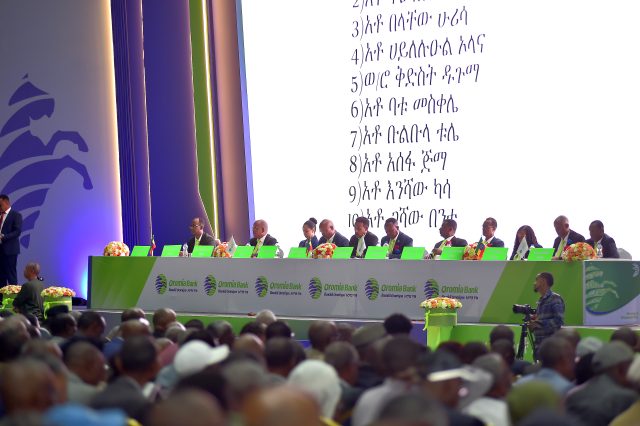
Oromia Bank S.C. has reported a 49% rise in profit before tax to Birr 3.82 billion for the 2025/26 fiscal year, up from Birr 2.57 billion a year earlier, according to its annual report.

The bank disclosed the results on Saturday at its 17th Ordinary and 6th Extraordinary General Meetings of Shareholders, held at the Addis International Convention Center in Addis Ababa.

The report shows that the pre-tax figure exceeded the bank’s own target of Birr 3.59 billion by 6.4%. Net profit after tax stood at Birr 2.84 billion, a 44% increase on the previous year, following an income tax charge of Birr 980.7 million. Earnings per share rose to Birr 386 from Birr 297, the report indicates.

The bank attributed the performance to income growing faster than costs. Total income rose 23% to Birr 15.24 billion, which the bank said was 99.9% of its annual target, while total expenses grew 17% to Birr 11.42 billion.

“The fact that our income pace above expense… signifies healthy income and expense structure,” said Teferi Mekonnen, the bank’s chief executive officer, in his message to shareholders.

The report also shows that interest income from loans and advances remained the largest earner at Birr 10.05 billion. Other local income rose 213% to Birr 1.89 billion, while fee and commission income fell 19% to Birr 2.45 billion.

The balance sheet expanded alongside earnings. Total assets grew 24% to Birr 105.7 billion and total deposits rose 24% to Birr 88.1 billion, while loans and Interest-Free Banking (IFB) financing increased 28% to Birr 56.2 billion.

Paid-up capital rose 14% to Birr 7.8 billion, lifting total capital to Birr 14 billion. The non-performing loan ratio was 2.43%, below both the bank’s 2.75% target and the 5% regulatory limit, according to the board chairperson’s statement. Return on equity was 37.5%, slightly below the 38.46% recorded the previous year.

Assefa Seme (PhD), chairperson of the board, said in his statement that the bank’s deposit growth reflected continued depositor confidence and its resilience in mobilising resources.

He noted that the economy is projected to grow by 9.2% in 2026 and 7.9% in 2027, but warned that conflict-related disruptions in the Middle East could hit commodity-importing economies with pre-existing fragilities, such as Ethiopia, harder than advanced economies.

Assefa said the board would remain committed to guiding the bank through a “dynamic, difficult, and uncertain environment”. He listed stronger digital capabilities, human resource competencies, prudent risk management and governance, and compliance with National Bank of Ethiopia directives as the board’s priorities.

The report was not uniformly positive. Foreign currency mobilisation fell 19.99% to USD 262.65 million from USD 328.25 million, with inward transfers dropping 69.09% and export earnings declining 31.9%. Forex dealing, by contrast, rose sharply to USD 106.89 million.

Teferi said foreign currency generation would be an area of “renewed focus and radical change” in the new fiscal year. The bank also cited cash shortages, foreign exchange scarcity and rising operating costs as challenges during the year.

On digital banking, the bank reported that digital customers rose 23% to 7.01 million, while service outlets, including ATMs, POS terminals, agents and QR points, grew 117% to 28,435.

The bank said it launched the Abbaa Fardaa Remit platform for diaspora transfers and introduced Oro Visa Classic, Gold and Platinum cards in partnership with Visa and Premier Switch Solutions. Its Milkii digital lending platform has surpassed 150,000 users and facilitated more than Birr 1 billion in lending.

Teferi, for his part, told shareholders that the bank had revitalised its business momentum during the year, with progress in profitability, resource mobilisation, customer growth, capital strength and asset quality.

He described the domestic outlook as positive, pointing to anticipated inflation of 12% in 2026 and continued improvement in export earnings.

Looking ahead, Teferi said the bank’s priorities include business growth, digital penetration, cost optimisation, superior service delivery, enhanced cybersecurity and sustainable asset quality.

He said these would be pursued under the bank’s fourth corporate strategic plan, which rests on five pillars: accelerating digital transformation, driving business growth and resource mobilisation, empowering a high-performing workforce, putting customers at the heart of the business, and disciplined cost optimisation.

The board has asked shareholders to approve the distribution of Birr 1.96 billion after reserves and other deductions.

The bank also reported progress on its infrastructure, with its transitional headquarters at Goma Kuteba at 60.5% completion and the first two phases of the Gelan Excellence and Convention Center finished.


#EBR_News Oct 9, 2026

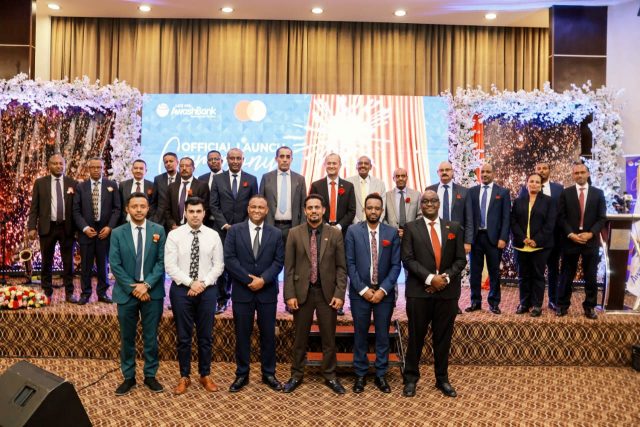
Awash Bank, Ethiopia’s largest private lender, has launched a five-card payment portfolio with Mastercard, aimed at customers ranging from high-net-worth individuals to ordinary account holders and corporate clients. The cards were unveiled on Thursday at a ceremony at Elilly International Hotel in Addis Ababa.

The bank said the launch follows the National Bank of Ethiopia’s (NBE) revised foreign exchange directive, which encourages banks to issue international cards with recognised global card networks.

The portfolio includes the Awash World Elite Debit Card, the Platinum Prepaid Card, the Gold Prepaid Card, a corporate prepaid card and the Awash Plus domestic contactless debit card. A prepaid virtual card for online and remote payments is also part of the range, according to the joint press release.

Awash Bank CEO Tsehay Shiferaw said in her speech that the World Elite card links to a customer’s foreign currency account and does not require travel documents. It also carries travel insurance, airport queue-skipping at selected destinations and lounge access.

The CEO added that the Gold card can be issued on the strength of a customer’s relationship with the bank, even without a foreign currency account.

Shehryar Ali, Mastercard’s senior vice president and country manager for East Africa and the Indian Ocean Islands, said the World Elite card offers free access to about 1,300 airport lounges and 600 golf courses worldwide. “There is no card that enables you to do that in Ethiopia,” Ali told the audience.

He also said four of the five cards were firsts for the Ethiopian market, Tsehay described the corporate card as new to the Ethiopian market, saying it lets companies manage foreign expenses such as travel, accommodation and online payments from within the country.

The launch builds on a three-year partnership in which Awash Bank has issued international prepaid cards. Tsehay said these have served more than 20,000 customers. In the last budget year alone, he said, the bank authorized over $60 million through the cards, of which more than $55 million in transactions were completed.

He said the figures earned the bank recognition from Mastercard, and that demand from its customer base made a wider range of cards necessary.

The scale of Awash Bank’s network explains the ambition. The CEO said the bank has more than 17 million customers, over 1,010 branches, 10 digital branches, more than 1,200 ATMs, over 3,200 point-of-sale terminals and over 20,000 agents.

He added that more than 4 million customers use its payment cards and more than 5 million use its Awash Birr Pro mobile app. The press release, which cites a figure of more than 16 million customers, said the bank’s digital platforms processed more than 1 trillion birr in transactions over a period of a few months.

Both executives pointed to tokenization, which replaces card details with secure digital tokens so that phones, rings or other devices can be used to pay. Tsehay said the Awash Plus card is ready for tokenization, while Ali said the technology could turn everyday items into payment tools.

The press release said Premier Switch Solutions, the bank’s card processing partner, is handling processing and technology implementation. In the release, Ali said the partnership would widen digital payment choice and build trust in Ethiopia’s payments ecosystem.


photo_2026-10-07_12-29-08.jpg

Betegbar Yaregal

#EBR_News Oct 8, 2026

Abay Bank posted a profit before tax of Birr 6.22 billion for the year ended 30 June 2026, up from Birr 4.22 billion a year earlier, according to its audited annual financial statements seen by EBR. That is an increase of about 47.6 percent.

After an income tax charge of Birr 1.68 billion, the bank’s profit for the year came to Birr 4.55 billion, the statements show.

Total operating income rose to Birr 13.12 billion from Birr 10.48 billion, a rise of roughly 25 percent. Interest income grew to Birr 12 billion from Birr 8.79 billion. After interest expense of Birr 3.39 billion, net interest income reached Birr 8.61 billion, compared with Birr 6.26 billion the previous year.

Net fee and commission income stood at Birr 2.59 billion, while net gain on foreign exchange valuation was Birr 1.51 billion, down from Birr 1.87 billion.

On costs, the statements show personnel expenses of Birr 3.71 billion, up from Birr 3.20 billion. Other operating expenses were Birr 2.09 billion, slightly below the Birr 2.13 billion recorded last year. The loan impairment charge increased to Birr 268.5 million from Birr 139 million. Basic and diluted earnings per share were both Birr 524.54, according to the report.

The statement of financial position shows total assets of Birr 119.69 billion at the end of June 2026, compared with Birr 91.35 billion a year earlier.

Deposits from customers reached Birr 92.74 billion, up from Birr 71.91 billion, while loans and advances, including interest-free banking financing, rose to Birr 61.15 billion from Birr 48.65 billion.

Total equity stood at Birr 17.58 billion, against Birr 12.21 billion.

The bank’s paid-up capital stood at Birr 9.66 billion as at 30 June 2026, the notes to the statements indicate. This is above the Birr 5 billion minimum that National Bank of Ethiopia Directive No. SBB/78/2021 required commercial banks to reach by that date.

The cash flow statement shows the bank raised Birr 2.64 billion from the issue of shares during the year and paid Birr 2.04 billion in dividends.

The notes also put the bank’s total capital to risk-weighted assets ratio at 17.04 percent, against 15.11 percent a year earlier and the regulatory minimum of 8 percent.

The statements further disclose that the bank’s shares were listed on the Ethiopian Securities Exchange main market on 25 June 2026 under the ticker ABAYB, with trading starting the same day.

The independent auditor, said in its report dated 21 September 2026 that the financial statements give a true and fair view of the bank’s position and performance in accordance with International Financial Reporting Standards. The bank’s board approved them on 18 September 2026.


Ethiopian Business Review | EBR is a first-class and high-quality monthly business magazine offering enlightenment to readers and a platform for partners.


2Q69+2MM, Jomo Kenyatta St, Addis Ababa

Tsehay Messay Building

Contact Us

+251 961 41 41 41